Kenya Government in collaboration with its Agencies to enhance Digital Inclusion
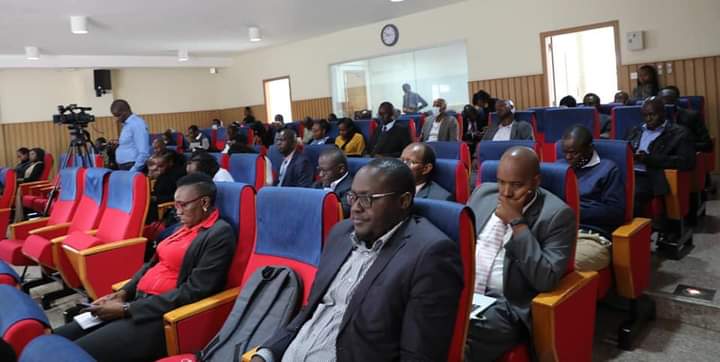
Some of the delegates who attended the forum

Kenya Government in collaboration with its Agencies to enhance Digital Inclusion
By MICT
Worth Noting:
- “A close scrutiny of our policy documents such as the National ICT Policy, our Broadband Strategy and the Digital Economy Blueprint brings out the government’s commitment to digital inclusion,” said Yiapan.
- “In these policy documents, digital inclusion is aimed at facilitating ICT accessibility, connectivity, affordability and usability for all people and particularly facilitate participation of women, youth, people with disabilities, the elderly, people from lower social economic groups, local communities, vulnerable people and the minority and marginalized populations of Kenya,” she added.
The Ministry of Information, Communications and Technology Principal Secretary for Broadcasting & Communication, Esther Koimett has said that said the government is in collaboration with its State Agencies and other partners, and have undertaken several projects to enhance digital inclusion.
Speaking at Strathmore University during the ITU-UK Kenya Digital Access Programme Partners’ Open Day yesterday, the PS said that the government has recognized that digital inclusion needs to be connected to broader policy issues in order to show impacts of digital inclusion and meaningful broadband adoption initiatives.
The PS said this in a speech read on her behalf by Secretary Administration , Broadcasting and Telecommunications Ms Juliana Yiapan at Strathmore University.
The theme of the event was “Partnering for Effective Connectivity and Broader Digital Inclusion”, . SA Yiapan said the government is finding a common goal of supporting the connectivity of those who are still unconnected and contributing to meaningful connectivity of those who are yet to benefit from the digital economy.
“A close scrutiny of our policy documents such as the National ICT Policy, our Broadband Strategy and the Digital Economy Blueprint brings out the government’s commitment to digital inclusion,” said Yiapan.
“In these policy documents, digital inclusion is aimed at facilitating ICT accessibility, connectivity, affordability and usability for all people and particularly facilitate participation of women, youth, people with disabilities, the elderly, people from lower social economic groups, local communities, vulnerable people and the minority and marginalized populations of Kenya,” she added.
The Agencies and partners include the Communication Authority of Kenya (CA), Kenya Film Classification Board (KFCB), African Centre for Women in ICT (ACWICT), Kenya Agriculture Livestock Research Organization (KALRO), Digi Green, Centre for Agriculture and Bioscience International (CABI) Acre Africa, ICT Authority, Kenya ICT Action Network (KICTANeT), Kenya Institute for Curriculum Development (KICD), Kenya National Parent’s Association, Dignitas, Association for the Physically Disabled of Kenya (APDK), Inspire Africa Initiatives International Limited and Kenya Bureau of Standards (KEBS).
These Agencies and partners have come up with projects that cuts across all sectors of the digital economy including healthcare, education, agriculture and government services.
PS Koimett said that Covid-19 pandemic highlighted the urgent need for Kenya to prioritize the digital inclusion agenda and that KFCB and ACWICT have jointly implemented Covid-19 and Digital Employability-III project that aims to empower 2832 young women with digital skills through mentorship, support and placement into digital and online spaces.
KALRO, ACWICT, Digi Green, CABI and Acre Africa are Implementing a project ensure that there is a sustainable, climate adapted and digitally enabled agriculture for enhanced food security and they aim to reach 600 Agriculture Extension Officers and Champion Farmers with basic digital literacy skills who will in turn train others directly reaching 22,000 farmers in Laikipia County and create awareness through local relevant digital agriculture content to other one million farmers in Laikipia, Nakuru, Kilifi, Kisumu, Homabay and Busia counties.
“ICT Authority and KICTANeT are implementing a project aimed towards cyber hygiene awareness among 30,000 excluded and marginalised populations in Kenya,” stated PS Koimett.
She said that KICD, Kenya National Parents’ Association in collaboration with Dignitas are targeting to reach 4,500 caregivers through the Building Digital Literacy Skills for Kenyan Parents and Caregivers project to support learning from home.
“ICT Authority, APDK and Inspire Africa Initiatives International Limited are implementing a project aimed at enhancing access to digital government services for Persons with Disabilities (PWD) that aims to reach 500 PWDs, 30 Senior Government Officers and 40 Government ICT Officers,” the PS stated.
The PS said that the CA is reviewing the Universal Service Fund (USF) Strategy and will develop a new USF strategy (2022-2026) and that together with KEBS, and ICT Authority, facilitated by Inable, they are developing the Kenya Accessibility Standards (DKS 2952-1:2021) for Products and Services and the implementation framework.
Similar Posts by The Mt Kenya Times:
- Mt Kenya Times ePAPER September 17, 2026
- Ruto and Uhuru: The rupture at the heart of Kenya’s 2027 election
- Gakoromone traders and rights group demand closure of sewage discharge
- Retirement is not disenfranchisement: Reclaiming the constitutional rights of Kenya’s former presidents
- Kenya’s 2027 election: Can technology strengthen democracy or manipulate voters?
About the Author