Shattered lives as gang warfare and street stabbing sprees in UK create safety fears:

Sad reminder... These three angels lost their lives in senseless stabbings in Southport, left to right, Alice DaSilva Aguiar nine_ Bebe King, six and Elzie Dot Stancombe, seven. in July.
IS BRITAIN FIGHTING A LOSING BATTLE AGAINST SOARING KNIFE CRIME?
By SHAMLAL PURI in London
Senior Editor – UK and Associate Publisher
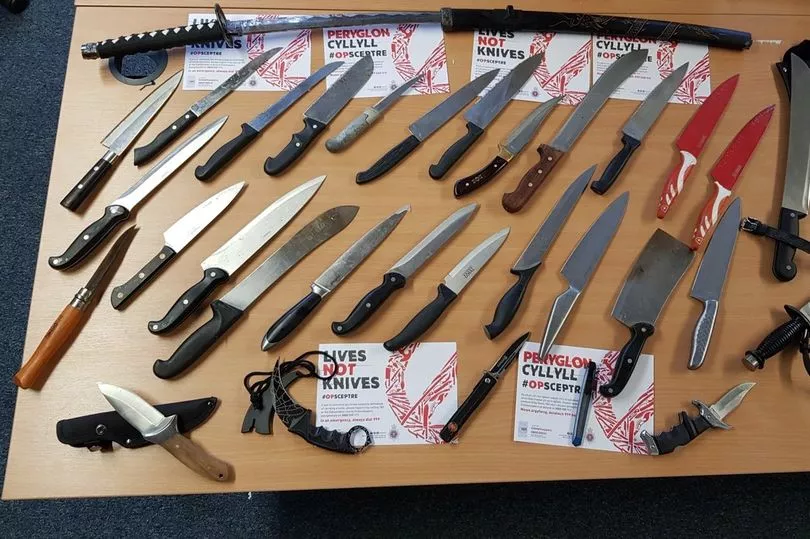
Britain has been fighting a knife crime pandemic for many years that shows little sign of being brought under control despite the intervention of the Police, leaving many shattered lives and causing fear among many peace-loving, vulnerable Britons who fear going out about their daily lives.
Britain’s long-term cancer of knife crime was thrust into the spotlight following the July 29 stabbing and the killings of three innocent girls under ten in Southport, Merseyside and injuring eight others by a crazed Rwandan-British diasporan teenager armed with a kitchen knife.
The consequent riots brought home once again the threats posed by people carrying knives and using them to cause death and destruction in the country.
The riots are over (for now), as are the in-depth academic discussions on the causes of the midsummer madness that engulfed the United Kingdom for two weeks.

Britain’s diaspora communities had not forgotten that dark day nearly half a century ago, when on June 4 1976, an 18-year-old Sikh teenager, engineering student Gurdeep Singh Chaggar, was stabbed outside the Victory Pub in the predominantly West London Asian suburb of Southall and left in a pool of blood by a group of violent far-right white racists who were in the town to cause trouble.
Police did not acknowledge that it was a racist stabbing and murder.
The racial violence of that era still haunts the town’s people, and Chaggar’s name is mentioned reverently as a martyr.
Half a Century later, the scourge of knife crime remains as an increasing number of Britons go around daily armed with sharp blades and do not hesitate to lash out at the slightest provocation.
Angry drivers have lashed out with knives at other motorists in road rage incidents or shopping car parks. People are stabbed so frequently these days that the scenario is scary.
The public says the Police are powerless to stop the rising number of knife attacks on vulnerable people.
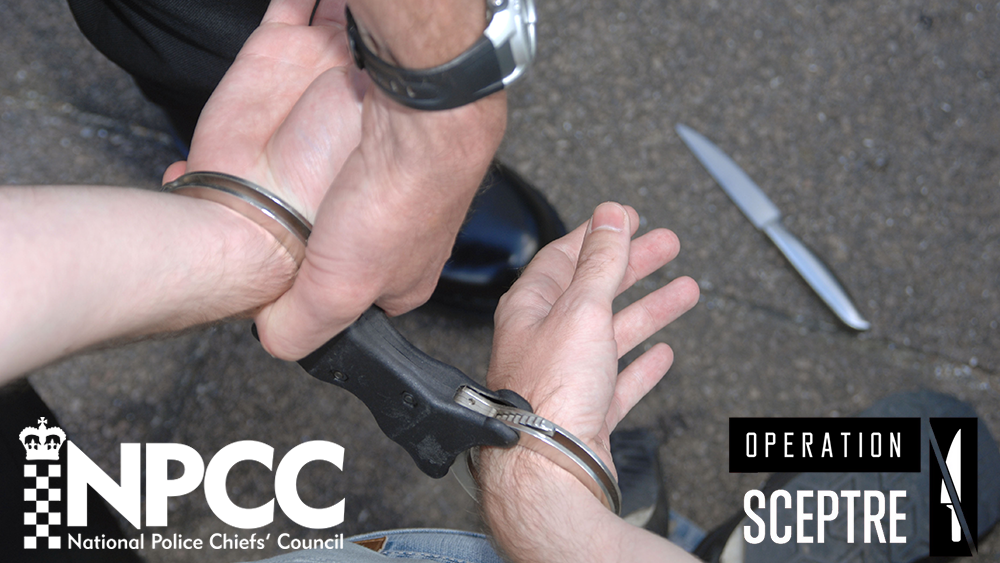
To be fair to the Police, they are working to stop criminals carrying knives. Still, they cannot achieve satisfactory results because of their internal problems and a heavy workload of pending criminal cases under investigation.
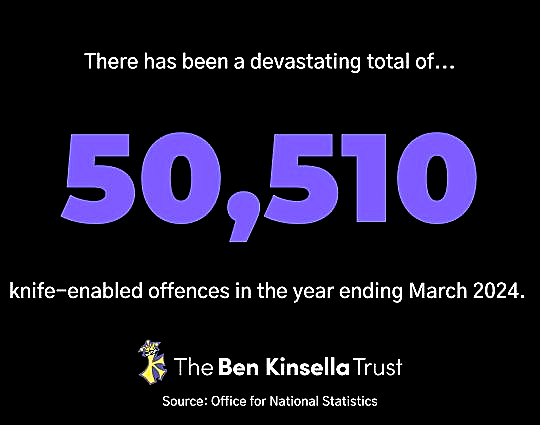
The devastating figures of the latest cases show 50,510 knife-enabled offences in the year ending 2023, according to the UK’s Office of National Statistics (ONS).
Instead of decreasing, the Office of National Statistics paints a grim figure showing that in England and Wales, knife crime has increased by 78% in the last decade. This is hardly reassuring to the British public.
Parents have lost their children, and older people have been stabbed in the streets and their homes, leaving families devastated.
The streets of the United Kingdom are unsafe as there is plenty of evidence from the official figures to prove that knife crime has claimed thousands of people, and the attacks continue regularly.
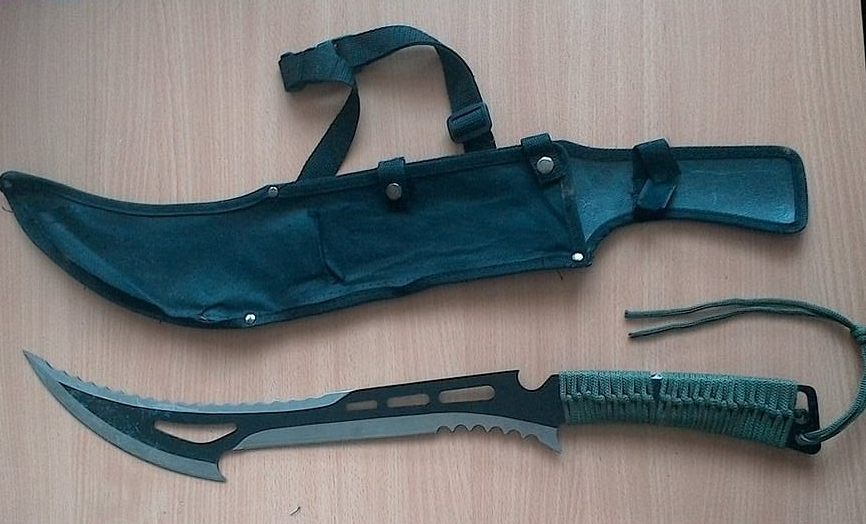
A new nationwide knife ban comes into force next month when people in possession of zombie-style knives – weapons with blades more than eight inches with a serrated cutting edge and machetes are being urged to hand them into Police stations until September 23 and claim compensation.
Ironically, the problem of knife crime goes back decades.
However, knives and sharp objects were included on the Government’s banned list only as late as 2016, and the authorities, instead of prohibiting all knives, banned only those with images depicting violence on the handles!
Manufacturers got around this with knives designed specifically without images!

People with violence on their minds did not have to get inspiration on how to use it from the violent image on the handle!
Zombie knives and machetes will be banned from September 24 under the Offensive Weapons Act passed by the Conservatives while in power.
Under this Act, anyone found with zombie-style knives and machete will be jailed.
The Government says there is no legitimate need for a weapon in homes or streets.
The new Government also says this is the first step in its plan to reduce knife crime in the next ten years.
The next phase will follow it to outlaw ninja swords. While the Government’s efforts to combat knife crime are to be lauded, there is little comfort for the families of those who have lost the lives of their loved ones in senseless stabbings.
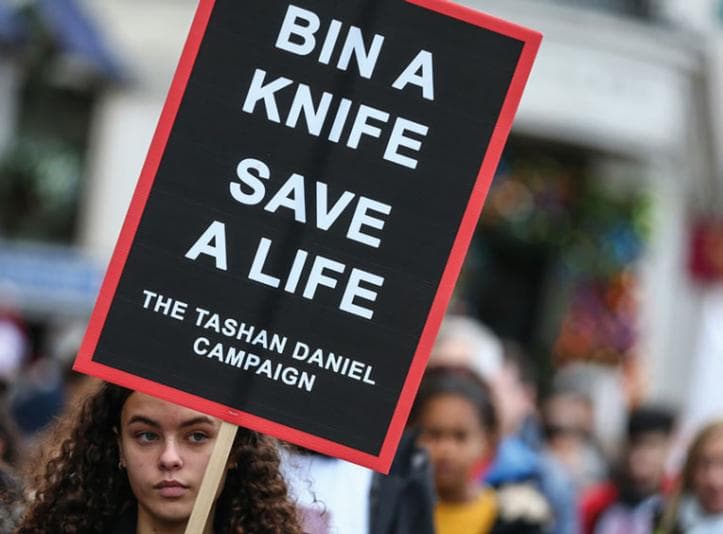
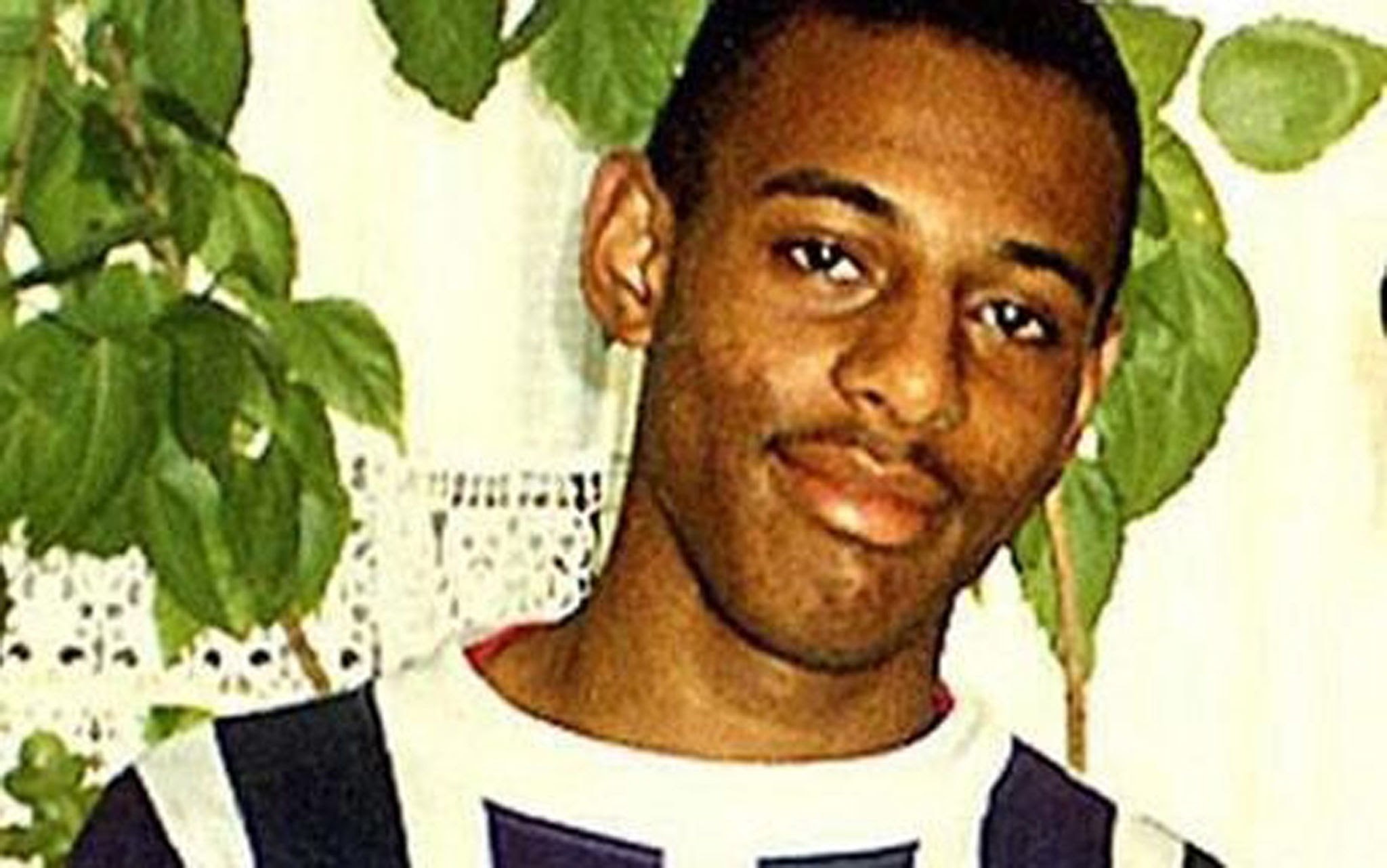
One of the most troubling cases in recent years was that of an 18-year-old Caribbean diasporan student, Stephen Lawrence, 31 years ago.
The teenager was stabbed to death at a bus stop in Eltham, south-east London, by a group of White youths in an unprovoked, racist attack on April 22 1993. Stephen was later pronounced dead on arrival at the hospital with two five-inch wounds to his arm and chest.
His killers were free for a long time because the Police botched the investigation.
Police began a surveillance operation on the prime suspects and made several arrests, but the Crown Prosecution Service later discontinued the prosecution, citing insufficient evidence.
There was a miscarriage of justice when his killers were acquitted at the time.
The Lawrence family vociferously continued to seek justice for their innocent son.

Nineteen years later, in 2012, two of his killers – David Norris and Gary Dobson – were jailed for life. Lawrence was murdered by a group of five or six racists, but only two of his killers have faced justice.
Things have hardly changed since Steven Lawrence’s death.
These days, young people believe that carrying a knife is normal. Schoolchildren have been known to carry these offensive weapons to school, and often verbal duels in the playground and to show off their bravado have threatened to turn into knife fights.
Earlier governments were aware of the changing trend. In 2018, the Home
Office under the Conservative Government launched a £1.35million advertising campaign to reduce knife crime, targeting 10-to 21-year-olds.
The then Home Secretary Amber Rudd said at the time: “The emotional stories at the heart of the new Knife Free campaign powerfully drive home a far-reaching impact it can have on a young person’s life if they make the misguided decision to carry a knife.”
The then Minister for Crime, Safeguarding and Vulnerability, Victoria Atkins, said at the time the campaign highlighted the tragic consequences of carrying a knife and challenged the idea that young people are safer if they had one.
Critics looking at that campaign in 2024 believe it did not fully achieve the desired results, though it may have affected a small section of under-21-year-olds.
Under English law, having an article with a blade or point in a public place or school premises without lawful authority is punishable by arrest and imprisonment.
Offences involving threatening with a knife or offensive weapon in a public place or on school premises, introduced on December 3 2012, in an aggravated form, used to threaten and endanger life is also punishable.
If an offender is over 18, British law gives a warning to those who admit guilt and agree to be cautioned where there is sufficient evidence for a conviction, but it is not considered to be in the public interest to institute criminal proceedings.
These days, there is a growing number of child offenders between 10 and 17 who are given community sentences. This is a non-custodial sentence,
For juveniles, the community sentences include supervision, unpaid work, specified or prohibited activities, accredited programmes, curfew, exclusion from or residence at a particular address, mental health, drug or alcohol treatment and attendance at a centre (for under 25s).
Immediate sentence for more serious cases of knife crime and offensive weapon is a maximum of four years. The law does not spare juveniles aged 12 to 17 who could be jailed/detained for up to 24 months.

These sentences may look draconian on paper, but despite this, knife crime continues and has increased over the years.
There appears to be a pattern of leniency in the courts as critics who analysed the sentences in the last quarter of 2011.
Home Office figures provide a grim reading: From a total of 4,811 knife crime cases brought to court, 1,363 were jailed.
Some courts gave absolute or conditional discharge to 152 offenders, while 914 were cautiously released. Some 1,397 were given community sentences and 586 suspended sentences.
There are two schools of thought: Some critics believe it is wrong to jail for short periods, and others believe that rigorous punishment, including isolation in prison, will serve as a deterrent for any repeat offenders.

It boils down to finances: The Starmer Government lacks resources to run the prisons. They chose the shortcut: To release short-term prisoners on parole and leave the prisons open for severe and long-term offenders.
Former Conservative Home Secretary James Cleverly was concerned over the increasing rise in knife crime in London when the Office of National Statistics released the figures showing recorded knife crime rose by 22% in London to last September.
In a letter to the Labour Party’s Mayor Sadiq Khan, he noted that if London’s increase had not happened, there would have been a slight reduction of 1% knife crime across the country.
Mr Khan blamed the Government’s underfunding of Police in London for an increase in London’s knife crime figures.

The Ben Kinsella Trust, a charity that tackles knife crime through education and campaigning, is one of the several UK organisations advocating for the end of violence.
This Trust was set up in memory of teenager Ben Kinsella, who was just 16 when he was stabbed to death in senseless violence on June 29 2008.
Ben had been out at a local pub celebrating the end of his GCSEs with his friends. On their way home, he and his friends realised three older teenagers were following them. Scared and worried, they decided to run home.
But the older teenagers chased after them. They were seeking revenge for an altercation in the club that had taken place earlier that evening.
Ben and his friends had nothing to do with the altercations, but when the older boys caught up with Ben in an unprovoked attack, they stabbed him to death.
A few months before he was murdered in 2008, Ben wrote to the then-prime minister, Gordon Brown, to call on the Government to do more to tackle knife crime. Since his murder, his family have tirelessly campaigned for change.
Ben was the 17th teenager to be killed in London in 2008.
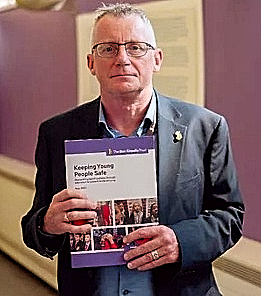
The charity was disappointed with the increase in the latest knife crime figures.
Its CEO, Patrick Green, said on August 8 that the latest increase in knife crime was not merely figures but that they represented shattered lives.
He said, “The latest knife crime statistics from the Office for National Statistics paint a deeply troubling picture. The overall number of offences involving a knife or sharp object is up by 4%, driven primarily by a surge in knife-enabled robberies. While the problem is widespread, metropolitan areas remain the worst affected.”
He pointed out, “The highest number of knife crime offences are committed in London – 15,016, up 16% on last year. The highest rate of knife crime offences by population is in the West Midlands, which has 178 offences per 100,000 people, almost twice the national average in England and Wales, where the average is 88 offences per 100,000 people.”
The report points out the largest single increase in knife crime offences occurred in Avon and Somerset – up 25% in the last year.
“It is important to remember that these are not just statistics; they represent shattered lives and devastated families,” said Mr Green.
“The recent, heart-breaking murders of children in Southport and a teenager in East London are stark reminders of the human cost of this epidemic. These young lives, ended at such a young age by senseless violence, underscore the urgent need to treat knife crime as a national emergency.
“The Labour Party has pledged to halve knife crime incidents, a commendable goal. However, these figures expose the scale of the challenge they face.
“Immediate and decisive action is imperative. We urge the Government to translate their promises into concrete policies without delay.
“At the Ben Kinsella Trust, we believe prevention is the most effective solution to knife crime. Our focus on early intervention and supporting young people aims to steer young people away from knife carrying and violence before they enter the criminal justice system. ”
Mr Green said that while law enforcement was crucial, it was often seen as a reactive measure.
“By investing in prevention, we create viable solutions which tackle the root causes of the problem.”
He expressed optimism over a recorded decline in knife possession offences, as recorded by Police “possession of an article with a blade or point” by 3% and knife-related hospital admissions – whilst staying relatively static in the last year – have decreased 25% since a high in 2019. “While this is positive, it is too early to determine if the trend will be sustained.”
“The coming months are critical, and we stand ready to collaborate with the government to address this pressing issue and create a safer future for our young people.”
The fear of increased knife crime is so overwhelming that many foreign tourists do not consider the United Kingdom a safe destination, particularly the main cities.
Police stop and search powers have stopped knife crimes, though many object to this a breach of human rights.
One blazing hot summer’s day in London, a foot patrol police officer stopped a young Caribbean diasporan walking on the High Street wearing a thick woollen overcoat.
The officer’s suspicion was aroused at the young man’s outfit. He stopped him and ordered him to unbutton his overcoat. To his shock, he found knives neatly stashed in his inside pockets. He was arrested.
Similar Posts by Shamlal Puri:
- BRITAIN PLEDGES ‘ROCK SOLID’ SUPPORT TO UKRAINE
- KENYAN HOCKEY LEGENDS HONOURED IN LONDON
- Tourism bonanza for the Middle East: FOUR DAYS WHEN THE WORLD CAME UNDER ONE ROOF IN DUBAI
- LONDON PACKAGING WEEK WITH TOP GLOBAL BRANDS ATTRACTS THOUSANDS OF VISITORS
- UK’S NATIONAL HEALTH SERVICE IN BIZARRE COLOUR BAR CRISIS
About the Author