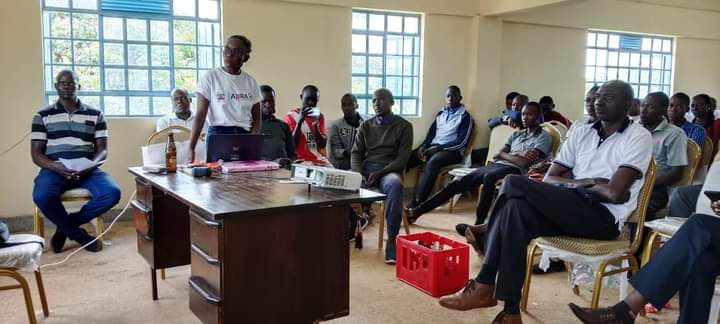

Butula constituency Youth Coordinator Julius Otieno, applauded the youths for embracing the Ajira Digital programme for digital skills development and self-reliance. “I want to thank the Butula youths for embracing this program. This program aims at bridging the gap between skills demand and lack of jobs. Ajira Digital Program seeks to place Kenya as a choice of labour destination for multinationals, local companies, and the public sector,” said Otieno. The sentiments were supported by Awiti Sharon, who noted that they are ready to explore the global market to empower themselves using the digital skills they have acquired. “Ajira Digital program is instrumental in overcoming the challenge of unemployment. The program’s free training, mentorship, and job linkages will empower us to work as freelancers or marketers, thus ensuring a steady income to meet my financial obligations,” noted Sharon.
 Nyeri County Commissioner, Pius Murugu, has hinted at bringing back public bazaas to promote government projects, saying, “I know a lot of projects are being undertaken and the people are not aware of what is happening. So we need to revive the village barazas so that we can connect ourselves with the people and appraise the wananchi on whatever projects the government is implementing on the ground.”

Cabinet Secretary for Trade, Investments, and Industry, Salim Mvurya (centre), and African Continental Free Trade Area Secretary General Wamkele Mene (third right), with other heads of departments and ministerial representatives, during a deliberation meeting which focused on critical aspects of the AFCTA trade negotiations and implementation, held at the National Social Security Fund (NSSF) Building, Nairobi.
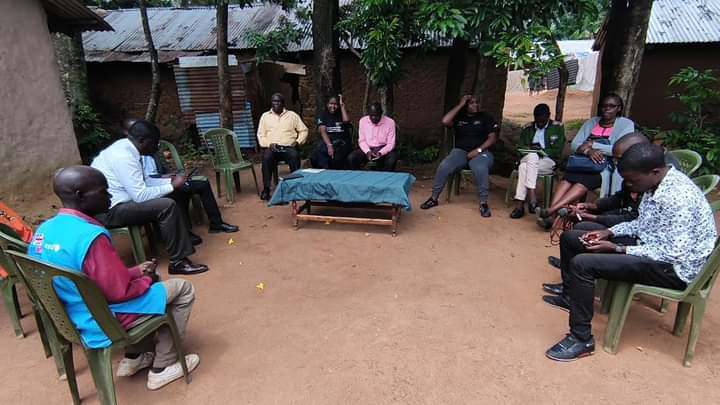 “We are also working with Western Kenya Sanitation Project (WKSP) on market-based sanitation that is improving our latrines from the basic bora choo to choo bora, and the product we are currently using is the SATO product, which keeps away flies and smells,” said the County Coordinator of Water, Sanitation, and Hygiene (WASH) in Kakamega, Mary Goreti.
“We have Community Health Promoters (CHPs), Ward Public Health Officers (WPHOs), and Community Health Assistants (CHAs) whom we are working with. We conduct WASH open days on a quarterly basis; we have a Community Strategy where we do community monthly meetings on WASH. CHPs move from house to house on a daily basis, and if they get a person who is unable to construct a toilet, they bring up the matter during the monthly meeting so that the community can intervene,” she added.
 Kenya Tea Development Agency (KTDA) hosted the Deputy President Rigathi Gachagua when he toured the Agency’s owned warehouses in Miritini and leased warehouses in Mengo, Changamwe, Mombasa County. KTDA owns 647,377 square feet of storage space in Mombasa and leases thousands of others. The firm requires 1.2 million square feet to manage teas produced by smallholder tea farmers. To bridge this gap, KTDA has to lease space from other third parties. The DP also toured the site where Chai Warehousing is constructing new warehouses to ensure all teas are under one roof so as to reduce logistics costs. The DP requested KTDA to fast-track the construction of the new warehouses and reduce the time by half to save farmers money from hiring storage space from third parties. He was taken round by the KTDA officials led by chairman Enos Njeru.
Similar Posts by The Mt Kenya Times:
- Diaspora Times Global Oct 17 – Oct 23, 2026
- Is social media a blessing or a curse for university students?
- Light at last: How electricity is reshaping Nandi and Uasin Gishu
- The triple squeeze: how EPRA’s fuel price hike is reshaping the survival equation for the common mwananchi
- Zelenskyy accuses Trump of rewarding Putin as Pope pleads for peace from a hospital bed
About the Author