As the nation celebrates its heroes, the sacrifices of Kenyans abroad demand more than speeches
By Collins Kibet
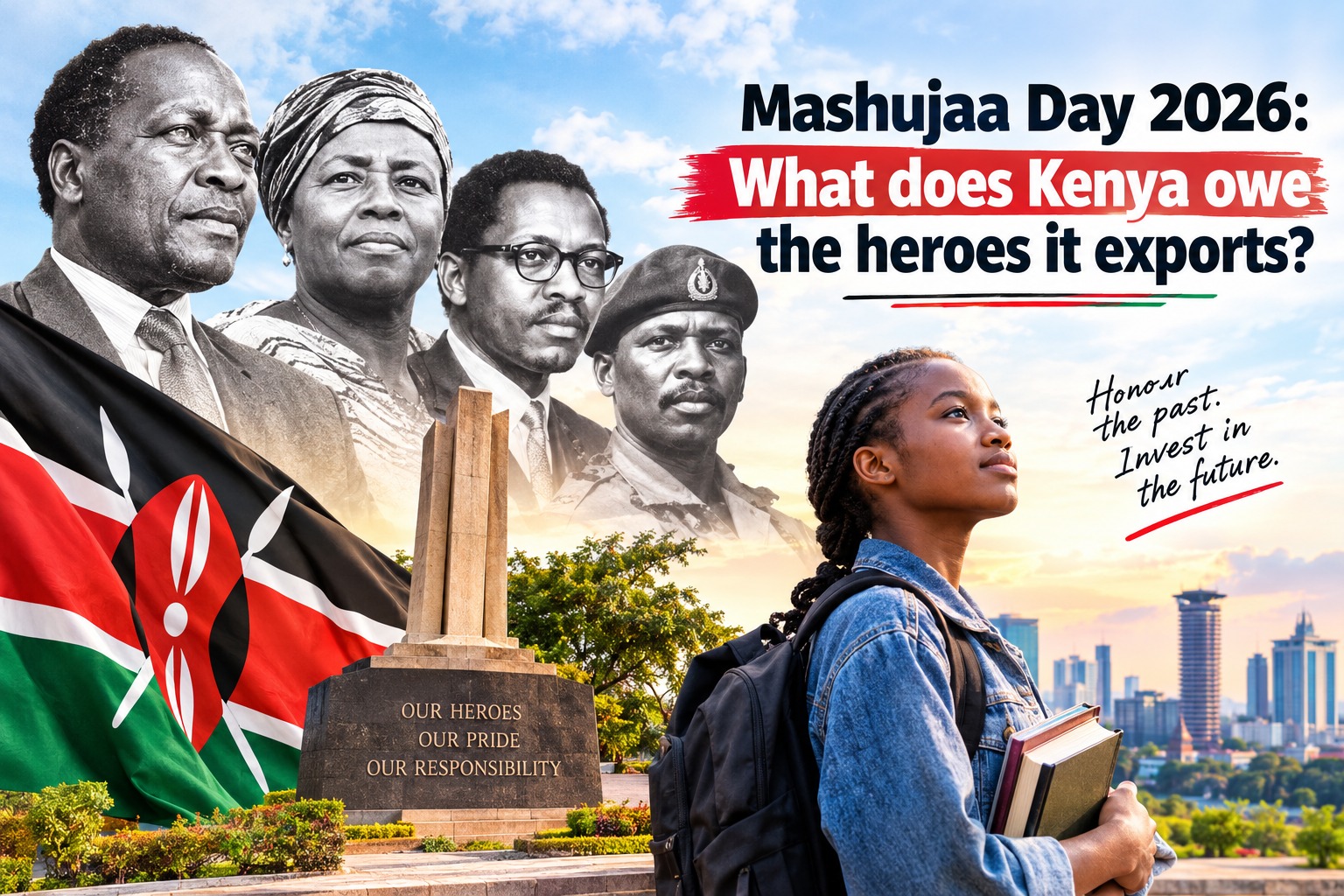
As Kenya prepares to mark Mashujaa Day on 20 October 2026, the occasion invites a question that deserves a more honest answer than patriotic ceremony tends to provide: is the country doing enough for the Kenyans living and working abroad whose quiet, daily sacrifices continue to support families, sustain communities and strengthen the national economy?
Mashujaa Day has always honoured courage — the courage of the men and women who challenged colonial rule and paid, often with their lives, to secure the freedoms Kenyans enjoy today. That founding story is worth retelling. But the spirit of heroism did not retire with independence. It lives on in the choices of ordinary citizens who confront difficult circumstances, carry responsibilities that were never glamorous, and press forward anyway. Among them are the thousands of Kenyans spread across the United States, the United Kingdom, Canada, the Middle East, Europe and elsewhere — many of whom left home in search of employment, education or opportunity that proved too scarce to find at home.
The economic case for recognising this community is by now well established. Diaspora remittances have grown into one of Kenya’s most significant sources of foreign exchange. According to the Central Bank of Kenya, these transfers support household consumption, pay school fees, fund medical care, finance housing and seed small businesses. For many families, the money arriving from abroad is not supplementary income — it is the primary reason they are not in poverty. These are not abstract macroeconomic flows. They are children kept in school, hospital bills met on time, and futures that remain possible because someone, somewhere, chose to stay away so that others could get ahead.
What the statistics cannot easily capture is the human cost sitting behind every transfer. A Kenyan working abroad may spend years — sometimes the most formative years of their children’s lives — separated from everyone they love. Some work long hours in environments that are physically demanding and emotionally isolating. Others navigate loneliness, cultural adjustment, discrimination and the grinding uncertainty of immigration status. Those employed in domestic work, construction, healthcare and hospitality may endure conditions that would be considered unacceptable at home, all while trying to hold together a financial lifeline for relatives thousands of kilometres away.
Their sacrifices are, more often than not, invisible to the people who benefit from them.
Mashujaa Day should change that. It should offer a moment to look beyond the financial value of remittances and acknowledge the human cost of earning them. Behind every transfer could be a parent who missed a child’s first day of school, a son or daughter unable to attend a family funeral, a worker who quietly postponed their own ambitions year after year to keep a promise to people at home. This is a form of patriotism. It does not come with a uniform or a public platform, but it is real — expressed through endurance, responsibility and an unbroken connection to home.
Recognition, however, must mean more than appreciation posts and ceremonial nods. The government carries genuine obligations here. Cases of fraudulent recruitment, exploitative contracts, labour abuse and outright mistreatment of Kenyan migrant workers point to a protection framework that remains dangerously inadequate. Prospective workers deserve reliable information before they travel. Recruitment agencies that operate illegally must face meaningful consequences. Kenyan embassies and consulates need to be properly resourced — not merely present — so that citizens facing emergencies, exploitation or employer disputes can access real and timely help.
Diplomatically, Kenya must do more to promote fair labour standards in destination countries and ensure that workers who encounter difficulties do not feel abandoned simply because they are far from home. Accessible emergency support, clear complaint channels, legal guidance and effective coordination with local authorities are not luxuries. They are the minimum a country owes citizens who are contributing to its economy while bearing personal costs the country rarely acknowledges.
There is also the question of investment — and it goes beyond household remittances. Kenyans abroad bring back more than money. They carry professional expertise, international networks, technical skills and entrepreneurial experience that, properly channelled, could help create jobs and drive local industry. But capitalising on that potential requires more than appeals to patriotism. Investors need confidence: that contracts will be honoured, that property transactions are safe, that public institutions are accountable and that the regulatory environment will not shift beneath their feet without warning. Corruption, bureaucratic obstruction and opaque processes have already deterred diaspora investment that Kenya could ill afford to lose. Fixing that is not optional — it is the precondition for any serious engagement strategy.
On the family side, there is a conversation that Kenya also needs to have more openly. Migrants are not bottomless wells of foreign currency. They have their own living costs, their own futures to plan for, their own pressures to manage. The assumption that earning in dollars or pounds automatically means living comfortably is, in many cases, far from reality. Families who treat relatives abroad as an unlimited financial resource can create a strain — emotional and financial — that is rarely visible until something breaks. A more sustainable dynamic would be built on realistic expectations, shared planning and genuine appreciation rather than entitlement.
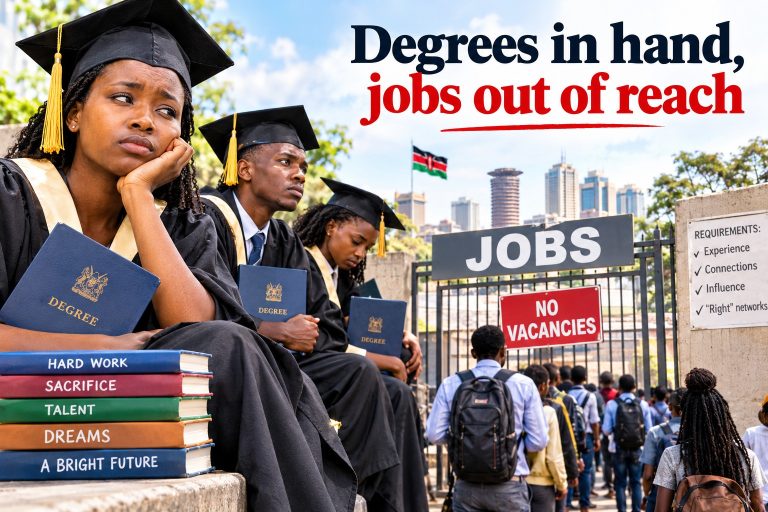
And through all of this, Kenya must confront the uncomfortable truth that overseas employment has become, for too many young people, the most plausible route to economic dignity. That should not be the answer. International mobility can be enriching and valuable, but a country that cannot offer its young people a reasonable shot at a decent life at home has a more fundamental problem than any diaspora policy can solve. Investment in education, vocational training, manufacturing, agriculture and technology remains essential — not as background noise, but as the central work of building an economy that retains the people it produces.
Honouring Kenyans abroad should not come at the expense of honouring those who serve within the country. Teachers, nurses, farmers, entrepreneurs and public servants are equally deserving of recognition. The point of Mashujaa Day is not to rank sacrifices but to acknowledge that service takes many forms — and that a nation grows stronger when it sees and values all of them.
As the celebrations unfold this year, Kenya should consider giving diaspora recognition a more concrete shape: transparent, merit-based acknowledgement of professional achievement, community development and responsible investment. Symbolic awards may stir pride, but what Kenyans abroad need most is effective protection, institutions that respond when it matters, and investment frameworks that actually work.
The heroes of independence sacrificed for freedom, dignity and a better future. The Kenyans working abroad today are pursuing many of those same things — often while propping up the families and communities they left behind. Their contribution deserves recognition. Their rights deserve protection. Their expertise deserves a genuine hearing.
On 20 October 2026, as the flags are raised and the speeches are delivered, the real test will not be what is said in the stadium. It will be whether the country turns those words into action. If Kenyans abroad continue to sacrifice for their homeland, the least their homeland can do is show up for them in return.
Mashujaa Day should not leave that question unanswered.
Similar Posts by The Mt Kenya Times:
- The triple squeeze: how EPRA’s fuel price hike is reshaping the survival equation for the common mwananchi
- Zelenskyy accuses Trump of rewarding Putin as Pope pleads for peace from a hospital bed
- My Mother Tongue — The Most Sacred Voice Of My Heart
- General conditions for the development of preschool-age children
- The Poet’s Silence, The World’s Noise: Who Needs Literature Today?
About the Author