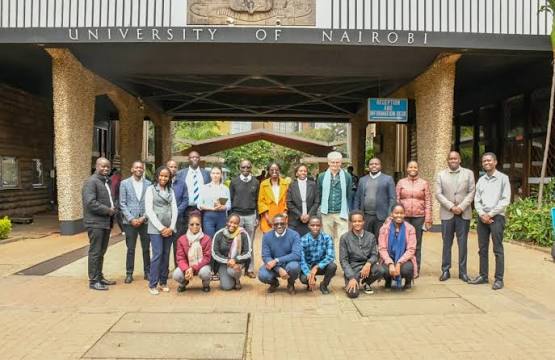
Those who underwent the training with the trainers

By MKT Reporter
The Kenya Plant Health Inspectorate Service (KEPHIS), in collaboration with Egerton University, has trained 35 students from the university on food safety and aflatoxin management in a move aimed at reducing the rising burden of food-borne diseases and helping in promoting public health.
The training, which was conducted through the ‘Food Safety 4 Africa initiative’, also focused on fair trade practices towards ensuring preservation of food quality from production, handling, processing, preparation, and marketing in order to prevent contamination.
Food Safety 4 Africa initiative Principal Investigator Prof. George Owuor said unsafe food has had devastating effects on the economy and businesses and emphasised the need to invest in a system that could ensure the safety of food from the farms to the table.
Prof. Owuor expressed optimism that the trained students will help in boosting farmers’ and traders’ safety practices to the required standards and also ensure the safety of consumers.
He explained that the two-day training was aimed at enhancing students’ knowledge of mycotoxin detection, mycotoxins (harmful compounds produced by certain types of fungi that contaminate food products), laboratory safety, and innovative solutions to food contamination.
The principal investigator noted that simple food safety training for informal vendors could limit the spread of SARS, avian influenza, tuberculosis, and pathogens such as salmonella, adding that they have been empowering and encouraging farmers to apply Good Agricultural Practices (GAP), including food safety practices, as it would enable them to tap into more lucrative markets.
While emphasising the need for producing safe foods that benefit both local consumers and international markets, Prof. Owuor underscored the project’s significance in combating aflatoxin contamination, which he termed as a persistent threat to food safety in Africa, and argued that ensuring food safety was not only crucial for public health but also for enhancing Africa’s competitiveness in the global food trade.
Prof. Owour indicated that the multifaceted challenges facing food safety and security in the country ranged from foodborne illnesses to potential risks associated with agricultural practices and poor food processing methods.
He emphasised on the need to implement rigorous inspection protocols at every stage of the food production and distribution process as one way of achieving food safety in the country.
“By conducting thorough inspections and audits, authorities can identify potential hazards and take immediate action to mitigate risks,” stated Prof. Owuor.
He was happy that the ‘Food Safety 4 Africa initiative’ places a strong emphasis on enhancing public awareness and education regarding food safety practices and regulations.
Through targeted campaigns and outreach efforts, Prof. Owour said citizens could be empowered to make informed choices about the foods they consume and take proactive measures to protect themselves and their families from foodborne illnesses.
Similar Posts by The Mt Kenya Times:
- Diaspora Times Global Aug 29 – Sep 5, 2026
- When soldiers turn on the junta they helped create
- Educational empowerment: A non-negotiable investment in Kenya’s future
- What aging parents want their adult children to understand
- Zimbabwe to roll out emotional learning programme to all 72 districts
About the Author