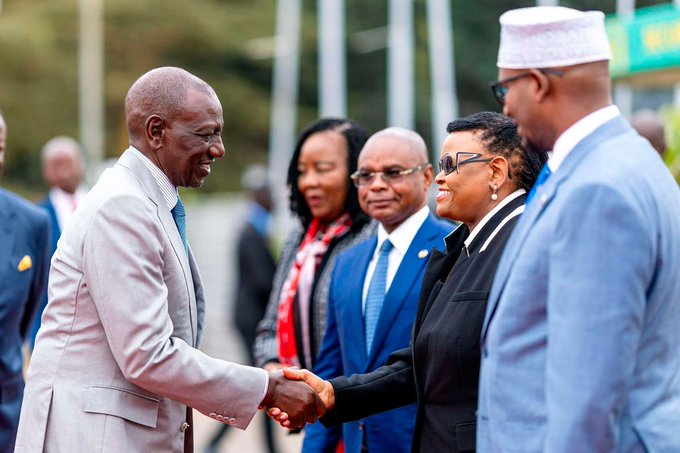
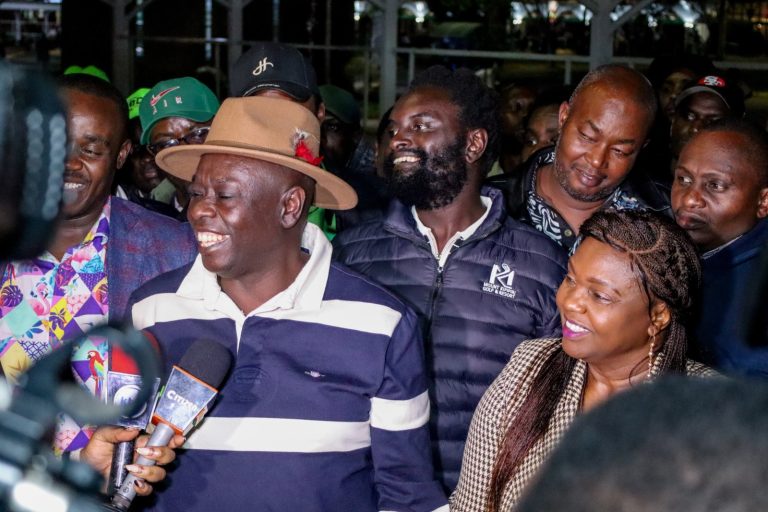
President William Ruto and Raila Odinga signing pact

By: James Bwire Kilonzo
Worth Noting:
- “Our collective goal is to adjust equitable and prosperous Kenya for all of us. We move forward with a shared commitment that is not only doing the right thing for our nation, but also to ensure they are done right. We, the leaders of UDA, Kenya Kwanza, and ODM, commit to it. We will raise and manage national resources, differences and embrace a higher vision of the Kenya we all deserve,” President Ruto stated
- The agreement, stemming from consultations and negotiations led by former Nigerian President Olusegun Obasanjo after the disputed 2022 General Election, also aims to protect and promote the rule of law, uphold constitutionalism, exercise the right to peaceful assembly, conduct an immediate audit of the national debt, end corruption, stop the wastage of public resources, and protect devolution as provided by the 2010 Constitution.
The political landscape of Kenya has always been a dynamic and often unpredictable arena. The recent signing of a Memorandum of Understanding (MOU) between President William Ruto’s United Democratic Alliance (UDA) and Raila Odinga’s Orange Democratic Movement (ODM) on March 7, 2025, marks a potentially transformative moment in the nation’s history. This agreement, unveiled at the Kenyatta International Convention Centre (KICC) in Nairobi, has sent ripples throughout the political sphere, eliciting both praise and criticism. While proponents tout it as a step towards national unity and the resolution of pressing socio-economic issues, skeptics question its true motives and potential consequences.
At the heart of the MOU is a 10-point plan that addresses critical areas such as the implementation of the National Dialogue Committee (NADCO) report, tackling the high cost of living, and resolving youth unemployment. Both Ruto and Odinga have emphasized the need to move beyond political differences and embrace a shared vision for a more equitable and prosperous Kenya. They have pledged to foster inclusivity in governance, protect devolution, uphold integrity in leadership, and safeguard the right to peaceful assembly. Furthermore, the agreement includes provisions for compensating victims of past protests and ensuring the smooth flow of funds to political parties. The MOU also aims to enhance inclusivity among Kenyans regardless of their religion and political affiliations, improve opportunities for all Kenyans (especially in public appointments), promote leadership and integrity by curbing opulence, and provide a legal framework to address conflicts of interest within government institutions.
“Our collective goal is to adjust equitable and prosperous Kenya for all of us. We move forward with a shared commitment that is not only doing the right thing for our nation, but also to ensure they are done right. We, the leaders of UDA, Kenya Kwanza, and ODM, commit to it. We will raise and manage national resources, differences and embrace a higher vision of the Kenya we all deserve,” President Ruto stated
The agreement, stemming from consultations and negotiations led by former Nigerian President Olusegun Obasanjo after the disputed 2022 General Election, also aims to protect and promote the rule of law, uphold constitutionalism, exercise the right to peaceful assembly, conduct an immediate audit of the national debt, end corruption, stop the wastage of public resources, and protect devolution as provided by the 2010 Constitution. To ensure seamless collaboration, the two leaders agreed to hold frequent consultations on pressing issues of interest to Kenyans and engage necessary expertise to address critical matters of national interest. The MOU could also pave the way for the return of the prime minister’s position, as the full implementation of the NADCO report proposes the creation of this powerful office.
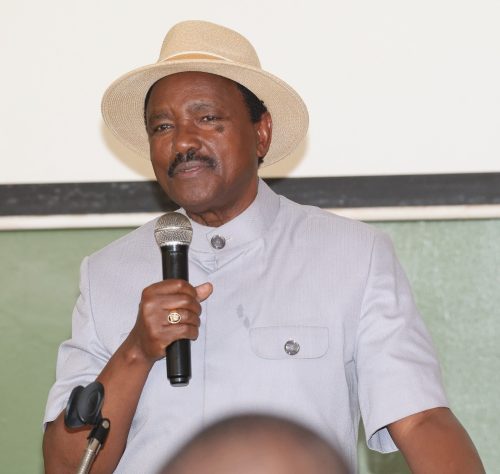
However, this newfound unity has not been universally welcomed. Wiper leader Kalonzo Musyoka has publicly criticized the agreement, calling it a “betrayal to Kenyans”. Musyoka, along with other opposition figures like Eugene Wamalwa, argues that the MOU disregards the sacrifices made by Kenyans who have protested against the high cost of living and governance issues in recent years. This sentiment is echoed by allies of Kalonzo, who caution ODM against setting conditions for his potential 2027 presidential bid, emphasizing his past support for Raila and the need for respect within the Azimio coalition.
Adding fuel to the fire, Kisumu Governor Peter Anyang’ Nyong’o released a statement on March 9, 2025, addressing Musyoka’s criticisms. Nyong’o suggests that Musyoka’s discontent stems from Azimio’s exclusion from the agreement and questions his assertion that Raila betrayed the coalition. He points out that Musyoka himself has been engaging with various political figures, including Rigathi Gachagua, without consulting others, and urges him to review the content of the MOU before condemning it. Nyong’o concludes by suggesting that there is still an opportunity for Musyoka to engage in dialogue with the leaders of ODM and UDA to work towards the nation’s future.
The rift within the opposition highlights a fundamental tension at the heart of the Ruto-Raila accord. While the MOU aims to foster national unity and address pressing issues, it also risks alienating those who feel excluded or betrayed by the agreement. The question remains: can this newfound unity truly serve the interests of all Kenyans, or will it further exacerbate existing divisions and grievances?
The News Breaks: A Nation Divided?
The signing of the MOU between President Ruto and Raila Odinga dominated headlines throughout the week. The Daily Nation ran a front-page story titled “Ruto, Raila: This is why we signed a political ” pact,” detailing the 10-point agreement and its potential impact on the country. Kenyans.co.ke published an article highlighting the key agreements reached, including the implementation of the NADCO report and addressing youth unemployment. Citizen Digital focused on Raila’s clarification that the pact is not a coalition, emphasizing its aim to ease political tensions and reconcile the population.
However, the news was not uniformly positive. The Star reported on Raila’s attempts to downplay the significance of the agreement, while also highlighting the concerns raised by Kalonzo Musyoka and other opposition figures. Busia Senator Okiya Omtatah dismissed the MOU, terming it a stumbling block to Kenya’s prosperity and vowed to take Ruto and Raila on “mundu khumudu” (head-on). Social media platforms were flooded with commentary, ranging from cautious optimism to outright condemnation. Many Kenyans expressed skepticism about the true motives behind the MOU, questioning whether it was a genuine attempt to address the country’s challenges or simply a power grab by the two dominant political forces.
“This MOU is nothing but a betrayal of the people,” tweeted one user. “Ruto and Raila are only looking out for themselves, not for the ordinary Kenyan who is struggling to make ends meet.”
Others were more optimistic, arguing that the agreement could provide a much-needed opportunity for political stability and progress.
“It’s time to put aside our differences and work together for the good of the country,” tweeted another user. “This MOU may not be perfect, but it’s a step in the right direction.”
The divergent reactions reflect the deep divisions that continue to plague Kenyan society. While the Ruto-Raila accord may represent a significant step towards political unity, it also underscores the challenges of building a truly inclusive and equitable nation.
Analyzing the Motives: A Shift in Political Strategy?
The decision by Ruto and Raila to enter into this agreement has sparked intense speculation about their underlying motives. Some analysts suggest that Ruto, facing mounting pressure to deliver on his campaign promises, sees the MOU as a way to broaden his support base and gain political legitimacy.By working with Raila, he can potentially neutralize a powerful opposition force and create a more stable political environment for implementing his agenda.
Others argue that Raila, having spent years in the opposition, may see this as an opportunity to finally achieve some of his long-held goals. By collaborating with the government, he can influence policy decisions and ensure that the interests of his supporters are taken into account. Furthermore, the MOU could potentially pave the way for a future political alliance, positioning Raila or his allies for a stronger showing in the 2027 elections.
However, there are also concerns that the agreement could be driven by more self-serving motives. Some fear that Ruto and Raila are primarily concerned with consolidating their own power and wealth, and that the MOU is simply a means to that end. Others worry that the agreement could undermine democratic accountability by co-opting the opposition and stifling dissent.
The truth likely lies somewhere in between. Both Ruto and Raila undoubtedly have their own political calculations in mind, but they may also genuinely believe that the MOU can serve the best interests of the country. The challenge will be to ensure that the agreement is implemented in a transparent and accountable manner, and that it truly benefits all Kenyans, not just a select few.
The Road Ahead: Challenges and Opportunities
The success of the Ruto-Raila accord will depend on several factors. First and foremost, it will require a genuine commitment from both leaders to work together in good faith and to prioritize the interests of the country over their own political ambitions. This will involve compromise, flexibility, and a willingness to listen to the concerns of all stakeholders.
Secondly, the implementation of the MOU must be transparent and accountable
The public must be kept informed of the progress being made, and there must be mechanisms in place to ensure that the agreement is not used to enrich a select few or to undermine democratic principles. Civil society organizations and other independent actors must play a role in monitoring the implementation process and holding the government accountable.
Thirdly, it is crucial to address the concerns of those who feel excluded or betrayed by the agreement3. This will require reaching out to Kalonzo Musyoka and other opposition figures, and finding ways to incorporate their ideas and perspectives into the process. It will also involve addressing the grievances of ordinary Kenyans who feel that their voices are not being heard.
The Ruto-Raila accord presents both significant challenges and opportunities for Kenya. If implemented effectively, it could lead to greater political stability, economic progress, and social cohesion. However, if it is driven by self-serving motives or fails to address the concerns of all stakeholders, it could further exacerbate existing divisions and undermine the country’s democratic institutions. The future of Kenya depends on the choices that its leaders make in the coming months and years. Only time will tell whether this new chapter in Kenyan politics will be a story of unity and progress, or one of missed opportunities and continued division.
James Bwire Kilonzo is a Media and Communication Practitioner.
Similar Posts by The Mt Kenya Times:
- Mt Kenya Times ePAPER August 28, 2026
- Kenya is losing fifteen mothers a day — and the numbers are getting worse
- Consolata International University opens new academic year with call to humanise artificial intelligence
- Written in gold, wielded in iron: Katiba@16 and the realities of power
- Mang’eni challenges universities to put entrepreneurship at the heart of learning
About the Author