Consolata International University opens new academic year with call to humanise artificial intelligence
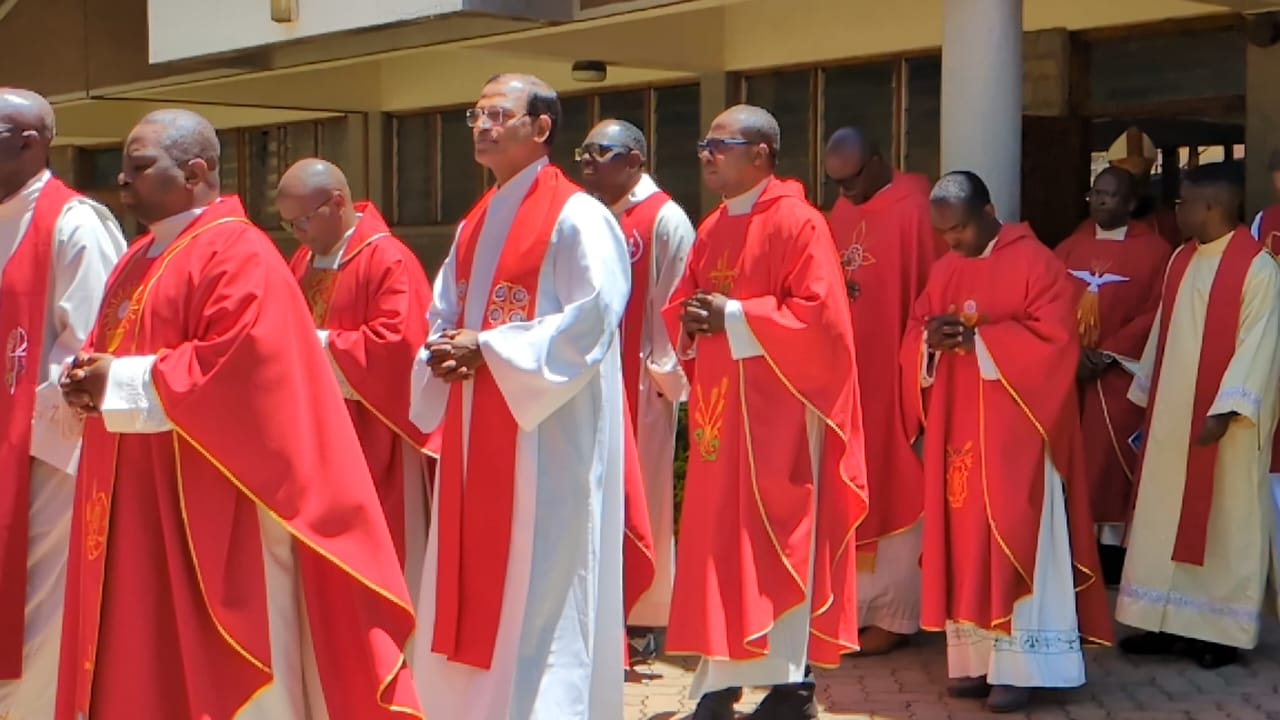
Bishop Obed Mosongo told students and staff that Catholic institutions have a prophetic duty to ensure technology serves human dignity, not erodes it
By Mukama Phillip Kahigiriza
Consolata International University yesterday opened its new academic year with a Solemn Holy Mass at its Nairobi campus, with the presiding bishop using the occasion to issue a pointed challenge to the university community: in an age of artificial intelligence, the defence of human dignity is not optional — it is a vocation.
The Eucharistic celebration, held at the university’s Edith Einstein Main Hall, brought together students, academic and administrative staff, and invited guests in an atmosphere that blended spiritual solemnity with the energy of a new academic season beginning. Presiding over the Mass was Bishop Obed Mosongo, Auxiliary Bishop of the Catholic Archdiocese of Nairobi, whose homily set a tone that went well beyond the ceremonial.
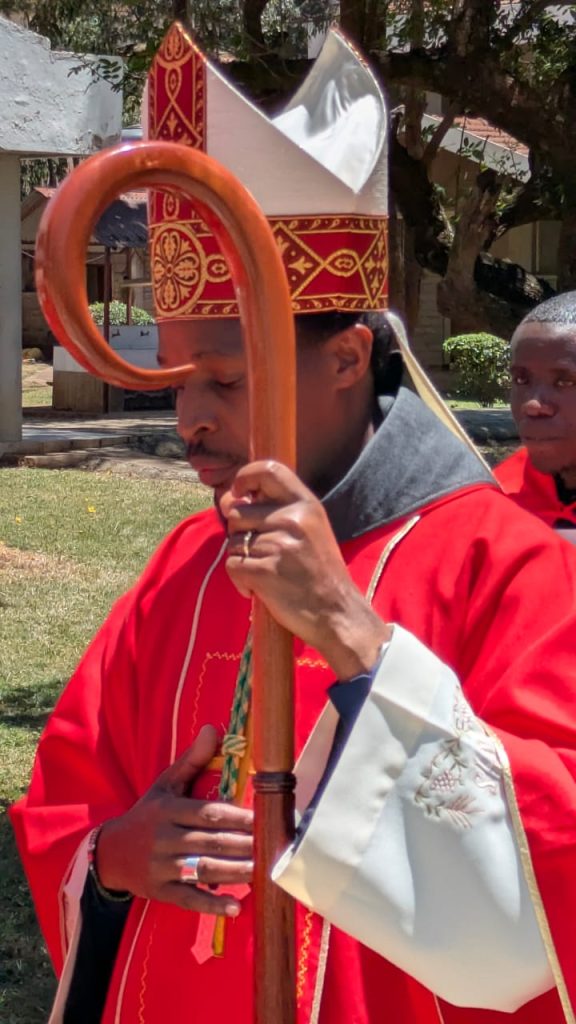 Drawing on Pope Francis’s consistent teaching on technology and the human person, Mosongo challenged the university community to resist the temptation to treat artificial intelligence as either a threat to be feared or a tool to be adopted uncritically. The Catholic institution, he argued, had a higher calling — to be the conscience of society at precisely the moment when that conscience is most needed.
“AI must not replace the human person, but must serve the human person,” he said. “You are in a Catholic university, and therefore you are called to be the conscience of society. Use AI to build, not to destroy — to humanise, not to dehumanise — to promote dignity, not to erase it.”
It was a message with urgency behind it. As automation, data analytics and algorithmic decision-making reshape industries, professions and daily life at a pace that has outrun most regulatory and ethical frameworks, Mosongo argued that institutions like Consolata carry a prophetic responsibility — to form graduates who are not merely technically proficient but morally grounded, ethically alert and anchored in values that no algorithm can replicate.
He reserved particular encouragement for the university’s leadership, commending the administration for the strides the institution has made and urging continued investment in education that develops the whole person — mind, heart and hands.
“The growth of this university is not just for itself, but for the Church and for society,” he said. “Keep your eyes fixed on the common good. Every block you lay, every course you introduce, every student you form is a service to humanity.”
Among the distinguished guests was Rev. Fr. Marino Colombo, a member of the Regional Council for the Kenya-Uganda Region of the Consolata Missionaries, who represented Regional Superior Rev. Fr. Zacharie Kariuki. Colombo conveyed goodwill and blessings from the Regional Superior and reaffirmed the Consolata Missionaries’ commitment to the university as a central expression of their evangelising mission through education.
Acting Vice Chancellor Rev. Fr. Dr. Peter Kanyiri, who welcomed both new and continuing students alongside his management team, thanked Mosongo for his presence and the clarity of his message. Kanyiri pledged that the university would continue to weave Catholic Social Teaching, academic rigour and innovation into the fabric of its programmes — not as competing priorities but as complementary ones, consistent with the Church’s vision of education as transformation rather than mere instruction.
He called on students to hold fast to three pillars throughout the year ahead: discipline, hard work and faith.
The ceremony marked more than the start of lectures. It was, in the language of the institution itself, a spiritual reawakening — a moment to reaffirm what Consolata International University understands itself to be: a place where faith and reason are not in tension, where tradition and innovation speak to each other, and where the purpose of education is ultimately the transformation of the world rather than simply the advancement of the individual.
The mandate for the year ahead was stated plainly: to form professionals who will wield knowledge — including the formidable and fast-expanding tools of artificial intelligence — not as instruments of dehumanisation, but as means of honouring the dignity that, in the university’s tradition, is not conferred by technology or the state, but by God.
Similar Posts by The Mt Kenya Times:
- Mt Kenya Times ePAPER October 12, 2026
- Gachagua’s party storms Kikuyu from afar as 2027 countdown begins
- Counties caught: The KSh100B payroll scandal Kenya can no longer hide
- CS Ogamba: tree planting could generate carbon credit millions to fund education
- Farouk Kibet calls for unity and development as leaders rally behind Ruto’s 2027 re-election bid
About the Author