CS Ogamba: tree planting could generate carbon credit millions to fund education
 The Mt Kenya Times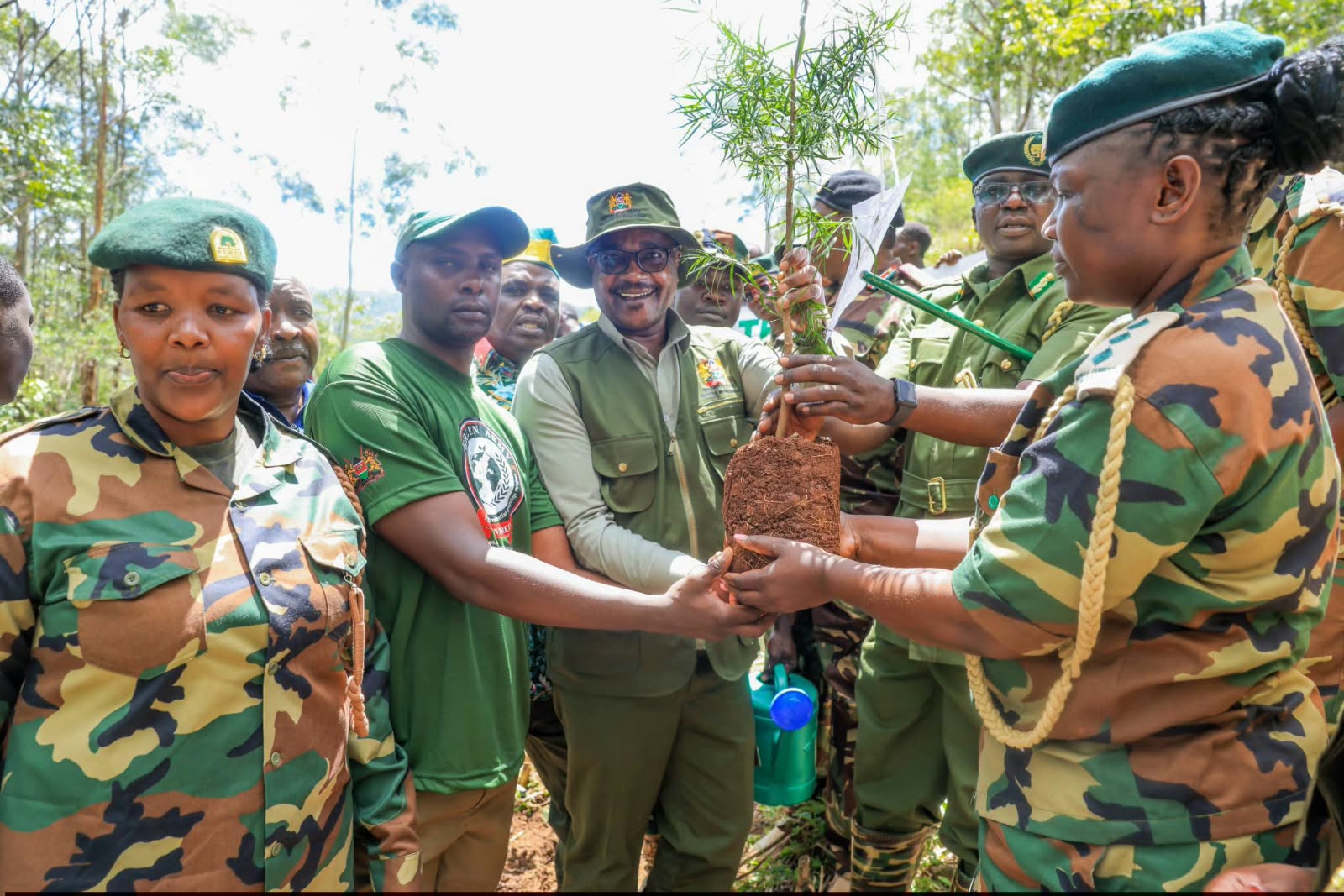
Education Cabinet Secretary Julius Migos Ogamba (C)
Kenya’s 15-billion-tree campaign could earn revenue from international carbon markets, with proceeds channelled back into education and health
By Elizabeth Angira
Education Cabinet Secretary Julius Migos Ogamba says Kenya’s ambitious tree-growing campaign could earn significant revenue from carbon credits in international markets, providing additional resources for education, healthcare and other government priorities.
Ogamba made the remarks during a tree-planting exercise at Nyangweta Forest in Kisii County, as the country marked the 2026 Mazingira Day celebrations under the theme “Panda Miti, Boresha Mazingira.” The exercise formed part of the government’s campaign to plant 15 billion trees by 2032 — an initiative aimed at increasing tree cover, restoring degraded landscapes and strengthening Kenya’s response to climate change.
He commended Kisii residents for achieving 26.4 per cent tree cover and urged them to push towards the national target of 30 per cent. “We are almost at 26.4. We only have 4.4 per cent remaining in order to figure out what we are going to do in 2032,” he said.
On carbon credits, Ogamba was direct about the government’s intentions. “What we are doing about the 15 billion trees is that we will then be able to sell what we call carbon credit in the international markets, so that we have enough resources which will then factor back into the education system and our social system, including health,” he said. “So that we have enough money to ensure that we get the services that we need from the government. It is something that we are doing.”
Carbon credits are issued to projects that demonstrate measurable reductions in greenhouse gas emissions or verifiable removal of carbon dioxide from the atmosphere. In forestry, activities such as forest restoration and large-scale tree growing may qualify — but only if they meet recognised standards for measurement, monitoring and independent verification. Planting trees does not automatically generate credits. Projects must prove their climate benefits and satisfy the requirements of the relevant carbon market before credits are issued and can be sold. Revenue ultimately depends on the number of verified credits, prevailing market prices and the cost of establishing and maintaining the projects over time.
Ogamba acknowledged the Ministry of Education’s direct role in the campaign, noting its commitment to engaging learners from primary schools through to tertiary institutions in environmental conservation. He praised Kisii University, Kisii National Polytechnic and other education stakeholders for donating trees and taking an active lead in the day’s exercise. The involvement of schools and learning institutions, he said, was essential in building a lasting culture of environmental responsibility among young people — ensuring that tree growing continues well beyond national celebrations.
Kisii Forest Conservator William Ojijo noted that Nyangweta Forest continues to provide a habitat for wildlife while offering opportunities for recreation, bird watching and eco-tourism. In a county where many households depend on agriculture, forests play a vital role in protecting water sources, reducing soil erosion and supporting farming communities. Their broader benefits, however, depend on planting suitable species in appropriate locations and ensuring that seedlings actually survive.
That last point was where Ogamba reserved some of his sharpest words. He warned that conservation gains would be quickly undermined if seedlings planted during campaigns were uprooted or destroyed afterwards — a pattern he made clear he was aware of. “I want to urge each one of us that today is not just one day. It is important to continue planting trees,” he said.
He called on communities to take direct responsibility for protecting what had been planted. “We should not allow people to take the seedlings from where they have been planted,” he said. “Because those are people who are going to affect the job that we have done. We know what they are doing. They are ruining it.” His remedy was collective ownership. “But if we allow everyone to participate, no one will be able to take the seedlings from where they have been planted,” he added.
The Cabinet Secretary’s message, delivered beneath the canopy of one of Kisii County’s most significant forest reserves, was ultimately a simple one: tree planting is not a single day’s work. The seedlings in the ground on Mazingira Day will only deliver their promised benefits — environmental, economic or otherwise — if the communities around them choose to protect and nurture them. Kenya’s carbon credit ambitions and its 30 per cent tree cover target are both within reach, but they will be built not by government programmes alone, but by the daily decisions of millions of Kenyans who choose to treat the trees around them as an asset worth keeping.
Similar Posts by The Mt Kenya Times:
- Mt Kenya Times ePAPER October 13, 2026
- Ruto commissions Uasin Gishu dam to boost year-round farming
- Ruto calls Kenyatta a conman as Kenya’s 2027 battle begins in earnest
- Electricity access must lead to local opportunity
- God had to break your marriage to save your mother’s house
About the Author