
Before the water rises: Kenya braces for another punishing rainy season
With forecasters predicting above-average October-December rains, the country is mobilising — but for families who lost everything last time, preparation is more than a government directive
By Oduor Rosequillet Nabwire
Anne Wanjiku expected her husband to come home on the evening of 6 March 2026. Muthee had left for work that morning as usual, promising to return and spend time with the family. He never did.
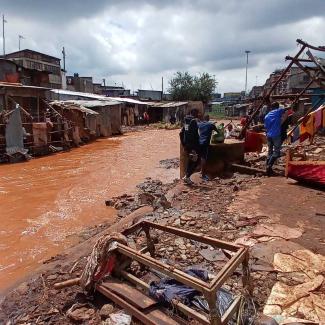
As darkness fell over Mathare and the rain intensified, Wanjiku waited. On his way home, Muthee had stopped to help neighbours struggling to cross between Mathare North and Kiamaiko as floodwaters rose rapidly. Using a cart, he ferried people to safety, some paying him KSh20 for the crossing. Then the water took him. His body was never found. Wanjiku, who was pregnant with their third child at the time, is now raising her children alone. The baby will grow up without ever knowing its father. “Floods came and took away my husband,” she said.
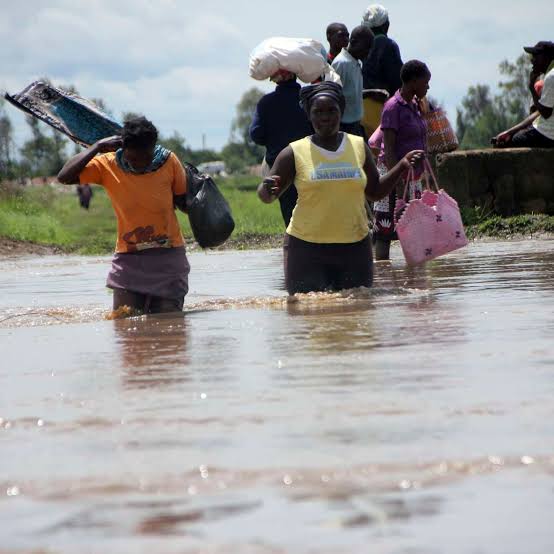
A few kilometres away, other Nairobi residents were confronting the same rising waters. In Baba Dogo, Florence Owilo and her neighbours climbed onto rooftops as the Mathare River burst its banks. In Nairobi’s city centre, car accessories seller Frederick Wasonga watched helplessly as floodwater poured into shops, sweeping away vehicles and destroying stock. Bus driver John Mwai, caught in gridlock and rerouted onto Grogan Road, found his vehicle overwhelmed by water with 33 passengers aboard. He and his passengers spent the night helping others to safety, prioritising women and children.
By 7 March, Nairobi Regional Police Commander George Seda reported ten confirmed deaths in the city — eight swept away by floodwaters, two electrocuted — and at least 71 vehicles stranded across flooded roads. By 3 May, the toll had spread across the country: 27 counties affected, 122 lives lost and 42,259 people displaced, with roads, bridges and water systems damaged across multiple regions.
The water receded. For Wanjiku and her children, that night did not end when it did.
Now, as Kenya moves into another October-December rainy season, the warning has arrived before the rain. The Kenya Meteorological Department forecasts above-average rainfall across much of the country during the coming months, with prolonged wet spells and isolated storms expected in several areas. Rainfall onset will vary by region, with many areas expected to receive rains between the second and fourth weeks of October. All 47 counties have been directed to map flood-prone areas, identify evacuation grounds and strengthen their response frameworks before the season begins.
Acting Director of Meteorological Services Edward Maina Muriuki offered an important clarification during a joint government briefing on 10 September. “El Niño is not rainfall itself, but a climate phenomenon associated with unusually warm sea surface temperatures in the central and eastern Pacific Ocean that influence weather patterns globally,” he said. The forecast does not mean uniform heavy rain everywhere — but it does mean that communities, authorities and households must prepare as if it might arrive at their door.
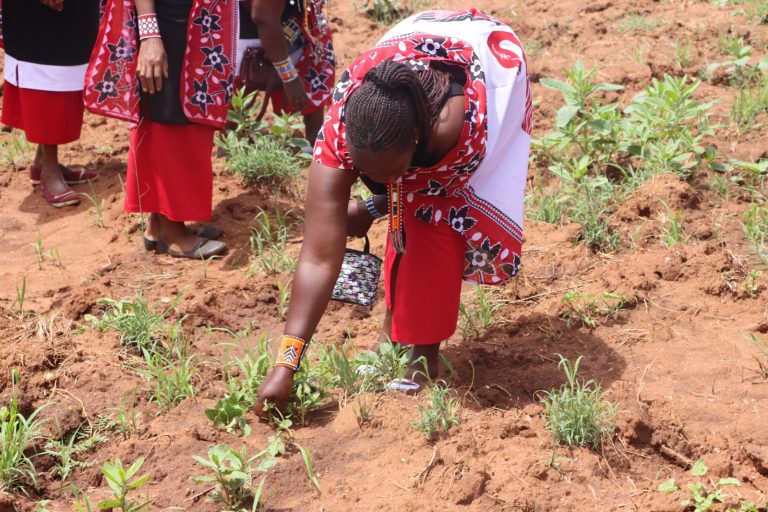
For farmers, the forecast must translate into decisions on the ground, often under considerable uncertainty. In Oyani, Migori County, maize farmer Paul Otieno knows the cost of a forecast that does not materialise. In late August, farmers in his area prepared their fields and planted after meteorological officials predicted El Niño conditions — only for the dry spell to continue. “We were told there would be adequate rains within the past one week, and many of us took advantage of the prediction by meteorological officials to prepare and plant our farms, only for the dry spell to continue,” he told the Kenya News Agency. A forecast shapes when farmers plant, what they grow and how much they invest. When it proves wrong, the losses are theirs to absorb.
The government has moved to mitigate those risks ahead of this season. Agriculture Principal Secretary Dr Paul Kipronoh flagged off 99,000 metric tonnes of subsidised fertiliser at the Port of Mombasa on 8 September for distribution to small-scale farmers, with a 50-kilogramme bag priced at KSh2,000 under the scheme. Kenya’s 2026-2030 National Agri-Food Systems Investment Plan includes measures for climate-smart inputs, early-warning systems, water harvesting and risk-financing mechanisms at county level.
Livestock keepers face their own set of risks. Some KSh2.1 billion has been allocated under the National Livestock Sector El Niño Preparedness and Anticipatory Action Plan, initially targeting 24 counties, covering vaccines, veterinary medicines, emergency kits, evacuation support and feed reserves. Agriculture and Livestock Development Cabinet Secretary Mutahi Kagwe was direct in his warning to pastoralists. “If we keep goats in low-lying areas, that means the rain will sweep away the goats, cows and whatever is in its path,” he said, urging herders to move animals away from flood-prone terrain before conditions deteriorate.
The health sector has also activated contingency plans. The Ministry of Health’s El Niño Contingency Plan, covering all 47 counties, addresses disease surveillance, safe water provision, sanitation, laboratory capacity and continuity of essential health services. Public Health Principal Secretary Mary Muthoni Muriuki warned that flooding inevitably raises the risk of waterborne diseases. “We need to check on drainages, check on reliable water supplies, sanitation, particularly in areas where facilities are limited,” she said. Between 8 and 11 September, the Kenya Defence Forces health security team and World Health Organization experts conducted a joint training exercise based on a flood scenario involving displaced families and a cholera outbreak, testing how emergency medical teams would coordinate across national and county levels under field conditions.
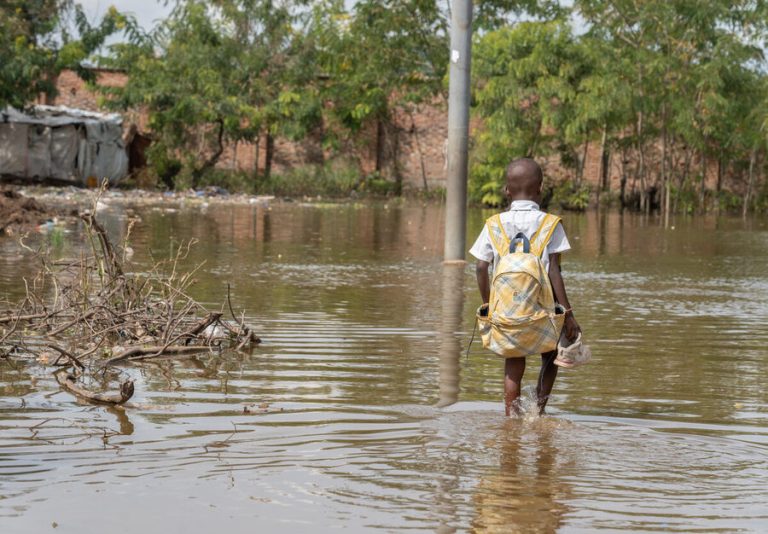
Education presents a further vulnerability. The October-December season coincides directly with national examinations, placing enormous pressure on schools in flood-prone areas to remain accessible and safe. Basic Education Principal Secretary John Ololtuaa said on 10 September that contingency measures were in place, including mapping high-risk schools, strengthening feeding programmes and pre-positioning examination materials. Where schools are considered unsafe, learners may be moved to alternative venues. Helicopters and drones are being considered for delivering materials to areas that become cut off. “The national examinations will proceed as scheduled despite the predicted El Niño rains,” Ololtuaa assured parents and candidates. That assurance, however, rests on conditions that flooding can rapidly overturn. At Imani Primary School in Tana River County, pupils were left learning under trees after earlier floods destroyed their classrooms. For children in vulnerable areas, preparedness ultimately comes down to something very simple: having a safe place to sit when the rains arrive.
Road access is equally critical. The Narok-Mai Mahiu Road was temporarily closed during the March floods after silt accumulated near Kedong Ranch. Transport operators have called for improved drainage along the corridor before the next season begins. Andrew Mwangi, a director at Narokline Services and spokesman for transport operators in the region, urged the Kenya National Highways Authority to deploy engineers to vulnerable sections now. “We should not wait for the rains to come and block the road,” he said. Keeping such routes open is not merely a logistics matter — they connect people to hospitals, children to schools and emergency teams to communities that cannot wait.
In Budalangi, Busia County, where flooding along the River Nzoia is a recurring reality, preparations have focused on infrastructure designed to redirect and control water rather than simply respond to it. Secondary dykes along the river have protected and rehabilitated farmland previously submerged for extended periods. Riparian restoration, including bamboo planting to strengthen riverbanks and reduce erosion, has been undertaken alongside dredging of waterways and rehabilitation of flood-control structures. For farmer Kevin Okumu, the changes have opened land once considered uncultivable. “When they said El Niño was coming, I knew this is sandy soil, meaning the water does not stay for long, so I planted maize and beans,” he said.
In Nairobi, the challenge is different in character but equally serious. Dense settlement, overwhelmed drainage infrastructure and the pace at which heavy rain can transform streets into rivers make the capital particularly vulnerable. Governor Johnson Sakaja said the city was not waiting. “We cannot wait for the rains to come and then start responding. We must prepare in advance, identify the risks, clear our drainage systems and make sure our teams are ready to respond when called upon,” he said. Drainage channels are being cleared, widened and deepened. Additional earth-moving equipment has been deployed to chronically flooded areas. An Emergency Operations Centre at Charter Hall will coordinate the response when emergencies occur. Residents can reach emergency services on hotlines 1508 and 1199. Evacuation drop-off points and shelters have been identified for those who may need to move quickly.
The city’s preparedness framework was stress-tested through Operation Okoa Maisha, a two-day multi-agency simulation concluded on 2 October 2026, which took responders from first alert through communication, deployment, evacuation and rescue. Nairobi teams worked alongside national agencies and neighbouring counties — Kiambu, Machakos and Kajiado — under a “One County, One Plan, One Command” framework designed to ensure coordinated, rapid response when the real emergency arrives.
Principal Secretary for Broadcasting and Telecommunications Stephen Isaboke reduced the public message to its essentials: “Stay informed. Prepare early. Follow official advisories. Act when advised to do so.”
Government preparations can strengthen the collective response. They cannot eliminate every risk, reach every family or replace the individual decisions that will determine whether a community survives the season intact. The real test of Kenya’s preparedness will not come when the authorities hold a press conference. It will come when the rain does.
For Anne Wanjiku, raising three children in Mathare while carrying the absence of the man the water took, that test has never really ended.
Similar Posts by The Mt Kenya Times:
- After nearly 60 years in darkness, Nyabiendi awaits the light
- Veterans to petition Ruto over Samburu cattle killings
- The price of survival: Kenya’s cost-of-living crisis bites deeper
- From Kiharu to State House: Nyoro’s bold presidential gamble
- Nyoro turns on Ruto over Dangote deal, tea bonuses and broken promises
About the Author

 Brenda Holo