Chiefs’ Climate Day drives large-scale tree planting and indigenous conservation in Narok
 Brenda Holo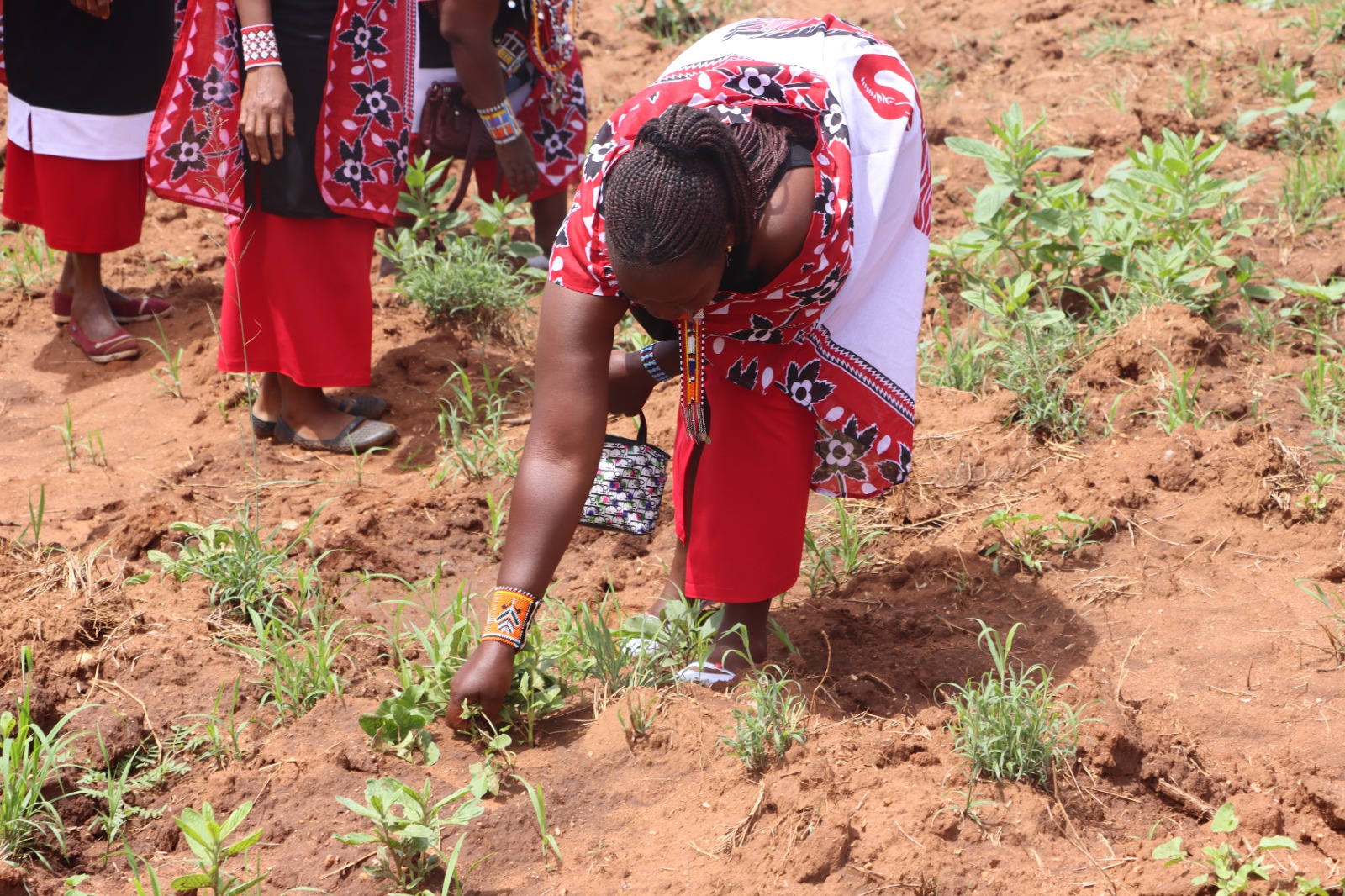
A community-led tree-planting initiative

A community-rooted programme blending government targets with Maasai ancestral knowledge is quietly transforming Narok County’s degraded landscapes, one Friday at a time
By Brenda Holo
A community-led tree-planting initiative anchored in indigenous knowledge and grassroots participation is taking root across Narok County as authorities intensify efforts to restore degraded landscapes and expand forest cover.
The “Chiefs’ Climate Day” programme has emerged as a key pillar of local climate action, with chiefs across all locations mobilising residents to plant trees on the first Friday of every month. Felix Aluko, Assistant Chief of Entasekera Sublocation in Narok County, said the targets are ambitious and deliberately structured to ensure no community is left behind.
“Every sub-county has a target. Narok South has a target of 150,000 trees every year,” Aluko said. “Every Friday of the first week of every month, we plant trees in all locations so that no area is left behind.”
The initiative forms part of a broader government strategy to increase tree cover and restore ecosystems under pressure from land degradation and a changing climate. County officials say Narok has committed to increasing its forest and tree cover by 30 per cent by 2032, in line with national climate commitments aimed at restoring forest landscapes by 2030.
Delivering on that ambition requires collaboration. The programme brings together national government agencies, county departments, community members, non-governmental organisations, and institutional partners such as Masai Mara University, which supplies seedlings and technical expertise.
“We get support from institutions like Masai Mara University, which provide different species of seedlings,” Aluko said. “The Ministry of Forestry and county conservation offices also assist in identifying the right species for different ecological zones.”
That attention to ecological specificity matters in a county as diverse as Narok, where landscapes range from forested highlands to semi-arid lowlands in the east. Restoration efforts are focused on degraded rangelands and previously forested areas that have lost tree cover over decades of human pressure and climatic stress.
Yet beyond formal conservation structures, what gives the programme its particular depth is its grounding in indigenous Maasai knowledge systems that have guided forest stewardship in the region for generations. Nowhere is this more evident than in the management of the Loita Forest, one of Narok’s most ecologically significant areas, which has remained relatively intact largely because of community protection and strict cultural norms against deforestation.
Aluko said traditional practices continue to play a critical role in how trees are managed at the community level. “We use a lot of traditional knowledge to plant trees in Imara,” he said. “The knowledge passed down from our ancestors is that you do not cut down a tree completely. You only prune it, and it continues to grow.”
Community custodians, including local forest guardians, help enforce customary rules that discourage destructive harvesting practices. The authority of traditional leadership remains central to how decisions are made on the ground.
“In this forest, there is no activity that can be done without the guidance of our traditional leadership,” Aluko said.
Non-governmental organisations are also playing an increasingly important supporting role, particularly in arid zones and areas at high risk of deforestation. Organisations such as the Mara Elephant Project are working alongside communities to monitor illegal logging and charcoal production, including through aerial surveillance.
“We have partners who help us identify areas that need protection and prevent destruction,” Aluko said.
Despite the progress, gaps remain. Enforcement is uneven, particularly in remote and dry regions where tree cutting for fuel and construction materials continues to pose a persistent challenge. Officials acknowledge that sustained gains will require stronger partnerships to support seedling supply, community education, and long-term monitoring.
For now, though, the rhythm of that first Friday of every month — chiefs gathering residents, seedlings going into the ground, ancestral wisdom guiding which tree goes where — offers a quiet but compelling model of what conservation looks like when a community truly owns it.
Similar Posts by Brenda Holo:
About the Author


 The Mt Kenya Times