The Mt Kenya Times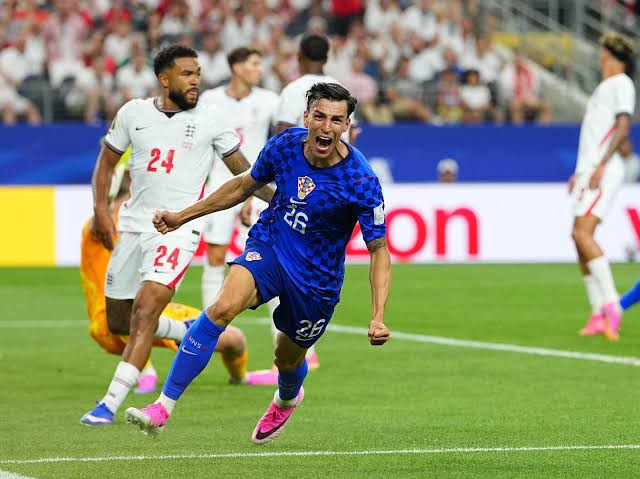
Kane’s brace and a Foden finish see England survive a relentless Croatian fightback to open their 2026 campaign with three points
By Norman Mwale
England opened their 2026 World Cup campaign with a pulsating 3-2 victory over Croatia at AT&T Stadium in Arlington, Texas, surviving a determined second-half fightback from the 2018 semi-finalists to claim all three points in Group L.
The match delivered drama from the first whistle. England took the lead through a retaken penalty from Harry Kane on 18 minutes, awarded after goalkeeper Dominik Livaković was judged to have come off his line during the initial spot kick. Croatia, however, refused to be rattled. Martin Baturina drew them level on 36 minutes with a superb strike from the edge of the penalty area that gave Jordan Pickford no chance.
England responded with purpose. Kane restored their advantage on 42 minutes, rising to meet Declan Rice’s corner with a towering header that underlined why he remains one of the most reliable finishers in international football. Croatia equalised again before the interval through a clinical finish that left Tuchel’s side with work still to do at the break.
The winner arrived midway through the second half. Jude Bellingham drove with intent into the Croatian penalty area and squared the ball for Phil Foden, who tapped home on 67 minutes to settle a contest that had swung repeatedly between the two sides. From there, England managed the game with the composure of a side that has learned, sometimes the hard way, how to see matches out on the biggest stage.
Kane was reflective but clearly satisfied when he spoke to ITV after the final whistle.
“We knew Croatia would test us and they did, but we showed character when it mattered most,” the captain said. “To score twice in a World Cup opener is special, but the three points are what matters.”
England manager Thomas Tuchel was equally measured in his assessment, praising his players’ ability to adapt when Croatia shifted their shape during the second half.
“The players executed the plan and adapted when Croatia changed their shape,” Tuchel said. “Jude was outstanding, Harry led from the front, and the whole team defended together.”
Bellingham’s performance was indeed the standout feature of the evening. The Real Madrid midfielder covered ground relentlessly, broke up Croatian build-up play, and provided the decisive contribution that led to Foden’s winner. If England are to go deep into this tournament, his form will be central to everything Tuchel wants to achieve.
Croatia coach Zlatko Dalić acknowledged that defensive lapses had cost his side dearly, though he remained measured rather than despondent.
“We created chances and matched England for long periods,” Dalić said. “Baturina’s goal showed our quality, but we must be better without the ball. The group is still open.”
He is not wrong. With Portugal and DR Congo having played out a 1-1 draw earlier in the day, Group L is wide open after the first round of fixtures. England sit top on goal difference, but the margins are tight and the competition is fierce. Croatia, with their experience of navigating tournament football under pressure, will not be written off on the basis of one result.
For Tuchel, the challenge now is sustaining the level. England have the talent to beat anyone in this tournament, as they demonstrated in flashes against Croatia, but moments of vulnerability — twice allowing opponents to equalise — will need to be addressed before they face stiffer opposition in the knockout rounds.
The co-hosts — the United States, Mexico and Canada — have assembled a World Cup of scale and ambition. AT&T Stadium provided the theatre. England, for one night at least, provided the drama.
Three points secured. The real test is still to come.
Similar Posts by The Mt Kenya Times:
- Mt Kenya Times ePAPER September 17, 2026
- Ruto and Uhuru: The rupture at the heart of Kenya’s 2027 election
- Gakoromone traders and rights group demand closure of sewage discharge
- Retirement is not disenfranchisement: Reclaiming the constitutional rights of Kenya’s former presidents
- Kenya’s 2027 election: Can technology strengthen democracy or manipulate voters?
About the Author