Africa at the crossroads: Breaking the cycle of dependency and building a future of productive sovereignty
 The Mt Kenya Times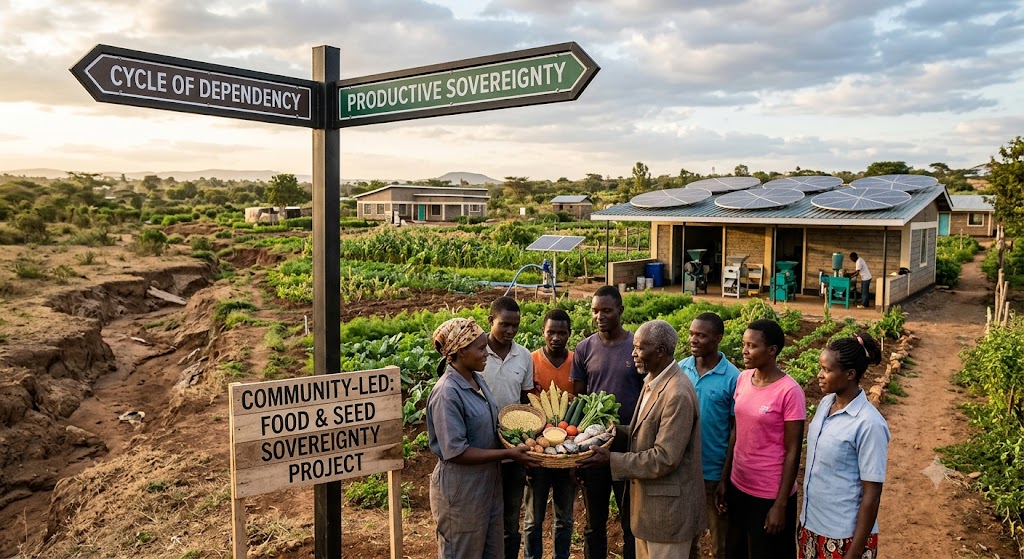
By Mr. Fredrick Kipchumba Chelimo – PWD
Email: fkipchelimo@yahoo.com
Africa’s story is one of extraordinary promise mixed with painful contradictions. The continent is home to vast natural resources, some of the world’s youngest populations, enormous agricultural potential, strategic minerals, abundant renewable energy possibilities and a growing generation of entrepreneurs, scientists and innovators. Yet, more than six decades after the majority of African countries achieved political independence, too many Africans still live with poverty, unemployment, weak public services and a high cost of living. The uncomfortable question is why a continent so richly endowed continues to struggle to translate its resources into broad-based prosperity.
The answer cannot be found in one explanation. Africa’s challenges are the product of historical exploitation, unequal global economic structures, weak domestic institutions, corruption, poor governance, political instability, limited industrialisation and policy inconsistency. The continent’s most persistent weakness is the failure to capture sufficient value from its own resources. This is the central problem of Africa’s economic structure: the continent often produces what the world needs but does not sufficiently control the processes that determine where the greatest value is created. The farmer grows the cocoa, but someone else makes the chocolate. The country extracts the mineral, but another country manufactures the battery. The African nation exports crude oil, then imports refined petroleum products..
Yet there are encouraging exceptions. Botswana demonstrates how relatively strong institutions and prudent resource management can turn mineral wealth into national development. Mauritius moved beyond its historical dependence on sugar by diversifying into tourism, manufacturing and financial services. Morocco has pursued industrialisation in sectors such as automobiles and aerospace while investing in renewable energy. Rwanda has demonstrated the value of policy continuity, digital transformation and strong state coordination, even as its political model remains debated.
Debt has become another major concern. External borrowing can be beneficial when it finances infrastructure that expands productivity, creates employment and generates sufficient economic returns. The danger arises when borrowing becomes a substitute for domestic production and revenue mobilization. This is where economic dependency can gradually become a loss of policy space. A country may retain its flag, parliament and constitution while its economic choices become increasingly constrained by debt obligations, external financing conditions and the demands of international markets.
But the answer is not to reject international finance or foreign investment. Africa needs global partnerships. The real issue is the terms of those partnerships. The rise of China’s influence illustrates this complexity. Chinese-funded roads, railways, ports and energy projects have contributed to infrastructure development in many African countries, but China’s involvement also serves its own commercial and strategic interests. The same principle applies to relationships with states and other global partners. Africa should welcome cooperation while ensuring that no external power becomes indispensable to its economic survival.
The African Continental Free Trade Area provides an opportunity to create a market large enough to support industrialisation and regional value chains. Instead of every country trying to manufacture everything, African economies can specialise, trade and build interconnected production systems. Minerals from one country can be processed in another; agricultural products can be manufactured and packaged within the continent; regional markets can support industries that would struggle to survive on small national markets.
This is where Kenya has a particularly important role to play. Kenya occupies a unique position in Africa’s emerging economic order. It is neither among the continent’s most dependent economies nor among those that have achieved full economic sovereignty. It is a relatively diversified economy with a sophisticated financial sector, an innovative technology ecosystem, strong telecommunications, significant renewable-energy capacity, an entrepreneurial population and a strategic position in East Africa.
Yet Kenya also exhibits many of the structural weaknesses associated with contemporary neo-colonial dependency. The country exports agricultural commodities but still captures insufficient value through local processing and branding. It imports significant quantities of manufactured products and technology. Its public finances remain under pressure from debt and debt-servicing obligations. Manufacturing has not expanded sufficiently to create enough formal employment for a rapidly growing population. Many young people are educated but remain trapped in informal and precarious employment.
Kenya’s challenge, therefore, is not simply poverty. It is the danger of becoming trapped in managed dependency—a situation where the country is sufficiently developed to participate actively in the global economy but remains structurally dependent on foreign capital, external borrowing, imported technology and international markets.
The way forward must begin with value addition. Kenya should not be satisfied with producing tea, coffee, milk, avocadoes, macadamia nuts and other commodities for export while importing finished products at much higher prices. The country needs to process, package, brand and market more of what it produces. Cooperatives can play a critical role by aggregating farmers, investing in processing and giving producers greater bargaining power.
The same approach should apply to minerals and manufacturing. Kenya needs an industrial strategy that connects agriculture, energy, technology, manufacturing and regional trade. Public procurement should be used strategically to build Kenyan enterprises rather than merely to purchase goods and services.
Debt management must also become a national priority. Every major borrowing decision should answer a basic question: Will this investment increase Kenya’s productive capacity enough to justify its cost? Borrowing that creates jobs, expands exports and strengthens domestic production is fundamentally different from borrowing that merely finances recurrent expenditure.
Finally, Africa needs political and institutional renewal. Economic sovereignty cannot be built where corruption, weak accountability and elite capture divert public resources away from development. African countries must strengthen democratic institutions, transparency, public participation and the rule of law. The future of Africa will not be secured by blaming the past, although the past must be understood. Nor will it be secured by blaming foreign powers for every contemporary failure. The continent must acknowledge the historical structures that shaped its present while accepting responsibility for changing them.
Kenya’s position in this emerging neo-colonial paradigm is both a warning and an opportunity. The country has sufficient human capital, entrepreneurial energy, infrastructure and institutional capacity to become a leader in Africa’s transition towards productive sovereignty. But that opportunity will be lost if the country continues to borrow heavily without expanding its productive base, tax citizens without improving economic opportunity or export raw commodities without capturing greater value. Africa does not need to withdraw from the global economy. It needs to enter it differently.
The continent must move from being primarily a supplier of raw materials and a consumer of finished products to becoming a producer, processor, innovator and owner of intellectual and economic value. The journey from political independence to genuine economic sovereignty is therefore unfinished. For Kenya and the wider continent, the central challenge is no longer simply how to escape the colonial past. It is how to build an economic future in which African countries have enough productive strength to determine their own destiny.
Africa has the resources. It has the people. It has the markets. What it now needs is the political courage, institutional discipline and long-term vision to turn those advantages into genuine prosperity. The ultimate test of independence is not whether Africa can attract the world to its resources. It is whether Africa can finally capture enough value from those resources to transform the lives of its own people.
Similar Posts by The Mt Kenya Times:
- When disability funds become a frontier for accountability: Kenya’s PWDs refuse to be invisible
- Public voices concerns over proposed education laws
- Manufacturing hope at the ballot, accumulating fortunes after the count
- Review of the Novel Pride and Prejudice
- Making schools places learners want to be: Addressing chronic absenteeism through engagement and belonging
About the Author