The Mt Kenya Times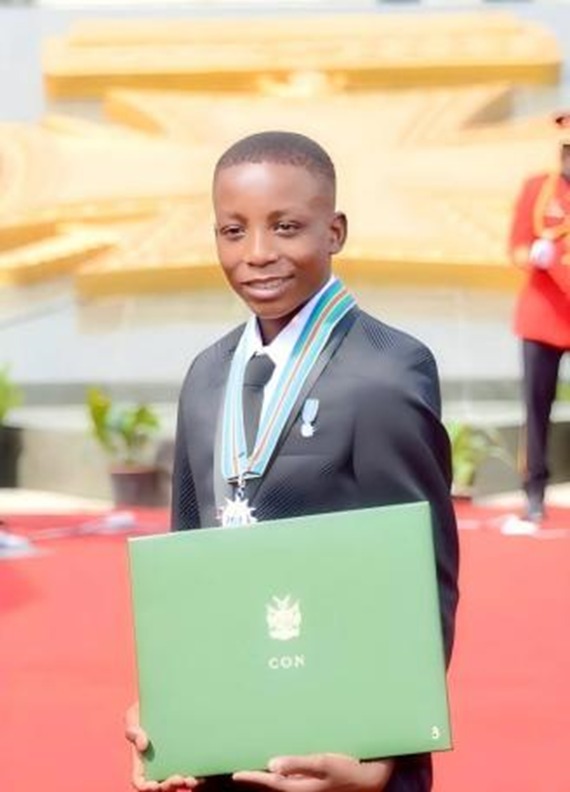
Cornelius Tulotokela Shimwaafeni
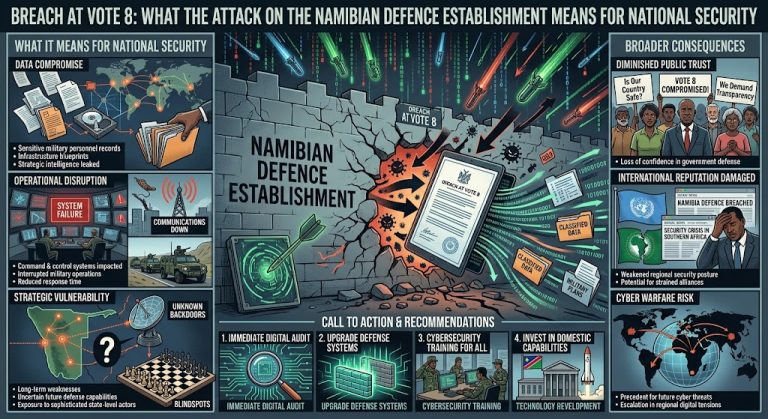
An Analysis of the Investiture Ceremony and the 60th Commemoration of Heroes Day in Namibia, and the Political Calculus Ahead of 2027 and 2029
By Silas Mwaudasheni Nande
Two Ceremonies in Forty-Eight Hours
On 25 August 2026, at the Independence Stadium in Windhoek, the President of Namibia, H.E. Dr Netumbo Nandi-Ndaitwah, presided over an Investiture Ceremony. She conferred national honours on 1,001 Namibians. The following day, at Heroes Acre outside Windhoek, she delivered a statement marking the sixtieth commemoration of Heroes Day. Two days before that, on Monday 24 August, the remains of six liberation figures were reburied at the same site. Three solemn national occasions, staged within seventy-two hours of one another, formed a single coordinated moment of remembrance.
Read together, the events raise a question that goes beyond ceremony. Could this concentrated display of recognition, reburial and renewed national purpose improve the political standing of the President? Could it strengthen the position of the SWAPO Party as the country moves toward a defining period in both its internal succession and its national electoral cycle? This article sets out to answer those questions with care. It draws on the Investiture Ceremony booklet and the full text of the Heroes Day statement. It also draws on the wider record of Namibian politics.
Two clarifications are necessary before any political reading can proceed responsibly. Both concern claims embedded in the framing of this analysis. Both require correction rather than assumption.
The first concerns the electoral calendar, addressed fully below. The second concerns the rescue that forms the emotional centre of the Heroes Day statement. The words of the President describe nine-month-old twins thrown into a water pond on 17 May 2026. Reporting in The Namibian on the same conferment confirms this detail and confirms the reward that followed. Precision on small facts matters in political writing. Larger arguments are often judged by the accuracy of their smaller claims.
Anatomy of an Extraordinary Investiture
The Investiture Ceremony booklet states the legal basis for the conferment plainly. Article 32(3)(h) of the Constitution vests the President with authority as Grand Master of the Namibian National Honours System. The Conferment of National Honours Act, Act 11 of 2012, supplies the statutory framework beneath that authority. That Act created the categories of orders, decorations and medals in use today. Among them are the Order of the Most Ancient Welwitschia Mirabilis, the Most Distinguished Order of Namibia, the Liberation Medal and the Independence Medal.
The scale of this year’s conferment is unusual. The booklet lists eight hundred and four recipients of the Liberation Medal. That medal is reserved for those who joined the armed liberation struggle and endured imprisonment, exile or displacement in its service. The booklet lists a further one hundred and ninety-seven recipients of the Independence Medal. That medal is reserved for those who advanced the cause of independence from within the country under apartheid rule, at the risk of arrest or worse. The two totals sum to exactly one thousand and one, the figure the President cited the following day at Heroes Acre.
No comprehensive public register exists comparing every conferment ceremony held since 1995. Any claim that this is the largest cohort ever honoured cannot be verified with full confidence, and this analysis makes no such claim. What can be said with confidence is more modest, yet still notable. Across fourteen pages of names, spanning every region of the country, a conferment of this size, held in a single day, is exceptional by any reasonable historical comparison available.
The citations accompanying each medal share a common register. They describe honourees as sons and daughters of the soil. They speak of sacrifice placed above personal interest. They invite each recipient into what the booklet calls the revered alumni of the honours system. This language performs a function beyond the simple keeping of records. Repeated annually, it operates as a form of national liturgy. It binds each new cohort of the living to the memory of those who did not survive to receive any medal at all.
Namibian commentary on the honours system has not been uniformly approving. A dialogue published earlier this year in the Windhoek Observer asked directly whether the national honours had begun to lose their allure. The piece cited political analyst Ndumba Kamwanyah. He argued that existing legislation does not set out sufficiently clear guidelines for determining eligibility. He warned against tying the system too closely to liberation credentials alone. Namibians who serve the nation through science, education, entrepreneurship, journalism and public health, he argued, deserve equal recognition. That critique was published before this particular conferment. It deserves to sit alongside any assessment of the scale achieved this year.
A Genealogy of Sacrifice
The Heroes Day statement does not confine itself to 1966. It constructs a continuous historical line stretching from resistance before colonial rule to the present day. That construction is itself a political act worth examining closely.
The President began with Omugulugwombashe, the site of the first armed engagement of the liberation war, on 26 August 1966, sixty years to the day before her statement. She then reached back further. She named battles fought against German colonial forces at Otjiunda in 1896, at Ohamakari and Okandjira in 1904, and at Namutoni in the same year. She named Vaalgras in 1905 and Oihole in 1917. She named the genocide committed against the Herero and Nama peoples during that period. She recalled the Battle of Sam Khubis in 1915 as evidence that resistance drew on faith as much as on arms.
She moved forward again to 10 December 1959. On that day, residents of the Old Location in Windhoek resisted forced removal to what is now Katutura, led by figures such as Anna Kakurukaze Mungunda. She named 19 April 1960, when the Ovamboland People’s Organisation transformed into SWAPO. She named the workers’ strike of the 1970s and the youth exodus into exile that began in 1974. She named the 1988 school boycott at Ponhofi Secondary School in Ohangwena. It was sparked by the deaths of two schoolgirls, Albertina Nghikongelwa and Victoria Nghikofa, killed in a military strike on their dormitory. She closed the sequence with Cornelius Tulotokela Shimwaafeni, the sixteen-year-old honoured for a single act of courage in 2026.
The effect of this sequence is cumulative, not incidental. Every generation named in the statement answers a call particular to its own moment, from armed resistance to student defiance to an act of individual rescue. SWAPO appears throughout this sequence as the vessel through which national resistance organised itself, from 1960 onward. A listener without prior knowledge of Namibian history would come away believing that the nation and the party grew from the same root, at almost every stage of the story. That belief may be historically defensible in large part. It is also, whatever its accuracy, a highly effective piece of political construction.
Restoration of Dignity: The Reburial and Its Diplomacy
On Monday 24 August, two days before the Heroes Day statement, six liberation figures were reburied at Heroes Acre. The remains of Eliaser Tuhadeleni, Hafeni Immanuel Shifidi, Nduuvu Fillemon Nangolo and Nathaniel Maxuilili were exhumed from burial sites within Namibia. The remains of Simon Petrus Niilenge and Festus Nehale were returned from South Africa. Symbolic graves were also dedicated for Brendan Simbwaye and Tobias Hainyeko, whose final resting places remain unknown to this day.
The President described reinterment as an act of restorative justice. She called it the restoration of dignity, rather than the mere movement of remains. That framing situates the Namibian reburial within a wider regional practice. Zimbabwe, Mozambique and South Africa have each pursued comparable repatriation projects at various points since their own transitions. Each has treated the recovery of remains from the era of liberation as an act of national healing, one that carries emotional weight independent of any electoral calculation.
The President thanked South African Minister of Sports, Arts and Culture Gayton McKenzie for his cooperation. He worked closely with Namibian Minister Dr Sanet Steenkamp to secure the return of the two sets of remains held in South Africa. This detail carries particular significance for an analysis of political positioning. Nandi-Ndaitwah served for years as Minister of International Relations and Cooperation before her elevation to the vice presidency and then the presidency. A successfully executed, dignified repatriation across international borders plays directly to that biography. It signals continuity between her diplomatic career and her presidency. It does so through an act that few Namibians, whatever their party allegiance, would object to.
A Sixteen-Year-Old Redefines Heroism
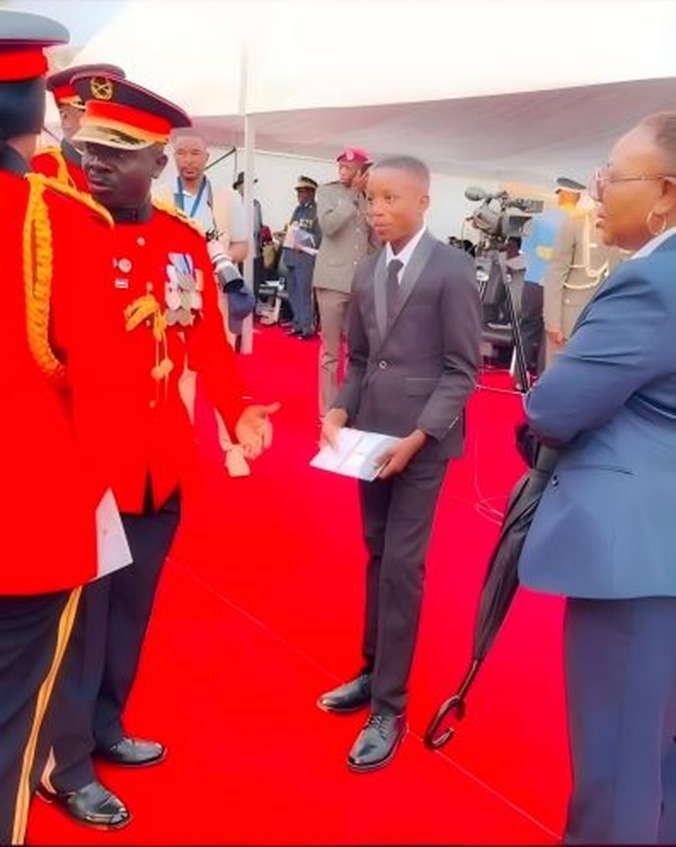
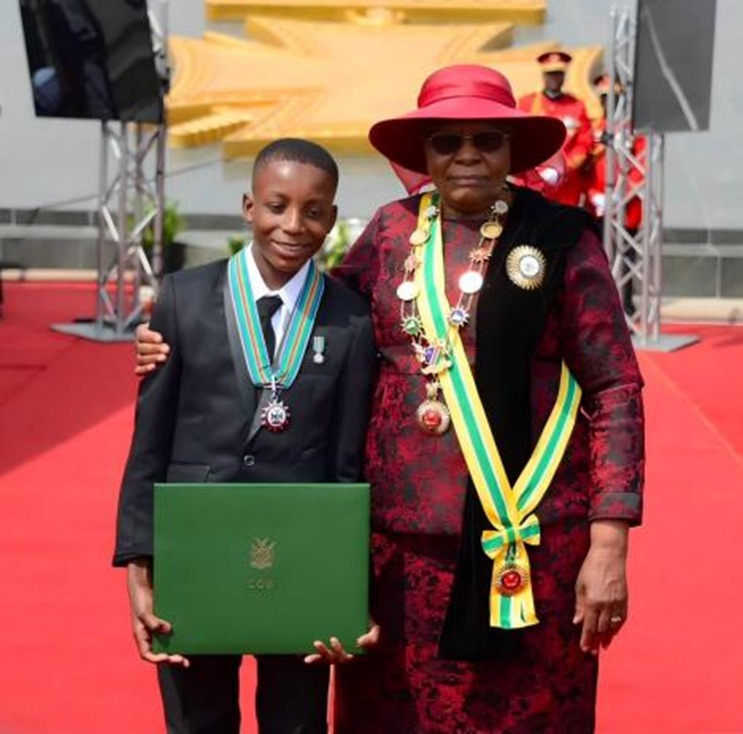
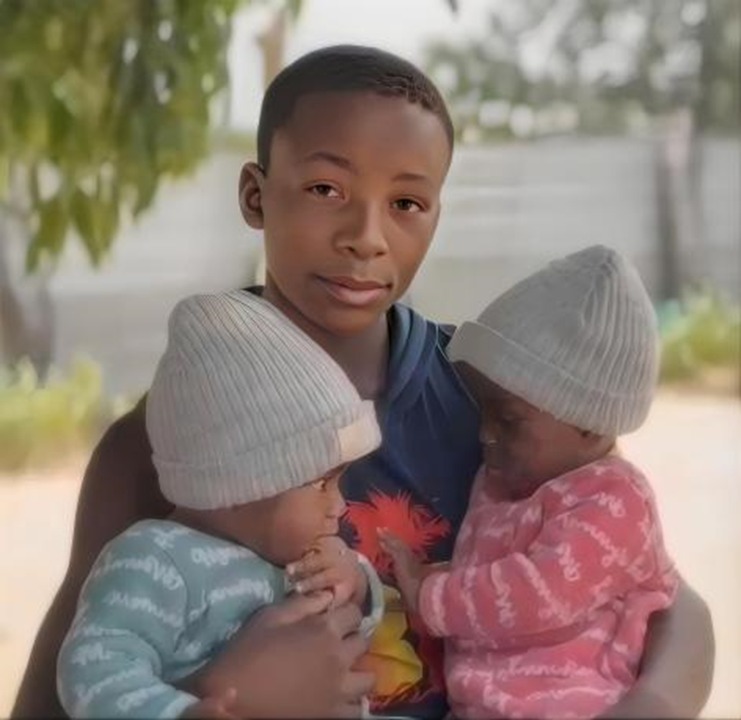
The most striking passage in the Heroes Day statement concerns no liberation figure at all. It concerns Cornelius Tulotokela Shimwaafeni, a sixteen-year-old from Omutundungu village in the Omusati Region. According to the statement, Cornelius rescued nine-month-old twins after they had been thrown into a water pond, on 17 May 2026, at clear risk to his own life. Reporting by The Namibian on the same conferment confirms the essential facts. It records that Cornelius received a medal and a cash award of two hundred thousand Namibia dollars.
The President used her authority under Article 32(3)(h) of the Constitution. She read it together with section 3(2) of the Conferment of National Honours Act. On that authority, she conferred hero status on Cornelius directly, separate from the Liberation and Independence Medals conferred the previous day. This is a marked departure from every other honour conferred across the three days under discussion. Every other recipient was recognised for the liberation struggle or for long service to the nation. Cornelius represents neither history. He represents a single act of courage by an ordinary teenager with no political record whatsoever.
The President built an argument for the future of Namibian heroism around this single act. She asked, directly, who counts as a hero in a free Namibia. She then widened the category herself. A mother who prepares children for school before selling goods at the market performs a form of heroism, in her formulation. So does a nurse who remains compassionate after an exhausting shift, and a public servant who declines a bribe though no one is watching. Each, she argued, meets the standard suited to the present era, an era she described as a struggle for economic emancipation rather than political liberation.
This is shrewd rhetorical construction, and it accomplishes two things at once. It reaches younger Namibians who feel little personal connection to a struggle that ended nine years before most of them were born. Roughly seventy per cent of the Namibian population is under thirty-five years of age. The construction also reframes the standard by which the current administration invites judgement. If heroism today means integrity in ordinary work, rather than participation in historical struggle, then government itself must be measured by delivery rather than by memory alone. That is a demanding standard to set, particularly for an administration presiding over youth unemployment above forty per cent.
Honours as Statecraft: The International Dimension
National honours in Namibia serve a second function beyond domestic commemoration. They operate as an instrument of foreign policy. In July 2025, President Nandi-Ndaitwah conferred the Order of the Most Ancient Welwitschia Mirabilis on Indian Prime Minister Narendra Modi. That order is the highest civilian honour available under Namibian law, and it was conferred during a state visit to Windhoek. The same order was conferred previously on Cuban leader Fidel Castro, in recognition of Cuban military and diplomatic support during the liberation struggle. That precedent echoes through the Heroes Day statement itself. The statement recalled the Battle of Cuito Cuanavale, and thanked Cuban internationalists directly for what the President called sharing the trenches with fighters of the People’s Liberation Army of Namibia.
Viewed alongside the domestic conferment of 25 August and the reburial diplomacy conducted with South Africa, a pattern emerges. The honours system functions simultaneously as a tool of internal legitimation and a tool of external alignment. It allows the presidency to reward foreign partners, commemorate historical allies and recognise domestic contribution, all through a single constitutional instrument. For a head of state whose formative career was built in international relations, this dual use of the honours system is a natural extension of existing diplomatic instinct. It strengthens her international standing, quite apart from any domestic electoral calculation.
The Politics of Liberation Memory: A Regional Comparison
Namibia is not alone among former liberation movements in drawing on commemoration to reinforce legitimacy. The African National Congress in South Africa, ZANU-PF in Zimbabwe and Frelimo in Mozambique have each invoked the memory of liberation at different moments. They have done so as electoral competition intensified, and as economic performance came under strain. Political analysts sometimes describe this as a claim to moral inheritance. The argument runs that the movement which delivered independence retains a standing claim on national gratitude, regardless of its record in government since.
SWAPO occupies a distinctive position within this comparison. Unlike the African National Congress, which lost its parliamentary majority for the first time in 2024, SWAPO has not yet lost a national election since 1990. Its parliamentary majority has nonetheless declined steadily, from sixty-five per cent in 2019 to fifty-three per cent in 2024. That result was widely described at the time as the weakest in the history of the party. Local and regional elections held in November 2025 suggested a partial recovery. SWAPO reclaimed several constituencies in the Erongo, Khomas, Hardap and southern regions, areas that had shifted toward the Landless People’s Movement and the Independent Patriots for Change five years earlier.
Set against this backdrop, a conferment of unusual scale and a heavily attended Heroes Day commemoration function as a reassertion of the founding narrative. That reassertion arrives at a moment when the narrative faces genuine, if still modest, electoral competition. Whether this reassertion was designed with that competition specifically in mind is one question. Whether it simply follows the statutory rhythm of Namibian public life is another, since honours are conferred and Heroes Day is commemorated every single year regardless of politics. Both questions are addressed directly in the sections that follow.
The Case that these Acts Strengthen the President and The Party
Several arguments support the view that the events of 24, 25 and 26 August improve the political position of Nandi-Ndaitwah, and by extension the SWAPO Party.
Scale itself carries political value. One thousand and one honourees, drawn from every region named in the booklet, each carry family, neighbours and community associations. That represents an unusually wide network of personal goodwill. Even a modest multiplier effect, relatives and friends who feel pride in a person being honoured, reaches a meaningful share of the population. That share matters ahead of the 2027 party congress and the 2029 general election.
The reburial diplomacy conducted with South Africa demonstrates competent statecraft. It draws directly on the background of the President in foreign affairs. It reinforces an image of a leader capable of delivering results through patient international negotiation, a useful asset for a party currently positioning its next generation of leadership.
The elevation of Cornelius Tulotokela Shimwaafeni extends the emotional reach of the commemoration well beyond veterans and their families. It reaches toward a much younger audience. It supplies a fresh, apolitical story of courage, one that Namibian outlets covered with evident sympathy. That coverage generated goodwill carrying no trace of partisanship.
The rhetorical shift from liberation heroism toward everyday civic heroism gives the administration a vocabulary suited to its own record. Farmers, entrepreneurs, teachers and honest officials become part of the national story the President is telling. That story doubles as an invitation to identify the governing party with ordinary daily progress, rather than with historical achievement alone.
Finally, the 2027 congress falls to party delegates rather than to the general public. Even so, a President seen as a dignified, unifying figure of state is better placed to discourage internal challenge. She is better placed, too, to favour a preferred successor at that congress. Her authority within SWAPO rests partly on the stature she projects nationally, and stature of this kind is difficult to build through ordinary governance alone.
The Limits of Symbolism
The case against reading too much political calculation into these events is equally substantial, and deserves equal weight.
Heroes Day and the conferment of national honours are annual, statutory obligations under Namibian law. They occur every year regardless of the electoral calendar, and have done so since long before the current administration took office. Treating a routine constitutional function as a deliberate electoral strategy risks overstating intent, in a case where continuity offers the simpler explanation.
The critique voiced in the Windhoek Observer before this year cuts directly against a straightforward reading of this conferment as an unqualified political triumph. That critique held that the honours system lacks clear legislative criteria, and risks dilution through scale. A system perceived as overly broad can invite cynicism as readily as gratitude. This is particularly true among younger voters, already frustrated by unemployment above thirty-six per cent overall, and above forty-four per cent among the young.
The 2027 congress, moreover, is decided by party delegates, not by public sentiment. It is a contest shaped by factional loyalty within SWAPO structures, as much as by national mood. Figures already positioning themselves for the Vice Presidency, among them Dr Saara Kuugongelwa-Amadhila, retain their own bases of support. That support exists independent of how the President is viewed by the broader electorate. Improved public approval does not automatically translate into a preferred outcome inside what remains, fundamentally, an internal party contest.
Opposition parties have built their appeal on different ground entirely. The Independent Patriots for Change, the Landless People’s Movement, Affirmative Repositioning and the Popular Democratic Movement each campaign chiefly on service delivery, land, housing and youth employment. None of them contests the legitimacy of the liberation history itself. A ceremony rooted in liberation memory addresses a dimension of Namibian politics on which SWAPO already holds a considerable advantage. It leaves largely untouched the economic grievances on which the opposition competes most effectively.
Finally, the structural problems named directly within the Heroes Day statement are not the kind of problems any ceremony can resolve. Poverty, unemployment, inequality, corruption and institutional inefficiency were all named by the President herself, who framed them as the unfinished struggle of the current generation. Symbolic recognition may generate genuine warmth in the days following a ceremony of this kind. It does not, on its own, generate employment. Namibian voters have shown, in successive elections, that they are willing to punish a governing party for failing to close that particular gap.
What this Means for SWAPO Beyond One Leader
Even where the direct personal benefit to the President remains genuinely uncertain, the events of late August plausibly serve the wider standing of the governing party as an institution.
SWAPO holds a structural advantage that few opposition parties can match. In the collective memory of most Namibians, the party remains inseparable from the liberation struggle itself. Every act that reinforces the salience of that struggle indirectly reinforces the salience of the party most closely associated with leading it. This holds true even though many individuals honoured this year, and in previous years, were never SWAPO members. The citations recognise contribution to liberation and nation-building broadly, rather than partisan service specifically.
The emphasis on continuity runs from the fighters of Omugulugwombashe in 1966, through the students of Ponhofi in 1988. It runs through the founding leadership of the late Dr Sam Nujoma, to a sixteen-year-old in Omusati in 2026. This sequence constructs a single unbroken national story, with SWAPO cast as its custodian across every chapter. That construction represents a durable form of political capital. It does not depend on any single leader. It can, at least in part, be transferred to whichever candidate the party selects at its 2027 congress, and presents to the country in 2029.
The honest answer to whether these acts could give credit to the SWAPO Party, then, is a qualified yes. That answer can be offered with more confidence than any answer to whether the acts specifically advantage Nandi-Ndaitwah in an internal succession contest she does not personally control. The party benefits from the reinforcement of national memory almost automatically. Any individual leader benefits from it only to the extent that delegates and voters continue to see that leader as the legitimate custodian of the memory being reinforced.
Other Acts, the Same Pattern
The two ceremonies of late August do not stand alone. They fit a wider pattern of conduct that a fair analysis should acknowledge. The question posed at the outset by individuals in public sphares, after all, asks about other national and international acts of good standing as well.
The repatriation of remains from South Africa, discussed above, is one such act. The conferring of the Welwitschia Mirabilis on foreign leaders is another, a practice that predates this administration but that the President has continued and extended. The consistent invocation of Southern African solidarity is a third example. It is marked each year on 23 March as Southern Africa Liberation Day, in memory of the Battle of Cuito Cuanavale. It situates Namibia within a network of regional gratitude stretching to Angola and Cuba. None of these acts was created by the events of 24 to 26 August 2026. Each has been extended and reinforced by them.
Taken together, this pattern suggests something broader than calculation. It suggests a presidency that treats commemoration, diplomacy and domestic recognition as connected instruments of one governing style, rather than as isolated events timed to a single moment. That does not remove the political value such acts may carry. It does mean the value should be read as part of a consistent approach to leadership, not as a sudden manoeuvre invented for late August 2026 alone.
Conclusion: Between Legitimacy and Delivery
Three occasions sit at the centre of this analysis: the Investiture Ceremony of 25 August, the reburial of 24 August, and the sixtieth commemoration of Heroes Day on 26 August. Each was solemn and carefully constructed in its own right. They honoured genuine sacrifice. They corrected a documented historical wrong, through the return and reburial of six liberation figures. They offered the country a vivid, apolitical story of courage, in the person of a sixteen-year-old from Omusati.
Read politically, the events sit comfortably within a long regional tradition. Liberation movements across Southern Africa have used commemoration to reinforce legitimacy at moments of electoral pressure. SWAPO faces real, if still modest, pressure of this kind. That pressure is evident in its reduced 2024 parliamentary majority, and only partially reversed by its recovery in the November 2025 local and regional elections. Whether these events measurably strengthen the position of Nandi-Ndaitwah is a harder question. It bears on the 2027 party congress, and thereby on the 2029 general election, but it cannot be answered with confidence from the ceremonies alone. That contest will turn on the choices of a few hundred delegates, operating under considerations this analysis cannot observe directly.
What can be established with more confidence is narrower, but still significant. The ceremonies reinforce a national narrative from which SWAPO, as an institution, continues to draw benefit, largely independent of any single leader. The harder tests facing both the President and her party lie beyond the reach of any medal ceremony. Unemployment above thirty-six per cent will not be resolved by an afternoon at Independence Stadium. Nor will youth unemployment above forty-four per cent, persistent inequality, or the public demand for institutional integrity, however moving that afternoon proved to be.
History is unlikely to remember Namibia in 2026 chiefly for the length of its honours list. It will remember whether the promise attached to that list, of economic emancipation to match the political freedom already won, was kept.
Cornelius Tulotokela Shimwaafeni
Similar Posts by The Mt Kenya Times:
- Mt Kenya Times ePAPER October 16, 2026
- Oburu marks birthday and brother’s death from Nairobi Hospital bed
- Natembeya and Orengo demand answers over security withdrawal
- Linda Mwananchi Movement: The brand that could reshape Ruto’s path to 2027
- ODM and Linda Mwananchi clash at Raila’s Bondo memorial
About the Author