King Mohammed VI
King Mohammed VI marks a quarter-century-plus on the throne with a commanding address on sovereignty, industry and the road ahead.
By Diaspora Times Team
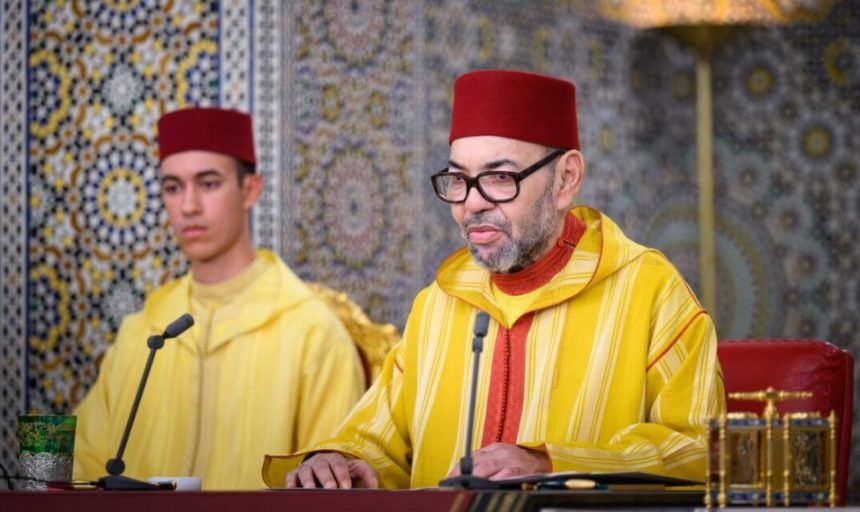
King Mohammed VI of Morocco marked the 27th anniversary of his accession to the throne on Wednesday with a landmark national address that was at once a measured reckoning with the past and a confident blueprint for the future — the speech of a monarch who believes his kingdom’s best chapter is still being written.
Speaking in Rabat, the King dismissed any suggestion that Morocco’s progress over the past three decades was accidental. “None of our achievements was a matter of chance,” he told the nation. “Our accomplishments were all the result of clear strategic direction and of a mode of governance based on entrepreneurship, meticulous follow-up, constructive self-criticism, and positive, resolute policies turned to the future.”
The tone was purposeful throughout. “Stability is today the fundamental factor in the development equation and the strategic capital of which Morocco is proud,” the King stressed — a foundation that has allowed the Kingdom to absorb shocks, including severe flooding in its western and northern regions, while continuing to execute major international events that have drawn global admiration.
Industry surpasses phosphates
The economic headlines were striking. Morocco’s growth reached approximately 4.9 per cent in 2025 and is expected to remain at or above that level in 2026, with a successful agricultural season and favourable rainfall strengthening both food production and water security after years marked by drought.
The deeper story, however, was industrial. The automotive, aviation, renewable energy and food processing sectors have become fundamental pillars of the national production fabric, attracting foreign investment and generating wealth and employment. Morocco has become Africa’s leading car exporter, with a production capacity of nearly one million vehicles a year, and automotive and aerospace exports now exceed 40 per cent of total Moroccan exports — surpassing phosphates for the first time.
New industrial facilities set to begin operations this year will position Morocco among the leading manufacturers of aircraft engines and landing gear components, alongside expanding investment in green hydrogen and electric vehicle battery production — sectors that signal Morocco’s ambition to compete at the technological frontier of global manufacturing.
The King framed this industrial surge in explicitly geopolitical terms. “In an international environment marked by a resurgence of protectionist policies and the need to secure supply and production chains,” he said, “I have made the consolidation of national sovereignty and strategic self-sufficiency a cornerstone of our industrial development.” Local food and pharmaceutical industries now cover roughly 80 per cent of domestic needs, and the King announced plans to extend self-reliance further into defence and cybersecurity infrastructure.
Tourism, diaspora and the next government
The tourism sector recorded unprecedented results, with Morocco welcoming nearly 20 million visitors in 2025, including Moroccans residing abroad — a record figure reflecting the Kingdom’s growing regional and international appeal.
With legislative elections approaching, the King set clear expectations for whoever emerges from the ballot. He called on the financial sector to expand capital access for small and medium enterprises and to mobilise domestic savings for the next era of development. The next government, he said, must open a new chapter — preserving past achievements, accelerating economic transformation and improving the quality of life for all Moroccans, without exception.
The address closed on a personal note that cut to the heart of the King’s governing philosophy. “I have never sought personal glory, or recognition of a leading role at the continental or international level,” he said. “All that has ever mattered to me is to fulfil my duty and serve you, and to enable all Moroccans to live a free, dignified life.”
Twenty-seven years in, that duty — as the King sees it — is far from finished. Morocco has gone from a phosphate-dependent economy on the edge of a turbulent continent to an industrial hub with global reach, a nation that earns both the respect and, in the King’s own telling, the envy of others. The next cycle of reform, he made clear, will be no less ambitious than the last.
Similar Posts by The Mt Kenya Times:
- Sengwer youth: When will Kenya stop treating a minority like an afterthought?
- When young lives become disposable
- The day death refused to be scammed
- Statement win at the Gtech: Brentford outclass Chelsea to claim all three points
- When disability funds become a frontier for accountability: Kenya’s PWDs refuse to be invisible
About the Author