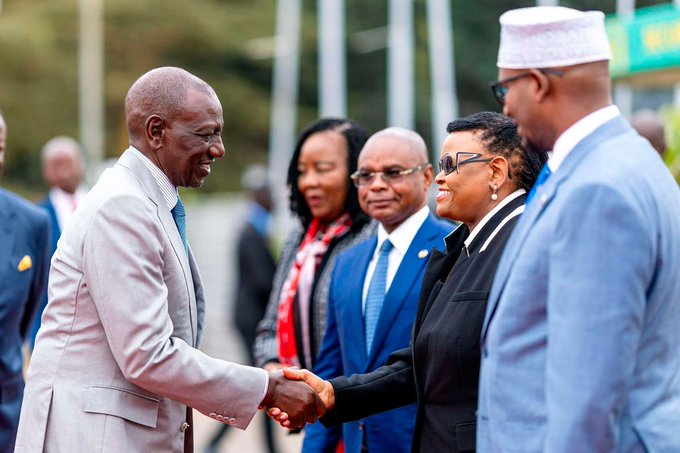
President William Ruto with Chief Justice Martha Koome during the commemoration of the 16th anniversary of the promulgation of the 2010 Constitution, at KICC, Nairobi
As Kenya marks sixteen years of its 2010 Constitution, President Ruto’s open challenge to the courts — and a judiciary that has declared his Cabinet and his election date unconstitutional — exposes a constitutional order under its greatest stress since promulgation
By James Mwangi
President William Ruto yesterday used Kenya’s Katiba Day celebrations to raise pointed questions about the role of the courts in blocking government policy — even as the judiciary stood accused of doing precisely what the Constitution mandated it to do, and as a sitting High Court judge had already ruled that his Cabinet was unconstitutional and that his mandate had, technically, already expired.
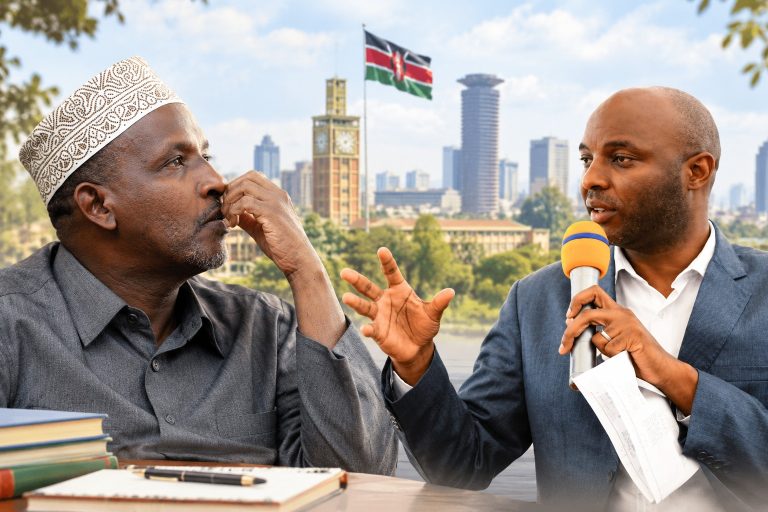
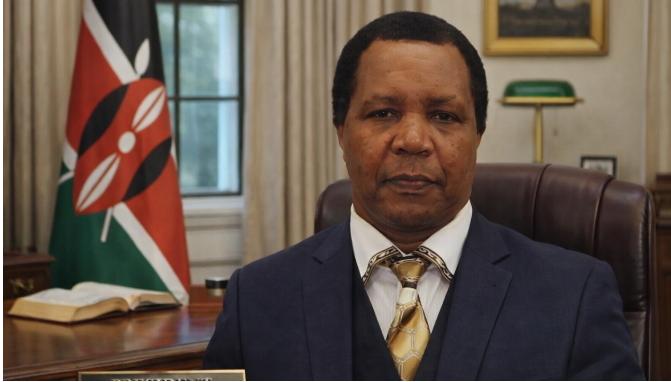
The occasion — the 16th anniversary of the promulgation of the 2010 Constitution, marked at the Kenyatta International Convention Centre in Nairobi — brought together the three arms of government in a single hall. It was, on paper, a moment of national unity and constitutional reflection. In practice, it was a public airing of the deepest tensions to have gripped Kenya’s constitutional order since the document was signed into law.
Ruto raised concerns about the growing number of court decisions nullifying government policies, arguing that Kenya must balance constitutional oversight with the ability of elected institutions to implement their mandates. “How do we preserve constitutional review without unnecessarily paralyzing legitimate government action?” he asked, posing a series of questions on how the Executive and Parliament should respond when courts find that a policy violates the Constitution.
It was a question that landed with particular weight given what the courts have actually found. In July, a three-judge bench of the High Court declared that the current Cabinet violates the Constitution for failing to meet the two-thirds gender principle under Article 27(8), directing Ruto to reconstitute his Cabinet within 120 days — leaving him with only 42 days from yesterday before the deadline expires. Then, just three weeks ago, a Malindi court delivered an even more explosive ruling. Justice M. Thande held that the IEBC’s plan to hold the next general election on August 10, 2027 is based on an incorrect interpretation of the Constitution, declaring that the correct date was August 11, 2026 — a date that has already passed. The judgment means Ruto’s tenure, which began on September 13, 2022, constitutionally ends when the next duly elected president is sworn into office, even if he has not served a full five years. The effect was suspended pending appeal, but the constitutional question it raised did not disappear with the stay order.
At Katiba Day, Ruto was asked directly during a panel discussion whether he was aware that his Cabinet had been rendered unconstitutional by the judgment. “Are you aware, sir, that your Cabinet is unconstitutional?” he was asked. He acknowledged the ruling and its implications — a moment of candour that underscored just how exposed the Executive has become to judicial scrutiny in the months leading to a general election now widely assumed to be scheduled for August 2027.
The judiciary, for its part, was not silent. Chief Justice Martha Koome said corruption and integrity concerns remain serious issues within the judiciary itself, while insisting that the institution must remain independent and make decisions without interference. “The judiciary’s credibility depends on protecting its independence,” she said. The message was unmistakable: the courts would not be retreating from their constitutional role, regardless of the political weather.
Former Chief Justice David Maraga, who is eyeing the presidency under the United Green Movement party, issued a Katiba Day statement warning that the Constitution’s protections were being eroded through violations that should concern all Kenyans. He cited the criminalisation of dissent, disregard for court orders and the treatment of public participation as a formality rather than a constitutional obligation as among the most serious threats facing the supreme law. Maraga’s intervention was both a legal warning and an opening campaign salvo — a sign of how thoroughly constitutional discourse and electoral politics have become intertwined as Kenya moves toward the next vote.
Ruto, for his part, said voters give elected leaders a mandate to implement their programmes, but that mandate comes with a responsibility to operate within the law — a formulation that acknowledged the constraints of constitutionalism even as he questioned how those constraints were being applied. He framed his Bottom-Up Economic Transformation Agenda as an instrument for implementing the Constitution, and warned that “progressive realisation of constitutional rights cannot mean indefinite postponement.”
The parliament, the third arm of the constitutional tripod, has been conspicuously active in ways that have drawn their own judicial scrutiny. The High Court has temporarily barred National Assembly Speaker Moses Wetang’ula and Senate Speaker Amason Kingi from using the authority of their offices in partisan political campaigns for Ruto’s 2027 re-election bid, pending determination of a constitutional petition that could redefine the political limits of their offices. The case encapsulates a broader question that has begun to dominate Kenya’s pre-election landscape: where does constitutional office end and partisan politics begin?
The stakes around the election itself are sharpening by the week. The IEBC has received KSh24.9B for the 2027 election but faces a KSh6.3B funding gap following Parliament’s recent rejection of additional allocations, a shortfall that threatens electoral credibility at a moment when the commission’s constitutional standing is already under legal challenge. Since the contested 2022 general election, a series of court rulings have placed the IEBC under sustained constitutional scrutiny, with judges clarifying election management rules and warning that electoral processes must strictly meet constitutional standards.
The picture that emerges from Katiba Day 2026 is not one of a constitutional order functioning smoothly sixteen years after promulgation. It is one of three arms of government — Executive, Legislature and Judiciary — each claiming the mantle of constitutional legitimacy while pulling in different directions, their tensions sharpened by proximity to an election that will determine who governs Kenya for the next five years.
President Ruto formally proclaimed August 27 as a perpetual national observance last year, underscoring the profound political and juridical weight attached to this foundational document. With the general election less than 350 days away, the commemoration demands more than ceremony. It compels a frank constitutional audit: how faithfully has Kenya translated the sovereign will of the people into operational governance?
The 2010 Constitution was built on a simple but radical proposition: that no single arm of government should accumulate enough power to govern without accountability to the others. Yesterday’s events at KICC demonstrated that the proposition is being tested as never before — by a president frustrated by courts, a judiciary defending its independence, a parliament whose speakers are fighting legal battles over their own political conduct, and an electoral commission whose funding, constitutional standing and planned election date are all simultaneously in dispute.
Ruto told the gathering that Kenyans have a constitutional responsibility to hold institutions to account, but should also recognise their importance in maintaining governance, public order and the rule of law. It was the right thing to say. Whether it reflects the administration’s actual posture toward an increasingly assertive judiciary — and an electorate that has not forgotten 2024 — is the question that will define the politics of the coming year.
The three-legged stool that is Kenya’s constitutional order is still standing. But each leg is under pressure, and the ground beneath it is shifting fast.
Similar Posts by The Mt Kenya Times:
- Ruto bets billions on Kerio Valley — with one eye on 2027
- Ruto’s health ministry kills Murang’a’s digital hospitals
- Kenya bets on Mount Kenya to drive a billion-shilling tourism revival
- Do you have a wealth vision? Or are you just working until you die?
- PS Isaboke lauds digital literacy programme in Kisii as 332 schools benefit
About the Author