Need to respect women land rights amidst EACOP implementation

By: Twongirwe Ireen
Worth Noting:
- In a nutshell, Before effective interventions to improve women’s land and property rights can be devised, there is a need for a thorough understanding of how women acquire, own, access, control and manage land that is critical to the development of policies to secure the land and property rights of women and reduce their vulnerability in relation to land.
- It’s also in order to understand that under article 26 of the 1995 constitution, every citizen has the right to own land and to live in a safer and healthier environment. But Ugandan government continues to violate that act hence increasing land grabbing and evictions.
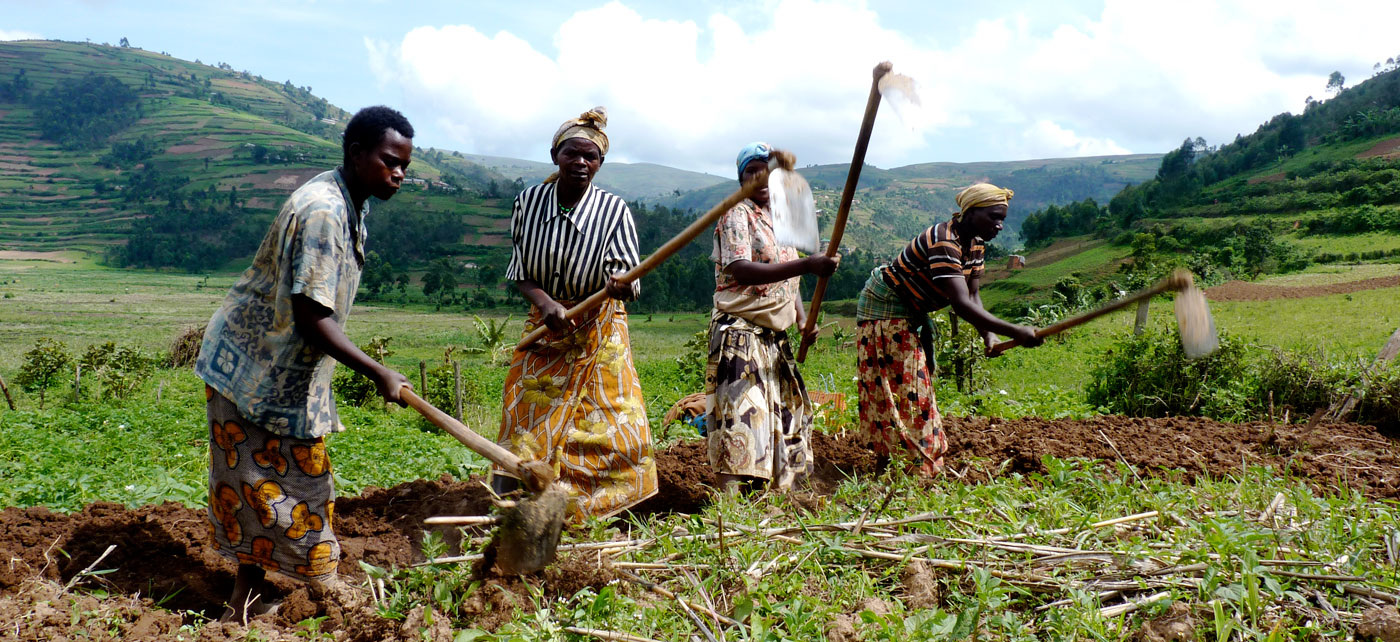
Women are primary users of land and provide the bulk of “non-contractible” agricultural labour in Uganda. Land is a complicated sector for countries to govern, and it is especially challenging in fragility, conflict, and violence (FCV) affected situations. Despite this, men dominate the majority of decisions related to land use and management, and the security of women’s land tenure can be tenuous.
Women play a critical role in managing natural resources and have extensive knowledge and experience of the water, land and energy supplies that sustain households and communities. Yet their lack of land tenure or inheritance rights and current trends such as water privatization, undermine their ability to own, manage, use, and conserve these resources and to provide for themselves and their families.
In addition, women in regions of Bunyoro, Hoima, are most affected by land grabbing , conflicts and evictions due to the minerals discovery . They have faced challenges of food insecurities, school dropouts, early marriages, gender inequalities, gender based violence, financial distress , un fair compensation, cutoff dates, intimidations, arrests among others. All these challenges have affected the social economic transformation both at country level and individual level.
More so, oil discovery has led to human rights violation and vulnerable women have suffered the consequences. Women since there are the bread givers of the family, they have limited access or no access to land to do agriculture. To most who can access limited land, they are restricted to plant a perennial crops due to the preparation of oil extraction. . Insecurity associated with women’s rights to land under customary law are grounded in assumptions that women are dependent on men and cannot own land in their own right under customary tenure and have what many term “secondary rights.
Noteworthy, Women’s limited title to land property and inheritance often means less access to agricultural extension services and credit into reduced access to water and food. Women still earn less than men for the same work; outnumber men among those who are illiterate.
More to that, Women’s responsibility for domestic chores tends to mean that time is an extremely limited resource for women-time to participate in community organizations, time to study and time to earn an income. Thus women’s ability to protect their own security and ensure the security of family members differs enormously.
However, improving women’s access to land and protecting their rights, can be a stabilizing factor for these situations, contributing to economic and social stability, food security, sustainable development, peace and equality.
Despite some progress, inequality between women and men in ownership and control of land remains stuck. Women are often understood to be highly marginalised in typical African customary land regimes.
In a nutshell, Before effective interventions to improve women’s land and property rights can be devised, there is a need for a thorough understanding of how women acquire, own, access, control and manage land that is critical to the development of policies to secure the land and property rights of women and reduce their vulnerability in relation to land.
It’s also in order to understand that under article 26 of the 1995 constitution, every citizen has the right to own land and to live in a safer and healthier environment. But Ugandan government continues to violate that act hence increasing land grabbing and evictions.
Paradoxically women are more active in environmental and resource conservation activities especially land, which are widely documented. It is imperative therefore to consider gender in land conflicts research and policy to help identify the specific pathways involved and hence the entry points for intervention.
In gender analysis access to and control over resources is one of the principal factors determining the economic and social wellbeing of women, especially in situations of conflict and reconstruction, when their rights are violated on a mass scale?
Therefore there is a need the EACOP Company to visit the affected land and hold meeting with district and village leaders as well as the squatters on the land. This will help to prove ownership of land hence avoiding or protecting vulnerable women from land grabbing.
For God and my country
Twongirwe Ireen
Executive Director Women for Green Economy Movement Uganda.
Similar Posts by The Mt Kenya Times:
- Diaspora Times Global Sep 19 – Sep 25, 2026
- Tibet’s glacial catastrophe: Behind Beijing’s wall of silence, a climate disaster reshapes a region
- Museveni says Uganda overpaid for fuel through Kenyan middlemen as new terminal breaks ground
- Court orders throw KPL season kickoff into doubt
- Can Kenyans abroad become the untapped force that transforms Kenya?
About the Author