Africa reels from energy shocks, Ebola fears and growth slowdown as Middle East conflict ripples across continent
 The Mt Kenya Times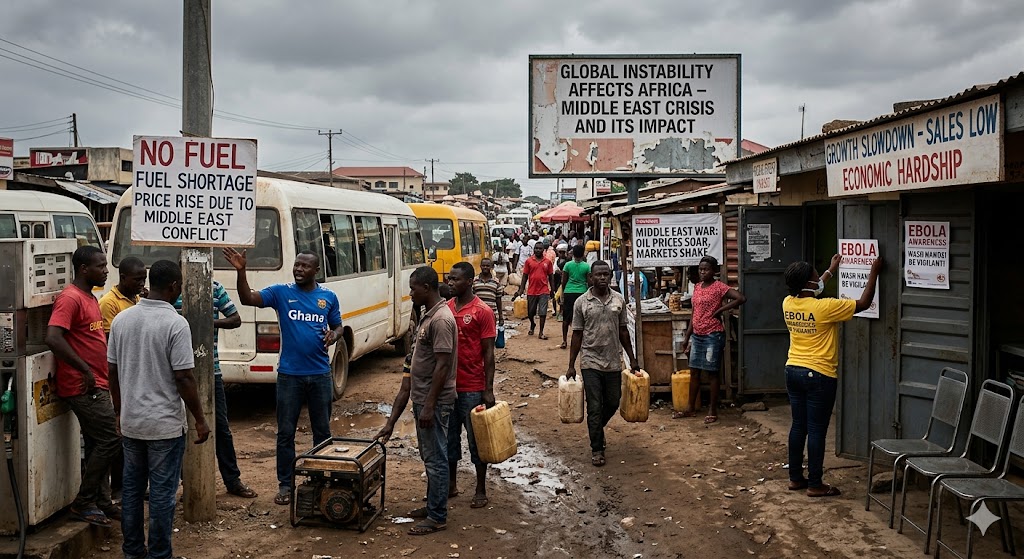
By Norman Mwale
“Inflation is being driven by events beyond Africa’s control, which have raised the prices of goods from abroad.”
African economies are facing a mounting squeeze from energy costs, supply shortages and renewed health threats, with the fallout from the Middle East conflict and a structural drop in foreign aid eroding hard-won stabilisation gains just as growth momentum was building. From Cairo to Pretoria, governments are cutting fuel taxes, drawing down strategic reserves and pleading for maritime stability, while the African Union and multilateral institutions warn that the continent could lose 0.2 percentage points of GDP growth in 2026 if disruption to trade, fertiliser and energy supplies persists.
The immediate shock is being felt at the pump and in markets. Rising geopolitical tensions in the Middle East have pushed energy costs higher, intensified inflationary pressures and forced central banks to keep interest rates elevated for longer. In South Africa, business confidence deteriorated sharply after the oil-price spike, with 61 per cent of firms reporting dissatisfaction with conditions and profitability in the second quarter, up from 53 per cent previously. “The outlook for the rest of 2026 is more challenging,” said Investec chief economist Annabel Bishop, noting that tighter monetary policy would keep pressure on consumers and businesses. The South African Reserve Bank echoed the warning, with Governor Lesetja Kganyago saying the outlook had deteriorated significantly since November 2025 due to the conflict’s impact on the global economy.
Across the continent, dependence on Gulf imports is amplifying the pain. Eighty per cent of oil imported into Africa and 50 per cent of refined petroleum comes from the Middle East region, leaving 31 countries already experiencing currency depreciation as fuel bills rise. Egypt, Morocco, South Africa, Nigeria, Kenya, Tanzania and others are coping with severe shortages of medical supplies, raw materials, crude oil, LNG and LPG, while pharmaceutical manufacturers struggle to secure imported ingredients and airlines face soaring jet fuel costs that are delaying tourism recovery. “Energy security has become a central policy priority across the region,” analysts noted as Iran and Oman prepared a joint statement on Strait management to ease fears over Hormuz traffic.
The World Bank and IMF have both trimmed forecasts. Sub-Saharan Africa’s growth is projected to hold at 4.1 per cent in 2026, unchanged from 2025 but 0.3 percentage points below earlier projections, with the downgrade reflecting higher fuel and fertiliser prices and weaker investment flows from Gulf countries. The IMF expects overall African growth to slow to 4.2 per cent in 2026 from 4.4 per cent last year, warning that oil importers without strong resource buffers would come under particular strain. “Just as the region is beginning to recover, growth was recovering, then you have this new shock,” said Abebe Selassie, IMF Africa director, adding that the conflict was “taking the froth off what had otherwise been really good recovery”.
Inflation is being driven by supply-side pressures that higher interest rates cannot easily fix, economists argue. “Inflation is being driven by events beyond Africa’s control, which have raised the prices of goods from abroad,” said Celestin Monga, warning that monetary tightening amounts to a demand-side remedy for a supply-side pathology. In Kenya, Finance Minister John Mbadi cut the 2026 growth outlook to 5 per cent from 5.3 per cent, citing the adverse impact of Middle East conflict on domestic activity, while also flagging climate shocks and weaker global growth as risks.
Health and security threats are compounding economic strain. The African Export-Import Bank cancelled its annual meeting in Egypt after the Democratic Republic of Congo reported 782 Ebola cases and Uganda recorded infections, with Egypt postponing other international events on public health grounds. Africa CDC Director-General Jean Kaseya warned at Africa Health ExCon 2026 that Ebola was the most widespread and dangerous outbreak facing the continent and urged joint medical procurement and local production pathways. Egypt responded by signing healthcare deals to host the African Pooled Procurement Mechanism, aiming to improve access to medical products across Africa.
Debt burdens leave little room to manoeuvre. Debt-service costs have doubled from 9 per cent of revenues in 2017 to about 18 per cent in 2025, while roughly half of African countries are at high risk of or already in debt distress. Mozambique, reclassified as having unsustainable debt in February, is discussing a new IMF-backed programme even after clearing $630 million in arrears. “High debt-service costs continue to erode fiscal space and limit public investment,” the African Development Bank said, warning that this undermines health, education and infrastructure spending.
Social tensions are rising alongside economic pressure. In South Africa, President Cyril Ramaphosa warned against scapegoating migrants for economic woes amid protests and attacks linked to 46 per cent youth unemployment and strained public services. “Addressing these challenges requires practical solutions, not the scapegoating of vulnerable people,” Ramaphosa said, stressing that South Africa’s problems were “in the main our own problems”. Meanwhile, the race for critical minerals in East Africa is triggering deforestation and land-rights disputes, with analyst Dr Claude Kabemba urging governments to enforce environmental impact assessments and prioritise conservation where costs exceed gains.
Despite the headwinds, pockets of resilience remain. Mobile technologies are forecast to contribute $290 billion to Africa’s economy by 2030 as operators shift from expanding coverage to boosting usage. South African assets have recently rallied on a weaker dollar and lower oil prices after a preliminary US-Iran agreement eased inflation fears. The World Bank has made $50-60 billion available through existing instruments, including $25 billion in pre-arranged financing, to help countries manage the crisis.
African Union Commissioner Francisca Tatchouop Belobe said the joint report on Middle East impacts “reminds us that the continent demonstrates remarkable resilience”. But with fertiliser shortages threatening food security and a 20 per cent rise in international food prices potentially pushing 20 million more people into food insecurity, policymakers are under pressure to protect the vulnerable while keeping inflation expectations anchored. As African leaders await the Iran-Oman statement on Strait management, the continent’s immediate task is to weather a storm largely made elsewhere, while building systems that make future shocks less devastating.
Similar Posts by The Mt Kenya Times:
- Mt Kenya Times ePAPER September 19-20, 2026
- Kenya joins US and UK to put citizens on the terrorism frontline
- Kenya’s parliament races to tame the AI frontier
- Kalonzo calls Ruto to order over Uhuru attacks
- Gachagua takes his 2027 campaign to America
About the Author