Rotten from the Roots: Why Broken Societies Produce Broken Leaders
 The Mt Kenya Times
Maina Wahome
By Maina Wahome
“When a people raise men without integrity to power, they do not inherit betrayal; they inherit a mirror, and they forget that the cure for corruption is not in committees, but in character.”
Kenya’s greatest tragedy is not merely the corruption in its offices, but the deeper corruption embedded in its culture. The problems are cultural, systemic, and structural, taking root in everyday habits, social norms, and institutional failures that together shape a society where dishonesty and self-interest are rewarded. The moral decay of leadership did not start at the top; it took root in the daily habits of ordinary citizens. When I observe the tribal rhetoric saturating political discourse, I am reminded of Ngũgĩ wa Thiong’o’s stark warning: a tribe left unchecked becomes a cage of savages. Today, Kenya offers proof of this truth. Our political elite spread hate, deepen divisions, and cultivate loyalty based on tribe, while ordinary citizens defend them as if virtue were defined by ethnicity.
 Social media, rather than serving as a platform for civic dialogue, has become a digital colosseum where tribes clash for validation and politicians hone their propaganda. These divisions are no accident; they are deliberately nurtured, refined, and weaponized by a political class that knows how to manipulate collective emotion for electoral gain. Institutions meant to uphold justice, such as the National Cohesion and Integration Commission (NCIC), often act inconsistently, summoning some while sparing others. This selective enforcement sends a clear message: in Kenya, justice is not universal; it is a privilege for the powerful rather than a right for all citizens.
This pattern has pigeonholed social justice while elevating cronyism and entrenched injustices. Every time a scandal erupts in Kenya, the script is predictable: headlines scream corruption, billions vanish, and hashtags trend for days. Politicians appear on television, feigning outrage and promising accountability, while the public, fatigued yet fascinated, rehearses its indignation online. Press conferences multiply, pundits speculate, and memes dominate social media. Then, as suddenly as it began, the uproar fades, replaced by the next scandal. The nation collectively sighs and asks, “How did we get here?” However, this ritual outrage conceals a deeper denial, the refusal to recognize that the crisis is not merely political, but cultural. Our leaders are not extraordinary villains; they are the inevitable offspring of a society that prizes corruption over honesty and tribal loyalty over national conscience.
The uncomfortable truth is that our leaders are not outsiders. They are not strangers who arrived from distant lands to plunder our resources. They are our sons and daughters, educated in our schools, shaped in our homes, celebrated in our neighborhoods, and elected by our hands. Their moral failures are not alien; they reflect the same small compromises Kenyans make every day. They cheat on exams yet demand transparency in procurement. They bribe police officers yet condemn corruption in ministries. They prioritize expedience over ethics in business, yet expect ethical governance. The leaders who loot the nation’s coffers are merely performing on a larger stage the same play that many citizens rehearse privately.
Corruption in Kenya does not begin in State House; it starts in classrooms, marketplaces, and at traffic stops. It resides in the parent who pays for leaked exams to secure a child’s success, in the motorist who slips a note to a traffic officer to avoid a fine, and in the contractor who inflates costs to win a tender. These small acts, tolerated as survival tactics, accumulate into a culture of normalization. When dishonesty becomes the social glue of daily life, those elevated to leadership will inevitably embody the same traits. The moral decay of the citizenry rises until the rot at the top mirrors the rot at the bottom.
The obsession with appearances has deepened this malaise. People glorify wealth without questioning its source and equate success with the ability to manipulate systems rather than build them. A man who suddenly grows rich is admired, albeit without scrutiny; a woman who flaunts an exotic lifestyle is envied, not examined. People have fashioned a society that rewards mediocrity and punishes integrity. As a result, voters repeatedly elect individuals without integrity, no proven record, and sometimes no qualifications, expecting them to become reformers overnight. This delusion has turned elections into national rituals of disappointment. A functional democracy requires discernment; yet in practice, citizens often reward deception, tribal arithmetic, and emotional manipulation.
Religion, too, has not escaped this moral confusion. National prayers and public ceremonies often spotlight a few dominant faiths while sidelining others, despite Kenya’s constitutional commitment to religious equality. Faith has become a stage prop for political legitimacy rather than a moral compass for social transformation. Politicians invoke God’s name at rallies while perpetuating injustice in office. Religious leaders bless those implicated in scandals and, in some cases, become beneficiaries of their patronage. If faith truly guided our national conscience, it would produce justice, humility, and accountability, not selective sanctity and self-interest. A nation that kneels in public but cheats in private is not devout; it is delusional.
The media, which should serve as a mirror of truth, has largely abandoned its moral duty, often doing a disservice to viewers and listeners. Editorials are shallow, frequently pigeonholing those without handouts while elevating flamboyant figures who attract mass attention despite being known for criminal vices. Vernacular stations have become hubs of tribal stereotypes, employing personalities based on social media followings rather than journalistic skill. Media ethics are often discarded, and investigative journalism has been replaced by gossip-driven sensationalism. Newsrooms compete for attention rather than accuracy, while serious issues are drowned out by trivial debates. Many journalists have become mere stenographers for politicians, recycling press releases instead of interrogating them. By glorifying mediocrity and sensationalism, the media feeds public apathy and normalizes corruption. Brown-envelope journalism has further eroded accountability, ensuring that those in power rarely face meaningful scrutiny. Without credible journalism, citizens cannot make informed choices, and democracy degenerates into a theater of distraction.
People often comfort themselves with a convenient fiction: that the people are good and the leaders are bad. This binary is emotionally satisfying because it absolves ordinary citizens of responsibility. However, it collapses under scrutiny. How can citizens who evade taxes demand better hospitals? How can parents who bribe teachers for exam success demand meritocracy in public service? How can communities that reward tribal loyalty over competence expect national unity? The truth is uncomfortable but unavoidable: the political class does not rise above us; it emerges from among us. Our leaders are not exceptions to the rule; they are its perfect reflection.
History offers countless warnings about what happens when societies lose their moral compass. Rome did not fall because of a single corrupt emperor; it collapsed because its citizens became addicted to performance and abandoned their civic duties. When public morality erodes, leadership inevitably degenerates into performance. Kenya is treading the same path. Our leaders thrive on the very lies we tell ourselves: that corruption is acceptable if it benefits “our people,” that tribalism is tolerable if it secures “our candidate,” and that impunity is forgivable if it shields “our side.” In such an environment, leadership becomes a mirror of collective hypocrisy rather than a beacon of collective hope.
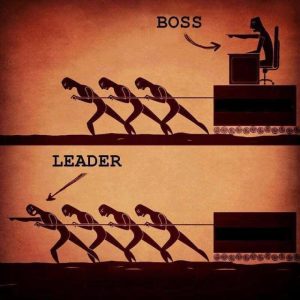
To believe that salvation will come from a single masquerading reformist leader or a catchy campaign slogan is naïve. Each election cycle brings a new messiah promising redemption and a new scapegoat blamed for failure. Ruto rose to the presidency through the “hustler” narrative and later rode the same cycle of promises and public expectation. However, every cycle ends the same way, with scandal, frustration, and excuses. You cannot legislate honesty into a population that glorifies shortcuts. A nation that cheats in the classroom will one day cheat in the treasury. Moral bankruptcy does not vanish with regime change; it must be uprooted at its source.
True change, therefore, cannot begin in Parliament. It must start in our homes, schools, workplaces, and communities. It begins when parents teach their children that truth is more valuable than deceit, when schools reward integrity alongside performance, when businesses prioritize fairness over profit, and when religious and civic institutions value moral courage above political convenience. Change starts in the simple act of saying “no” to dishonesty, even when it comes at a personal cost. It begins when citizens hold themselves to the same standards they demand of those they elect. Simple acts, avoiding littering, refraining from spitting indiscriminately, and maintaining community hygiene, are part of this moral foundation. Only then can leadership transform from a mirror of national decay into a reflection of civic virtue.
A nation is not destroyed by its laws but by its habits. Kenya’s Constitution is among the most progressive in the world, yet it remains powerless when citizens prioritize convenience over principle. Laws can define justice, but only habits can sustain it. If small lies go unchecked, minor thefts go unpunished, and selfish acts are excused, then no constitutional reform, anti-corruption commission, or electoral overhaul can save the populace. Leadership will continue to mirror the culture that produces it.
Until Kenyans rebuild themselves from the ground up, until honesty is rediscovered as a virtue, fairness embraced as a duty, and integrity restored as a national value, scandal will remain our national anthem, outrage our daily prayer, and disappointment our political tradition. When a people raise thieves to power, they should not be shocked when the treasury runs dry. They need only look into the mirror and recognize themselves.
Short Bio
Maina Wahome is an author, linguist, and columnist. He also serves as a lecturer of the English language and conducts academic research.
Similar Posts by The Mt Kenya Times:
- Mt Kenya Times ePAPER October 17-18, 2026
- Ruto bets billions on Kerio Valley — with one eye on 2027
- Ruto’s health ministry kills Murang’a’s digital hospitals
- Kenya bets on Mount Kenya to drive a billion-shilling tourism revival
- Do you have a wealth vision? Or are you just working until you die?
About the Author