Zimbabwe Navigates Energy Strain and Fuel Costs as Growth Forecast Softens
 The Mt Kenya Times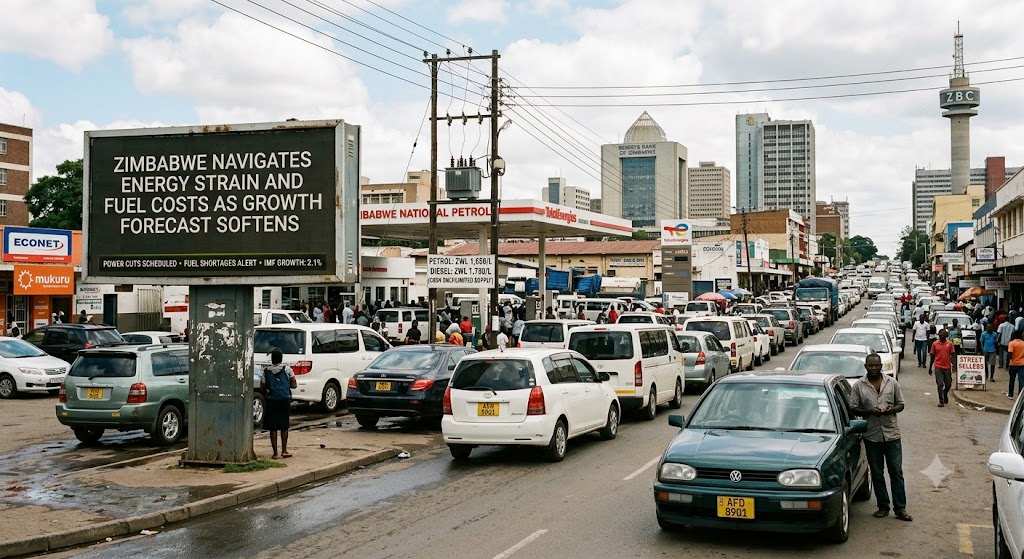
By Norman Mwale [The PenPusher]
“You cannot separate mining from energy. As we industrialise, power must lead the way.” — Dr Caleb Makwiranzou, Deputy Minister of Mines
Zimbabwe enters the second half of 2026 balancing tentative economic stability against rising energy demand, fuel import pressure and external price shocks, with government and industry warning that power deficits remain the biggest drag on growth. The mining sector is set to drive a sharp increase in consumption through to 2030, with electricity demand projected to rise by 40 per cent and petroleum use by 20 per cent, according to Government estimates presented at a Kwekwe strategic planning workshop. Deputy Minister of Mines and Mining Development Dr Caleb Makwiranzou said coordination between energy and mining was non-negotiable for Vision 2030. “As we move towards 2030, the mining industry will experience rapid energy consumption. Strategic coordination between our ministries is essential because you cannot separate mining from energy,” he said.
Power shortages already cost the economy an estimated 6.1 per cent of GDP in 2022, largely due to generation inefficiencies and network losses. Most electricity still comes from coal at Hwange and hydropower at Kariba, which remains vulnerable to low rainfall. A potential shift is emerging in the Cabora Bassa Basin. Australian firm Invictus Energy, the only oil and gas company operating in Zimbabwe, is preparing a pilot gas-to-power project that could supply a gold mine within 12 to 18 months. Chief Executive Scott Macmillan said the pilot would “prove the concept that we can produce gas, process it, deliver it to our customers, get all the approvals in place from government… and then get paid,” with full-field production possible in two to three years. One trillion cubic feet of gas could provide about 500MW annually for 20 years, enough for 250,000 homes.
Households and businesses are also feeling pressure from global fuel markets. Fews Net has warned that rising fuel prices linked to Middle East tensions are eroding purchasing power and threatening access to food and markets. “Fuel price and transport fare increases driven by the conflict in the Middle East continue to negatively impact poor households’ livelihoods, disposable income, and access to markets,” the network said. Zimbabwe’s fuel consumption is accelerating. ZERA data shows diesel demand jumped 20.2 per cent year-on-year in Q1 2026, with total fuel use projected at 2.5 billion litres in 2026, up from 2.1 billion in 2025. That trajectory could push the import bill above US$2.2 billion, compared with US$1.86 billion spent in 2025. Government says stocks are sufficient for two to three months and that supplies in transit via Beira are being monitored. Industry and Commerce Minister Mangaliso Ndlovu said most basic commodity prices had remained relatively stable despite energy cost pressures, with businesses absorbing rather than passing on costs. “The Government’s monitoring of a 14-product ‘basic basket’ shows minimal price movement across the board,” he noted.
The fiscal outlook has also been tempered. Finance Minister Mthuli Ncube expects GDP growth of 5 per cent in 2026, down from a projected 6.6 per cent in 2025. “While this marks a moderate recovery, growth remains softer than expected due to persistent global headwinds, weak external demand, and energy deficits… and also due to financing constraints,” he told Parliament. Inflation is forecast to moderate to 12.7 per cent by year-end, with single-digit inflation targeted for early 2026. The 2026 Budget Strategy Paper forecasts growth will be driven by agriculture, mining, ICT and electricity, with a fiscal deficit targeted below 3 per cent of GDP.
Stakeholders offer a balanced view. For business, the surge in diesel and petrol use reflects industrial activity. ZERA data shows diesel consumption reached 489.2 million litres between January and April 2026, already exceeding full-year 2010 use, which analysts say signals productive utilisation in transport-heavy sectors. Civil society groups caution that households bear the brunt when global prices rise, particularly rural families reliant on fuel for transport and farming. Fews Net says external energy shocks are likely to sustain cost pressures in the near term. Zimbabwe’s economic path for the rest of 2026 will therefore hinge on whether gas exploration can diversify power supply and ease reliance on imports, and whether fiscal and monetary policy can contain fuel-driven inflation without slowing industrial growth.
Similar Posts by The Mt Kenya Times:
- Mt Kenya Times ePAPER October 9, 2026
- Ruto claims farming revolution as election season dawns
- China grants Kenya $2M for drought and Ebola response
- High Court upholds KSh2.5M IEBC fine against Gikaria
- Kenya’s opposition fractures with 11 months to the ballot
About the Author