Nyandarua Farmers Embrace Climate-Smart Solutions To Boost Livestock Productivity
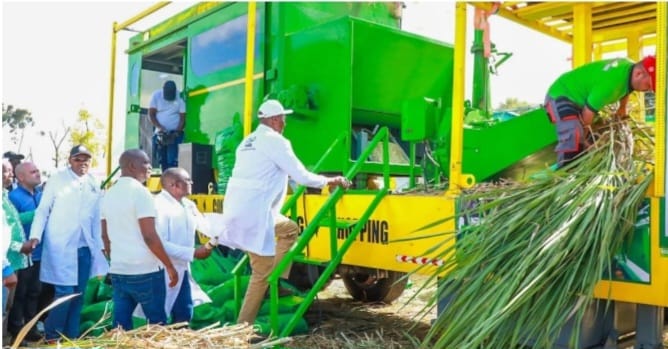
Farmers being taken through the process of making the best silage.
By MKT Correspondent
Livestock farmers in Nyandarua County are being urged to adopt climate-smart innovations to safeguard their livelihoods and enhance productivity amid the challenges posed by climate change.
The call came during a Nyandarua County Farmers Field Day held in Olkalou, where key challenges facing the sector were discussed, including inadequate fodder storage and losses caused by spoilage.
Nyandarua Governor Moses Kiarie Badilisha highlighted that the county, despite being a leading milk-producing region, faces significant risks due to climate change, which has disrupted traditional farming practices. “Farmers incur huge losses when their silage and other fodder go bad,” he noted, emphasizing the importance of the field day as a platform for farmers to learn about modern technologies and innovations that can address such challenges.
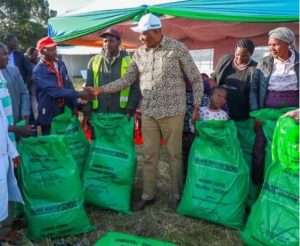
One of the main issues discussed was the inefficiency of traditional fodder storage methods, such as open-air drying and trench or pit silos, which often result in significant nutrient loss and wastage. To tackle this, innovators introduced The Silage Master, a modern silage bagging solution designed to preserve fodder by creating perfect anaerobic conditions, thereby reducing spoilage caused by oxygen exposure.
Ms. Teresiah Wanja from Silage Master3000 explained that the technology aims to make animal feeds more affordable, sustainable, and nutritionally high-quality through advanced preservation methods. The machine converts crops such as maize and Napier grass into vacuum-sealed silage. Fodder is chopped into small pieces, mixed with other nutrients, weighed, and packed into 25–50kg bags for convenient storage, use, and transport. The machine then compresses and vacuums the silage to remove air, fostering essential bacterial growth for fermentation. The double-sealed bags can be used after 15 days or preserved for up to two years.
Beyond providing a practical solution for fodder preservation, the initiative incorporates education and training, empowering farmers to adopt resilient farming practices. Training sessions focus on modern techniques that enhance productivity, reduce vulnerability to climate-related shocks, and improve livestock health.
Governor Badilisha emphasized that these skills contribute not only to higher milk yields but also to better household nutrition, particularly for children, who are most vulnerable to malnutrition. By combining technological innovation with farmer education, Nyandarua County aims to strengthen the livestock sector, enhance sustainability, and mitigate the adverse impacts of climate change on small-scale farmers and pastoralists.
Similar Posts by The Mt Kenya Times:
- Uhuru owns “sponsor” — and Ruto should be worried
- Sengwer youth: When will Kenya stop treating a minority like an afterthought?
- When young lives become disposable
- The day death refused to be scammed
- Statement win at the Gtech: Brentford outclass Chelsea to claim all three points
About the Author