Colombians vote Sunday in election that will shape security, economy and peace
 The Mt Kenya Times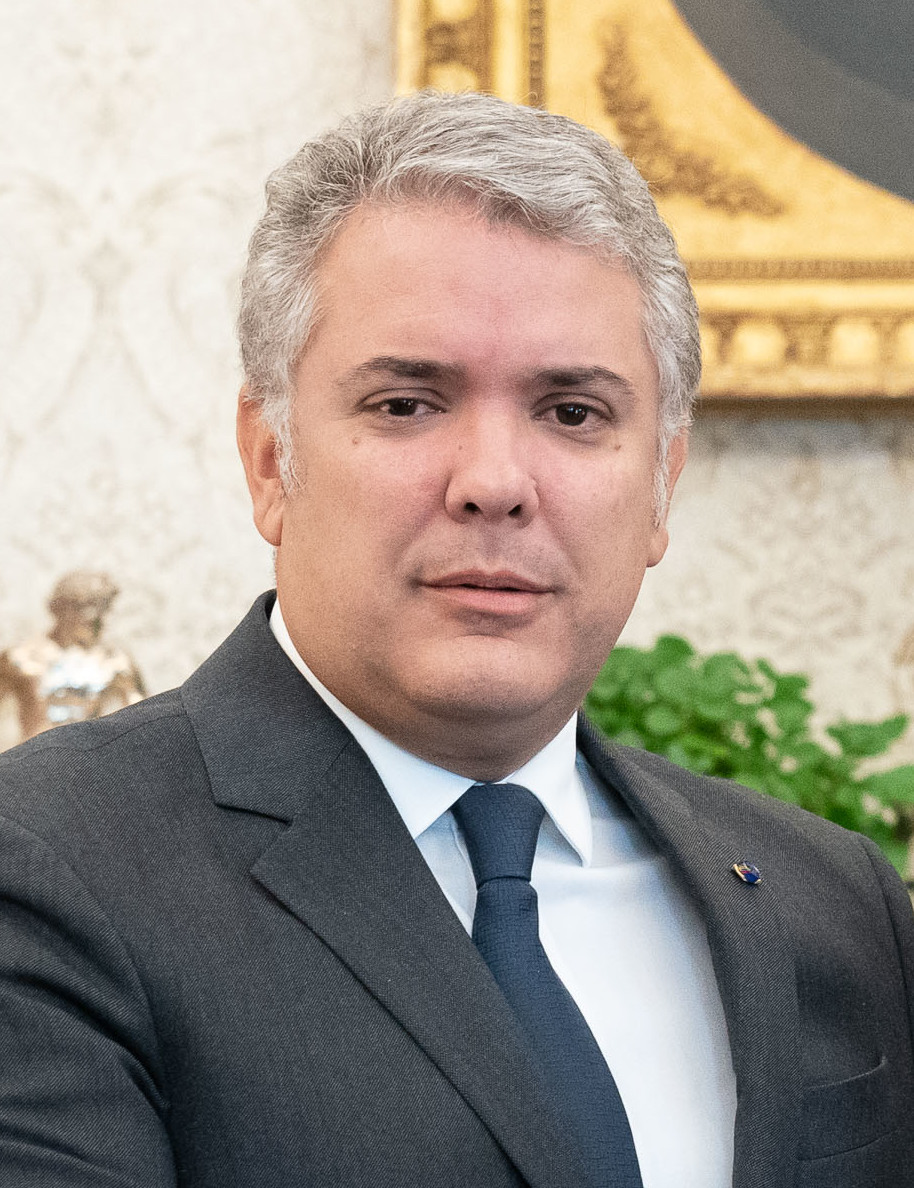
President Iván Duque
Thirty-nine million citizens go to the polls — and a watchful diaspora in 67 countries goes with them.
By Norman Mwale
Colombia holds a presidential election on Sunday in a contest that will determine the country’s direction on security, the economy and an unfinished peace process, with more than 39 million eligible voters casting ballots at home and across 67 countries worldwide.
The vote arrives at a moment of acute national anxiety. Persistent inflation, renewed violence in several departments, and a restless electorate demanding credible answers on employment, healthcare and public safety have combined to produce one of the most closely watched Colombian elections in years. Campaigning closed on Wednesday with leading candidates making final appeals in Bogotá, Medellín and Cali, each framing Sunday’s choice in the starkest possible terms — continuity or change, stability or rupture, the peace dividend or a harder line.
The National Registry of Civil Status confirmed that over 972,000 Colombians are registered to vote abroad, a bloc that has proved decisive in tight races and whose influence has grown steadily alongside the volume of remittances flowing back to Colombian families. Analysts say turnout among young voters and the diaspora will be the election’s defining variable. “This election is about restoring confidence in institutions while protecting the gains we have made in peace and social investment,” a senior campaign adviser told Reuters on Friday, speaking on condition of anonymity in accordance with electoral regulations.
Civil society observers have urged all actors to uphold the integrity of the process. The Mission of Electoral Observation was direct in its pre-election statement: “The integrity of the process depends on respect for the rules by all actors, from candidates to citizens.” International monitors are deployed across the country’s 32 departments, with particular attention on regions where armed group activity has historically disrupted participation.
For the Colombian diaspora — scattered from Madrid to Miami, London to Toronto — Sunday’s ballot is not a civic abstraction. It is a deeply personal reckoning with decisions made years or decades ago, and with the question of whether the country they left has become one they might return to. Many departed during previous waves of economic hardship or political violence and now weigh their vote against family welfare, the cost of living abroad, and the safety of those they left behind.
“We are voting with our relatives in mind,” said Lucía Ramírez, a community organiser in London who coordinates voter assistance for Colombians in the United Kingdom. “The cost of living, the safety of our neighbourhoods, the future of our children — these are not abstractions. They are the reasons people queue at consulates.” Her words capture a sentiment repeated in Colombian communities across Europe and the Americas in the days before the election.
The Ministry of Foreign Affairs confirmed that consular polling stations in 67 countries will operate from 8 a.m. to 4 p.m. local time, with extended hours in cities carrying the highest concentrations of registered voters. The logistics of running a credible election across that many time zones and jurisdictions represent a considerable administrative undertaking, and one that Colombian authorities have worked to refine through successive electoral cycles.
International attention extends well beyond the ballot itself. Governments, investors and multilateral institutions are watching for signals about how Colombia will position itself on regional security, trade partnerships and the complex peace architecture built over years of negotiation with armed groups. Business leaders have called publicly for policy certainty and an environment conducive to long-term investment. Trade unions, meanwhile, are pressing for stronger labour protections and a government willing to confront the structural inequalities that have driven emigration for generations.
President Iván Duque, constitutionally barred from seeking a second consecutive term, made a final public appeal on Thursday. “Democracy is strengthened when citizens speak through the ballot box,” he said in a televised address, urging Colombians at home and abroad to participate peacefully and to trust the institutions that govern the count.
The National Electoral Council has pledged real-time updates once counting begins, with results expected late Sunday evening. What those results will mean — for the peace process, for the economy, for the millions of Colombians who made their lives elsewhere and still vote as though they never left — will take longer to measure.
Colombia has held difficult elections before and found its way through them. Sunday will test whether it can do so again, in a climate where the stakes feel higher, the divisions run deeper, and the diaspora has never been more invested in the outcome.
The polls open at 8 a.m. By nightfall, a nation will know which direction it has chosen. The diaspora will be watching every number as it comes in.
Similar Posts by The Mt Kenya Times:
- Polycystic Ovary Syndrome: Diagnostic Challenges And Its Impact On Reproductive Health
- Understanding parentification and its impact on learning
- Gachau bows out, but the passion stays
- AI Curse or boon: The Future of Intelligence: Artificial or Emotional?
- Dr. Ekrah Ndung’u wins TVET advocacy award after 12 years
About the Author