Informed Citizens Or Manipulated Masses? Reassessing Democratic Education In Kenya
 The Mt Kenya Times
 By Jerameel Kevins Owuor Odhiambo
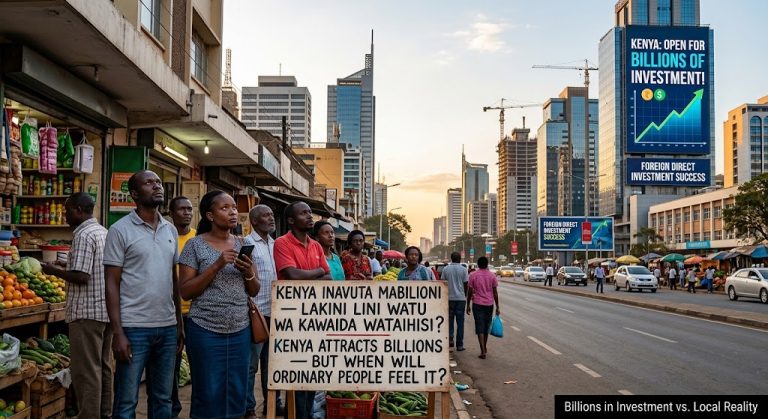
Kenya’s literacy rate stands at 82% according to the 2019 census, with significant disparities between urban areas like Nairobi (96%) and rural regions such as northeastern counties (below 20%). The country allocates approximately 5% of its GDP to education, yet challenges persist: overcrowded classrooms averaging 60-80 students per teacher in public schools, a shortage of over 100,000 teachers, and limited access to quality education in marginalized areas. Internet penetration has reached 43%, while mobile phone penetration exceeds 120%, creating new frontiers for both information access and misinformation. These statistics frame the Kenyan context in which Jefferson’s 18th-century warning about democracy and ignorance plays out in distinctly 21st-century ways.
Thomas Jefferson’s assertion that democracy requires an educated citizenry resonates profoundly in Kenya’s contemporary political landscape. Since achieving independence in 1963, Kenya has grappled with ethnic polarization, electoral violence, and governance challenges that often exploit educational and information gaps. The 2007-2008 post-election violence, which claimed over 1,100 lives and displaced 600,000 people, demonstrated how misinformation and manipulation of ethnic narratives could destabilize democratic processes. Citizens lacking critical analytical skills became susceptible to inflammatory messaging that appealed to tribal loyalties rather than policy considerations. This tragic episode validates Jefferson’s concern that ignorance creates fertile ground for demagogues and those who would manipulate democratic systems for personal gain.
Kenya’s education system, while producing impressive graduates who excel globally, suffers from qualitative inconsistencies that undermine civic preparedness. The 8-4-4 curriculum, only recently replaced by the Competency-Based Curriculum (CBC), emphasized rote memorization over critical thinking. Students could recite constitutional provisions without understanding their practical implications or how to hold leaders accountable. Civic education remains peripheral rather than central to the curriculum, producing voters who may be literate but lack the analytical tools to evaluate political promises, scrutinize budgets, or recognize manipulative rhetoric. This distinction between basic literacy and genuine civic education represents the difference between Jefferson’s vision of an informed citizenry and merely a literate one.
 The digital revolution has complicated Jefferson’s equation in ways he could never have anticipated. Kenya’s robust mobile technology adoption, exemplified by innovations like M-Pesa, has democratized access to information but simultaneously weaponized misinformation. During election cycles, WhatsApp groups become echo chambers spreading unverified claims, doctored images, and inflammatory content that bypasses traditional media gatekeepers. The 2017 elections saw sophisticated disinformation campaigns targeting voters through social media, exploiting both educational gaps and ethnic divisions. Citizens without strong educational foundations in media literacy, critical thinking, and fact-checking become vulnerable to these manipulation tactics, exactly as Jefferson feared, though through mechanisms he could not have imagined.
Economic inequality intersects with educational disparities to create a two-tiered democracy in Kenya. Wealthy Kenyans access quality private education, international curricula, and digital literacy skills that enable them to navigate information environments critically. Meanwhile, millions attend under-resourced public schools where graduating without basic comprehension skills is common. This educational divide translates into a political divide: the educated elite can analyze policy proposals and hold leaders accountable, while others remain vulnerable to populist appeals and ethnic mobilization. Jefferson’s self-government becomes hollow when only a fraction of citizens possess the tools to participate meaningfully, creating what amounts to an oligarchy masked as democracy.
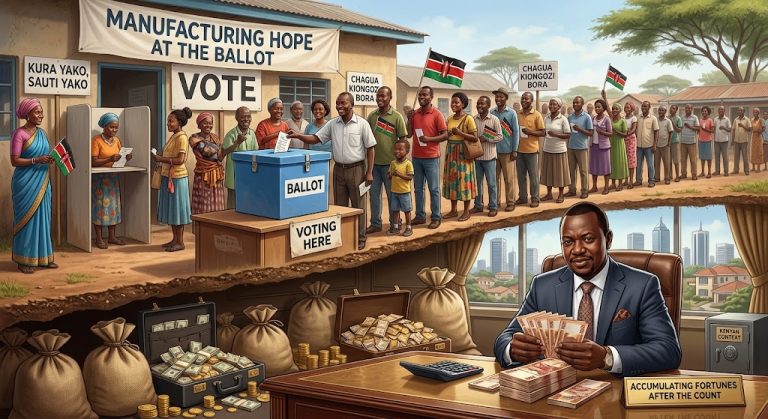
Kenya’s experience with constitutional referendums illustrates how educational gaps enable manipulation. The 2005 constitutional referendum and the 2010 one that succeeded it both involved complex legal documents that many voters could not fully comprehend. Politicians simplified these documents into tribal calculations and personal loyalty tests rather than substantive constitutional analysis. In 2023-2024, debates around housing levies, university funding models, and the Finance Bill saw similar patterns where technical policy discussions were reduced to tribal narratives or simplified slogans. Without widespread educational capacity to engage with policy complexity, democracy devolves into what political scientists call “delegative democracy,” where citizens periodically choose leaders but cannot effectively monitor or constrain them between elections.
Yet Kenya also demonstrates paths forward that Jefferson would recognize. The rise of civil society organizations focused on civic education, voter awareness campaigns, and innovative uses of technology for transparency represent modern applications of Jefferson’s principle. Platforms that simplify county budgets, track development projects, and fact-check political claims help bridge educational gaps. The 2010 Constitution’s devolution system brought government closer to citizens, creating opportunities for civic learning through participation in county assemblies and public participation forums. These initiatives suggest that while formal education remains foundational, creative approaches to civic engagement can partially compensate for educational deficits and strengthen democratic practice.
Jefferson’s warning remains urgently relevant to Kenya’s democratic journey, but with crucial qualifications for the modern context. Education alone is insufficient if it does not cultivate critical thinking, media literacy, and genuine civic engagement. Kenya must move beyond measuring educational success in enrollment rates and examination scores toward assessing whether graduates can analyze information critically, engage constructively across difference, and hold power accountable. The quality of Kenyan democracy in coming decades will depend not merely on literacy rates but on whether educational systems produce citizens who cannot be easily misled, manipulated, or mobilized along ethnic lines. In this sense, Jefferson’s 18th-century insight offers a timeless challenge: democracies must invest in the minds of their citizens or risk losing democracy itself. For Kenya, this means treating civic education not as a luxury but as essential infrastructure for self-government, as vital as roads, electricity, or digital networks.
The writer is a legal writer and researcher
Similar Posts by The Mt Kenya Times:
- Trauma, Friendship, Love, and the Search for Self-Worth in Hanya Yanagihara’s A Little Life
- Kenya’s scouting laws face overhaul: Kiarie leads push to align movement with devolved governance
- Mt Kenya Times ePAPER September 19-20, 2026
- Kenya joins US and UK to put citizens on the terrorism frontline
- Kenya’s parliament races to tame the AI frontier
About the Author