Jimi Wanjigi shifts political debate to economy, dismisses ethnic politics
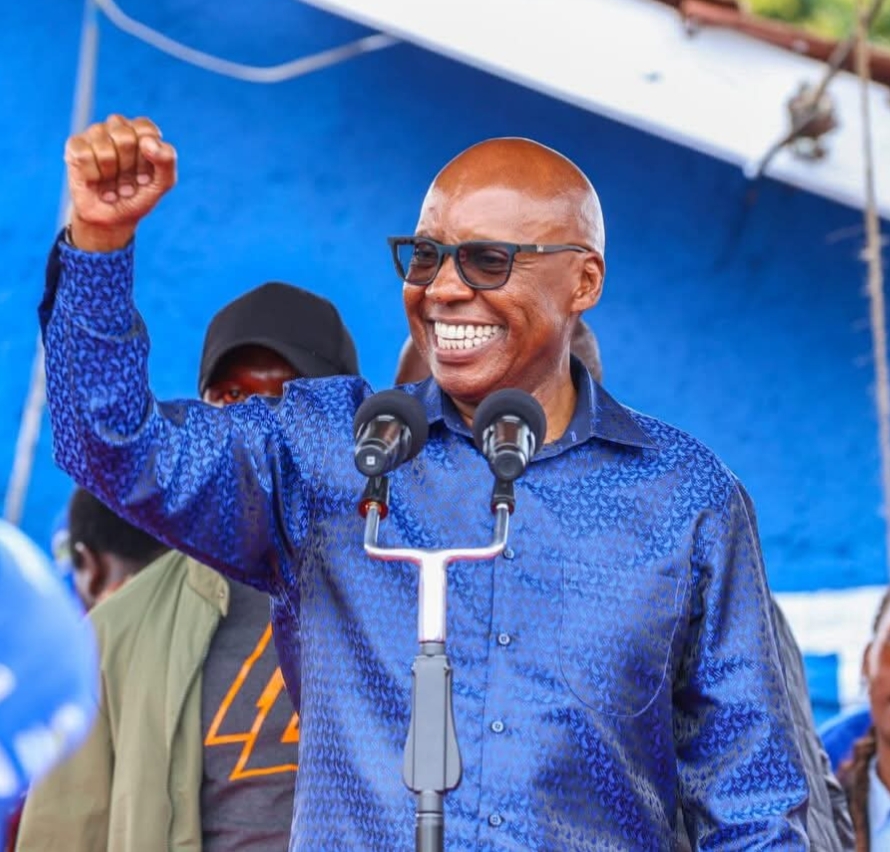
Jimmi Wanjigi addressing the public after opening Safina party's Homa Bay office. Photo/courtesy.
By WMW
Safina Party leader and presidential aspirant Jimi Wanjigi has called for a fundamental shift in Kenya’s political conversation, urging leaders and citizens alike to focus on economic hardship rather than ethnic divisions, which he described as outdated and distracting.
Speaking during the opening of the party’s new office in Homa Bay County on Friday, Wanjigi painted a stark picture of the country’s economic reality.
He argued that a vast majority of Kenyans are struggling to meet basic financial obligations, characterizing the national mood as one weighed down by “pain, trauma, and tears.”
Despite the grim assessment, Wanjigi struck a hopeful tone, commending Kenyans for their resilience and entrepreneurial spirit.
He expressed confidence that the country can overcome its current challenges if leaders and citizens unite around a shared economic vision.
The choice of Homa Bay for the event carried symbolic and political weight.
The region has long been a stronghold of opposition politics, and Wanjigi acknowledged its historical significance while describing it as a place he considers home.
He emphasized the importance of building unity across political lines to advance economic progress.
Wanjigi also highlighted the untapped potential of Homa Bay County, pointing to its strategic position along Lake Victoria and its strengths in fishing, agriculture, and cross-border trade with neighboring countries.
He argued that such regions should serve as engines of growth under Kenya’s devolved system, rather than being held back by inefficiencies and missed opportunities.
A key theme of his address was a rejection of ethnic-based politics. Wanjigi criticized leaders who continue to rely on tribal narratives, saying they divert attention from the real challenges facing Kenyans.
While acknowledging historical grievances in regions like Nyanza, he warned against using them to deepen divisions.
Turning to national policy, Wanjigi delivered a pointed critique of the government’s economic management.
He described the current model as ineffective, citing rising public debt, high inflation, and declining investment as key concerns.
According to him, a large share of government revenue is now consumed by debt servicing, limiting the state’s capacity to invest in development.
He further noted signs of slowing growth in critical sectors such as agriculture, construction, and services, alongside weakening private sector activity.
These trends, he said, have led to job losses and business closures, worsening the economic strain on households.

In a dramatic metaphor, Wanjigi likened the country’s economic situation to a biblical flood, framing the present moment as a turning point.
He presented the Safina Party as a vehicle for recovery, calling on Kenyans to embrace a new path toward prosperity.
Central to his message was what he described as an “economic salvation plan.” The proposal focuses on reducing reliance on debt, investing in human capital, and promoting innovation and enterprise.
He advocated for a shift in fiscal policy, including lowering taxes and prioritizing value creation.
Among the measures he outlined were reducing sales tax, expanding access to free education and publicly funded healthcare, and increasing the availability of affordable credit.
He also proposed limiting government borrowing from domestic financial institutions to ease pressure on private sector lending.
Wanjigi stressed the importance of strengthening local industries, particularly manufacturing and high-value agriculture, as a means of creating jobs and building sustainable wealth.
He argued that long-term economic stability will depend on empowering these sectors.
He also called for governance reforms aimed at improving accountability and restoring public trust. According to Wanjigi, rebuilding confidence in public institutions is essential for achieving meaningful and lasting economic recovery.
Wanjigi urged Kenyans to take an active role in shaping the nation’s future.
He framed economic empowerment as a form of freedom and invited citizens to join the Safina Party, describing the newly opened office as a symbol of opportunity and renewal.
The event highlighted the growing centrality of economic issues in Kenya’s political landscape as the country moves toward the 2027 general election, with leaders increasingly advancing competing visions for recovery and growth.
Similar Posts by The Mt Kenya Times:
- Mt Kenya Times ePAPER August 12, 2026
- Kalonzo takes tea crisis to Mombasa in direct pitch for farmers
- The extortion charge: Ichung’wah fires back at Gachagua with KSh300M allegation
- Gachagua goes for the jugular: The speech that shook a nation
- Mau Mau veterans sign peace pact, renew compensation push ahead of 2027 polls
About the Author