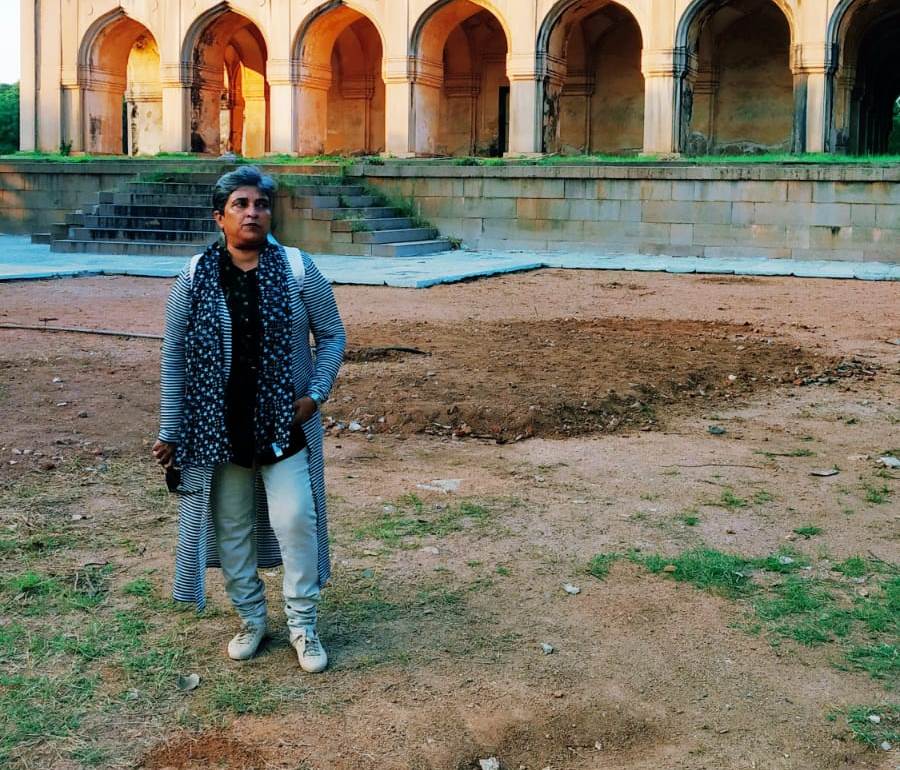
Robina Farooq
Three decades in education, a lifetime of quiet courage — and verses that refuse to look away
By MKT Reporter
Robina Farooq’s journey spans more than three decades as a child educator, teacher trainer, and school principal. Having taught among the privileged, she made a deliberate and deeply personal choice to redirect her energies toward children who needed her most — those in care, in crisis, and on the margins.
Her time working closely with street children caught in the grip of substance addiction left a lasting imprint on her. It reshaped not only her understanding of childhood and resilience, but of humanity itself — the kind of understanding that no classroom can teach.
An artist at heart, Robina finds quiet joy in transforming everyday objects into something beautiful, whether through painted pots or expressive visual artwork. But it is poetry that has become her truest and most intimate medium. Her verses are abstract, contemplative, and sharply observant — the kind that stir something long dormant in the reader and draw them gently into worlds of introspection and quiet wonder.
Away from the page, she is a private and unassuming person, yet a remarkably keen observer of people and the world around her. A devoted fan of crime thrillers, she lives by a philosophy attributed to Plato: that truth, however damaging, must never be abandoned — and it is this conviction that guides her pen most faithfully.
Her literary voice has earned recognition well beyond her immediate circle. She secured fourth place at the S7 All India Poetry Competition, and her work has appeared in more than thirty anthologies across various literary platforms and publications — a quiet but considerable body of achievement.
One of her most arresting poems, Politics of feelings, offers a fearless exploration of ethics, greed, power, and truth. Through vivid imagery and carefully layered metaphors, the poem examines how manipulation and dishonesty may appear to triumph for a time — yet ultimately crumble before justice and integrity. The recurring image of the “park bench” is particularly memorable, evolving across the poem from a symbol of ridicule into one of quiet, hard-won victory. It is a reminder, rendered with elegance, that honest perseverance will always outlast hollow conquest.
Rooted in observation, honesty, and the courage to sit with uncomfortable truths, Robina’s writing does not merely reflect her outlook on the world — it mirrors the very essence of the life she has chosen to live.
Similar Posts by The Mt Kenya Times:
- Mt Kenya Times ePAPER October 12, 2026
- Gachagua’s party storms Kikuyu from afar as 2027 countdown begins
- Counties caught: The KSh100B payroll scandal Kenya can no longer hide
- CS Ogamba: tree planting could generate carbon credit millions to fund education
- Farouk Kibet calls for unity and development as leaders rally behind Ruto’s 2027 re-election bid
About the Author