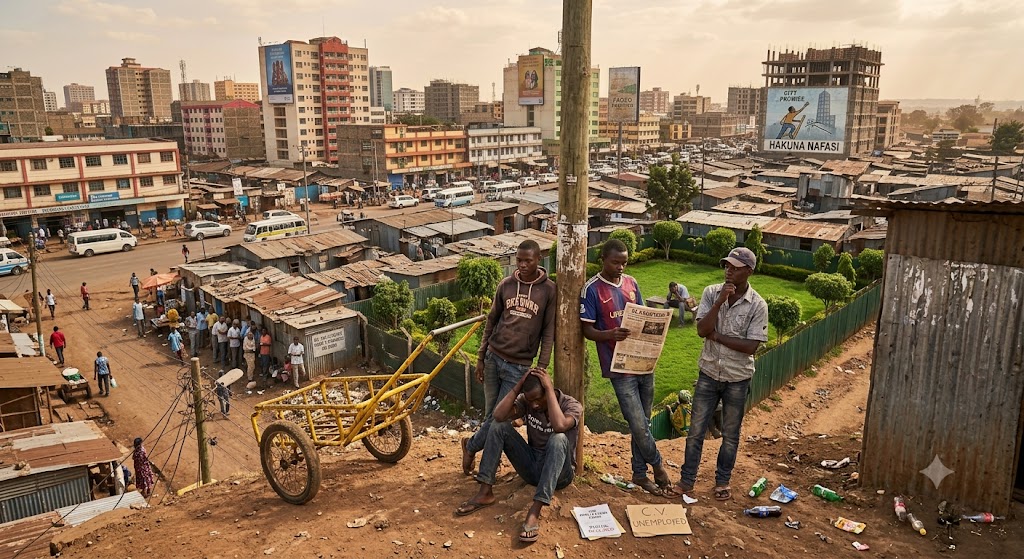
The rush to urban centres has blinded many Kenyans to the quiet, steady wealth being built back home — and the land they left behind may hold more promise than the city ever did.
By Hadassah Karangu
For generations, the story has been the same: pack your bags, head to the city, and leave poverty behind. Nairobi beckons. Mombasa promises. The village can wait.
But can it?
A closer look at where Kenya’s real wealth is being built tells a very different story. While young graduates queue for shrinking office jobs and urban rents consume half a monthly salary before the week is out, a growing number of Kenyans are quietly building fortunes in the countryside — from poultry sheds, dairy barns, greenhouse rows and fish ponds that city dwellers rarely think about until they sit down to eat.
The countryside is, in truth, the backbone of the Kenyan economy. Every day, the food that feeds the nation travels from farms far beyond the busy streets of Nairobi, Mombasa and Kisumu. Farmers rise before sunrise to tend crops and livestock. Cabbages, sukuma wiki, broccoli, potatoes, cauliflower — all of it begins not in a supermarket, but in soil that someone chose to work. While many office workers wait anxiously for end-month, a successful farmer earns from each harvest. A well-managed farm does not wait for a payslip. It produces continuously, and often handsomely.
I have seen this firsthand. A neighbour from my rural area started with a modest flock of chickens. No corporate backing, no city connections — just land, patience and a clear-eyed vision. Through dedication and consistency, he built a thriving poultry business from the ground up. Today he is a millionaire, with rental flats in Nairobi, a beautiful home, cattle, sheep and an ever-expanding farm operation. His wealth did not begin in a boardroom. It began in a village, with a decision to stay and build.
His story is not exceptional. It is becoming a template. Across Kenya, dairy farming, horticulture, beekeeping, fish farming and small enterprise agriculture are generating incomes that rival — and in many cases surpass — white-collar salaries. The land that young people abandon in search of opportunity elsewhere often holds precisely the opportunity they are looking for.
None of this dismisses what cities offer. Urban centres remain essential engines of education, technology, trade and industry, and for many Kenyans they represent genuine pathways to progress. The argument is not against cities. It is against the unexamined assumption that success only lives in them.
One of the most undervalued advantages of rural life is access to land — a productive asset that can feed families, create employment and generate lasting income. Urban life, by contrast, frequently brings high rent, punishing transport costs, intense job competition and the grinding anonymity of a city that owes you nothing.
Perhaps it is time to redefine what success looks like. Agriculture is no longer merely a way of life. It is a business, an investment and, for a growing number of Kenyans, a pathway to genuine financial freedom.
The food on every city plate begins on a farm. The next time someone says all the green pastures are in the city, they should remember the farmers building fortunes from the land — and consider that the richest opportunities in Kenya may lie not among skyscrapers, but among the green fields they left behind.
Similar Posts by The Mt Kenya Times:
- Mt Kenya Times ePAPER October 1, 2026
- Museveni backs Lamu but keeps Uganda’s money at home
- Sifuna’s party wins its name — and Kenya’s opposition race begins in earnest
- Lamu’s $16B gamble: Africa’s biggest refinery divides the region
- Ruto launches KSh2.2 trillion Lamu refinery in East Africa’s biggest energy bet
About the Author