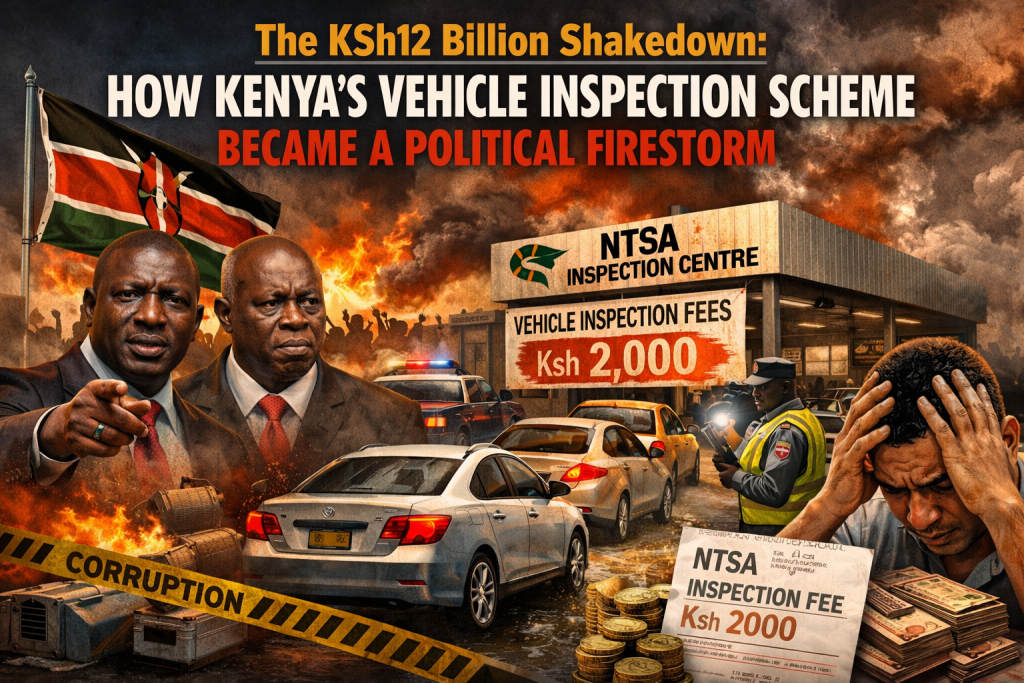
The KSh12 billion shakedown: How Kenya’s vehicle inspection scheme became a political firestorm
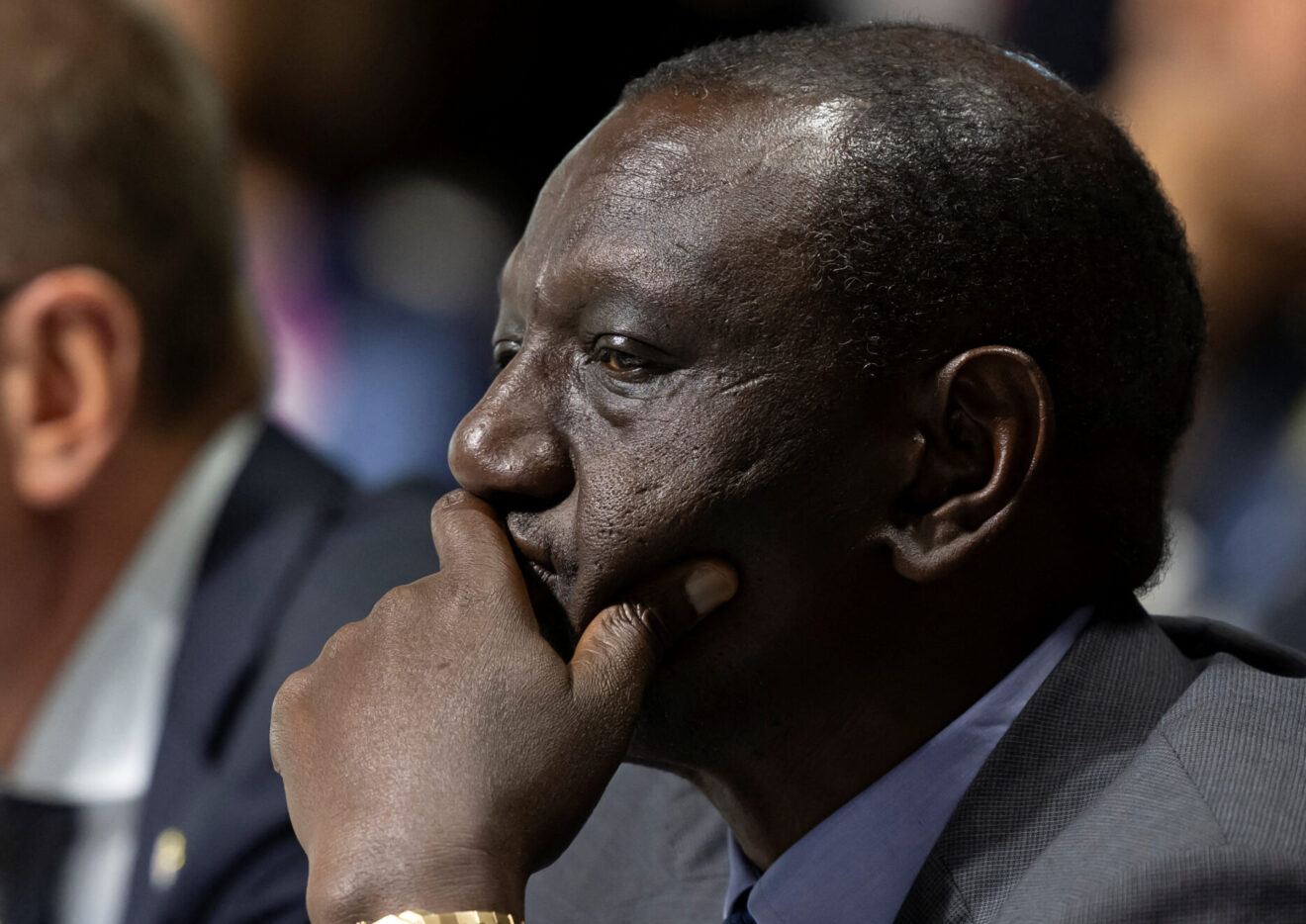
President William Ruto
With nearly five million registered vehicles on Kenyan roads and the government standing to collect up to Sh12 billion annually in mandatory inspection fees, opposition leaders are crying foul — and one has told Kenyans to refuse to pay.
By MKT Reporter
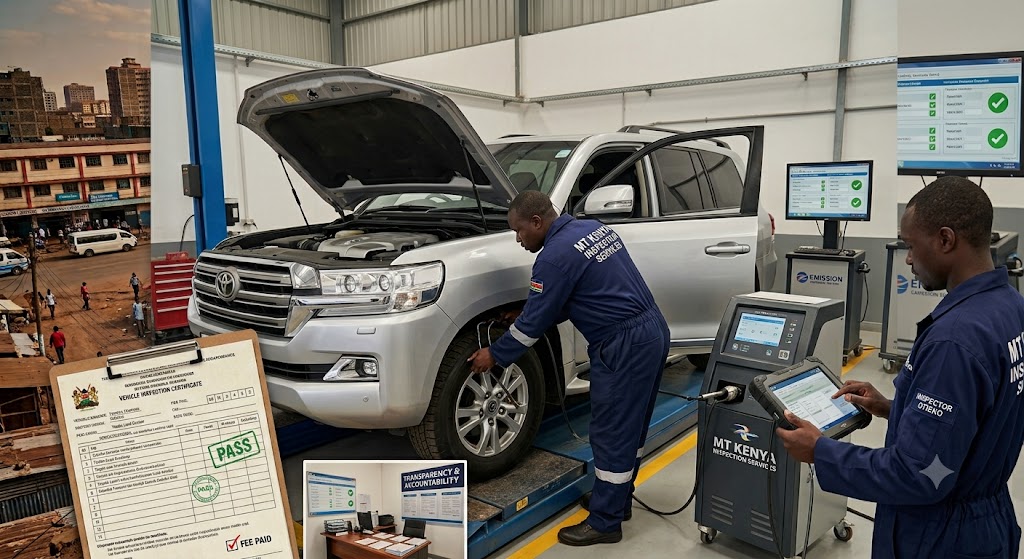 The government’s plan to subject millions of private vehicles to mandatory annual inspections has triggered a political and public storm, with opposition leaders calling for its suspension and one accusing President William Ruto of using the new policy to raise billions to bankroll his 2027 re-election campaign.
According to NTSA, Kenya has more than six million registered vehicles. Based on inspection charges set by the authority, the government could potentially collect at least Sh12 billion annually if all registered vehicles in the applicable categories paid the Sh1,000 booking fee and Sh1,000 inspection fee. An MKT analysis of Kenya National Bureau of Statistics data sharpens that figure considerably. The total number of registered motor vehicles in Kenya stood at 4,973,017 as of December 2024. Of that figure, non-motorcycle vehicles — private cars, commercial vehicles and public service vehicles — numbered 2,429,381, with the balance comprising motorcycles and three-wheelers. Applying the gazetted fee structure to the full fleet — Sh2,000 per non-motorcycle vehicle and KSh500 per motorcycle — yields a conservative gross annual collection potential of approximately KSh6.13 billion, rising to the authority’s own implied figure of KSh12 billion when private inspection centre fees are factored in alongside NTSA’s booking revenue. Either sum, extracted not through Parliament or a Finance Bill but through a gazette notice and a regulatory instrument signed in February, represents one of the largest non-legislative revenue grabs in recent Kenyan memory.
From 1 July 2026, every privately owned vehicle more than four years old is required to undergo a compulsory annual roadworthiness inspection under the Traffic (Motor Vehicle Inspection) Rules, 2026, gazetted as Legal Notice No. 13 of 2026 in February and implemented by NTSA under Section 119(g) of the Traffic Act. The opposition has not hesitated to frame it in the bluntest possible terms. Democracy for the Citizens Party leader and former Deputy President Rigathi Gachagua, addressing supporters, was unsparing. “Nobody should take their vehicle for inspection and give William Ruto money,” Gachagua declared, alleging the programme was designed to raise billions for political purposes ahead of the 2027 General Election. He went further still. “If William Ruto continues to harass people, continues to bring violence, chaos and kill people, we will not fight him with violence. I will issue a directive to Kenyans to suspend the payment of taxes until William Ruto comes to his senses,” he said, threatening a full tax boycott if the government persists with what he described as intimidation of citizens. The allegation — that policy is being weaponised as a campaign finance vehicle — is unprovable before a court. In a public square already seething with distrust, it does not need to be.
 Jubilee Party deputy leader and former Interior Cabinet Secretary Fred Matiang’i, equally in opposition, issued a sharply worded call for immediate suspension. “Road safety is a legitimate national objective. However, public policy must be evidence-based, proportionate, transparent and sensitive to the economic realities facing citizens. The proposed inspection regime fails that test,” Matiang’i said. He challenged the government to disclose how many vehicles would be affected, what revenue it expects to collect annually, and what evidence exists that annual inspections of private vehicles reduce road accidents. “Vehicle condition is only one part of a much larger road safety strategy. Before imposing mandatory costs on citizens, Government must publish the data, the policy analysis, the cost-benefit assessment and the implementation plan that justify such a far-reaching decision,” he said. DAP-Kenya leader Eugene Wamalwa, speaking at a church service attended by opposition principals including Kalonzo Musyoka and Justin Muturi, went further, vowing to challenge the directive in court. “The inspection costs will increase expenses for vehicle owners, and those costs will eventually be passed on to wananchi through higher transport fares, on top of the already high fuel prices. We need to challenge this NTSA law because it is very oppressive,” Wamalwa said.
There is an old and bitter adage in Kenyan political commentary: the rich steal through policy, while the poor steal through desperation. It is crude, but it lands — and the arithmetic makes it land harder. The Motorist Association of Kenya estimates that approximately 98 percent of all vehicles on Kenyan roads fall within the four-year age bracket that triggers mandatory inspection, meaning there is virtually no exemption for the average motorist. “Many say there is no justification since the move is informed by revenue collection rather than safety. The present inspection is riddled in corruption where commercial vehicles get stickers without having met the specifics of a roadworthy vehicle. We would not want to roll out this graft to private vehicles,” the association said. It added, with brutal economy, that “it is ironic to check vehicle worthiness while the roads themselves are not vehicle worthy.”
NTSA Director-General Nashon Kondiwa has insisted the reforms are anchored in law and driven by road safety imperatives. “All motor vehicle owners with vehicles older than four years from the recorded date of manufacture are therefore expected to book for annual inspection through the NTSA service portal accessible through the eCitizen platform,” he said. The authority has pointed to Kenya’s devastating road carnage — thousands of deaths annually from preventable crashes — as justification for a tougher inspection regime. The argument is sound in principle. In practice, a regulator whose commercial vehicle inspection programme has for years been synonymous with bribery, and whose mandate covers roads that shred tyres and kill motorists through neglect, carries a formidable credibility deficit when it demands trust for an expanded remit. Kondiwa himself acknowledged that a 12-month inspection interval may not even be sufficient for heavy road users. “For users who are always on the road, 12 months is such a long time,” he conceded — a remark that, whatever its intent, raises the question of whether the interval was designed around safety science or annual revenue cycles.
Faced with mounting public fury, NTSA attempted a partial retreat. In a statement issued on Sunday, the authority said traffic police have been instructed not to demand proof of mandatory inspection from private vehicle owners during roadside checks, and that the enforcement date will be communicated once the implementation framework is fully in place. The concession has done little to quiet the storm. The regulations remain law. The commercial and school vehicle rollout has proceeded. Motorists who fail to present their vehicles face fines of up to Sh20,000, imprisonment for up to six months, or both — penalties that will fall hardest on the middle-income earners who most depend on private transport to earn a living and can least afford a shakedown at a roadblock.
A government that has imposed levy after levy on an exhausted citizenry — fuel taxes, housing levies, SHA deductions, insurance surcharges and a cost of living crisis that has left millions unable to cope — and that has simultaneously failed to fix roads, prosecute corrupt inspection officers or keep unroadworthy public service vehicles off the streets, begins with a very thin stock of public trust. Extracting between Sh6 billion and Sh12 billion annually through a gazette notice rather than parliamentary process is not road safety. It is fiscal policy by stealth — and Kenyans, armed with those numbers, know exactly what they are looking at.
Matiang’i’s questions deserve direct answers, not a deferred enforcement date. Publish the data. Publish the revenue projections. Publish the accident statistics. Publish the corruption-prevention plan. And if the numbers do not justify the policy, suspend it — because in a country where the rich write the rules and the middle class pays the bills, between Sh6 billion and Sh12 billion extracted by regulatory fiat is not a road safety programme. It is a toll booth on the road to 2027.
Similar Posts by The Mt Kenya Times:
- Mt Kenya Times ePAPER October 1, 2026
- Museveni backs Lamu but keeps Uganda’s money at home
- Sifuna’s party wins its name — and Kenya’s opposition race begins in earnest
- Lamu’s $16B gamble: Africa’s biggest refinery divides the region
- Ruto launches KSh2.2 trillion Lamu refinery in East Africa’s biggest energy bet
About the Author