New World Bank loan reignites debate over Kenya’s debt and development path
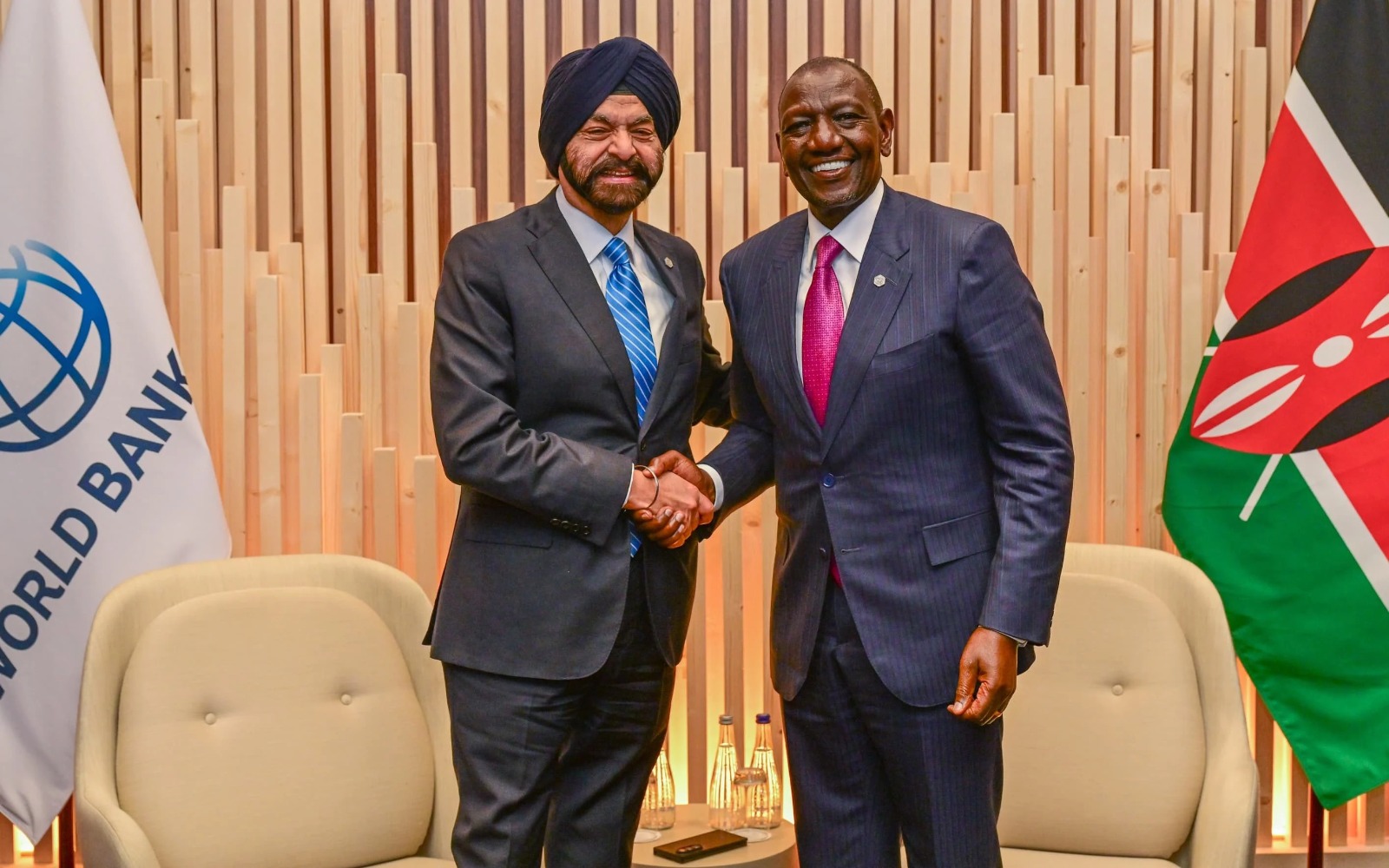
President William Ruto with World Bank President Ajay Banga
As Nairobi secures a Sh97 billion facility, Kenyans ask whether borrowed money will finally translate into better lives
By Hadassah Karangu
Kenya’s confirmation of a new financing package from the World Bank has once again stirred national conversation about debt, development and the country’s economic direction. The World Bank approved the $750 million (KSh97.12 billion) facility on Monday, structured as a Development Policy Operation combining a $340 million (KSh44.03 billion) loan from the International Bank for Reconstruction and Development and $410 million (KSh53.09 billion) in concessional financing from the International Development Association.
While government officials describe the funding as a necessary boost for the economy, many Kenyans have responded with a mix of concern, scepticism and cautious hope.
For ordinary citizens already contending with the rising cost of living, unemployment, heavy taxation and broader economic uncertainty, news of another major loan does not automatically inspire confidence. It raises a familiar question: where will the money go, and will ordinary Kenyans feel the benefit?
According to the World Bank, the funds are intended to strengthen governance, improve public financial management and expand social protection for vulnerable households. Part of the package will support implementation of the Social Protection (General) Regulations 2026 and the use of Kenya’s Enhanced Single Registry, aimed at ensuring assistance reaches the poorest households while reducing duplication. A separate $500 million (KSh64.75 billion) sustainability-linked loan, agreed alongside the main facility, will back reforestation efforts and improved energy access.
On paper, these objectives sound promising. Every Kenyan would welcome stronger public services and a more stable economy. But years of borrowing have left many citizens wondering why daily life remains difficult despite billions of shillings flowing into the country through loans and grants.
Across social media and public discussion, many Kenyans have voiced concern that borrowing has become a recurring response to economic pressure rather than a last resort. Some worry that future generations will carry the burden of debts they did not create. Others question whether enough transparency exists to ensure borrowed funds are used effectively.
Trust remains one of the government’s biggest challenges. Many citizens argue that before seeking further loans, authorities should publish clear, accessible accounts of how previous borrowed funds were spent. For these Kenyans, accountability is not optional — it is the baseline expectation.
The debate extends beyond figures and economics into the relationship between citizens and leadership. When people trust that public resources are managed responsibly, they are more inclined to support government initiatives. When that trust is absent, every new loan announcement is met with suspicion rather than optimism.
Kenya’s economic outlook now hinges not only on access to financing but on how effectively the funds are managed. Used wisely, the money could strengthen key sectors, support job creation and underpin long-term growth. Mismanaged, it risks deepening public frustration and adding to an already substantial debt burden.
For young people entering the job market, the stakes are particularly high. Many want to see investment that creates employment, supports entrepreneurship and builds industries capable of sustaining growth — and argue that Kenya’s future cannot rest on borrowing alone, but on innovation, production and the prudent management of public resources.
As the reform programme unfolds, Kenyans will be watching closely, looking for tangible outcomes rather than announcements: roads completed on schedule, hospitals adequately stocked, schools properly funded, and jobs created.
The new financing may offer near-term relief, but its success will ultimately be measured by what follows. The question is no longer whether Kenya can borrow — it is whether the borrowed funds will translate into meaningful improvements in the lives of ordinary citizens.
Similar Posts by The Mt Kenya Times:
- Mt Kenya Times ePAPER October 13, 2026
- Ruto commissions Uasin Gishu dam to boost year-round farming
- Ruto calls Kenyatta a conman as Kenya’s 2027 battle begins in earnest
- Electricity access must lead to local opportunity
- God had to break your marriage to save your mother’s house
About the Author