When the grid gasps: Energy poverty and the silent theft of Kenya’s tomorrow
 The Mt Kenya Times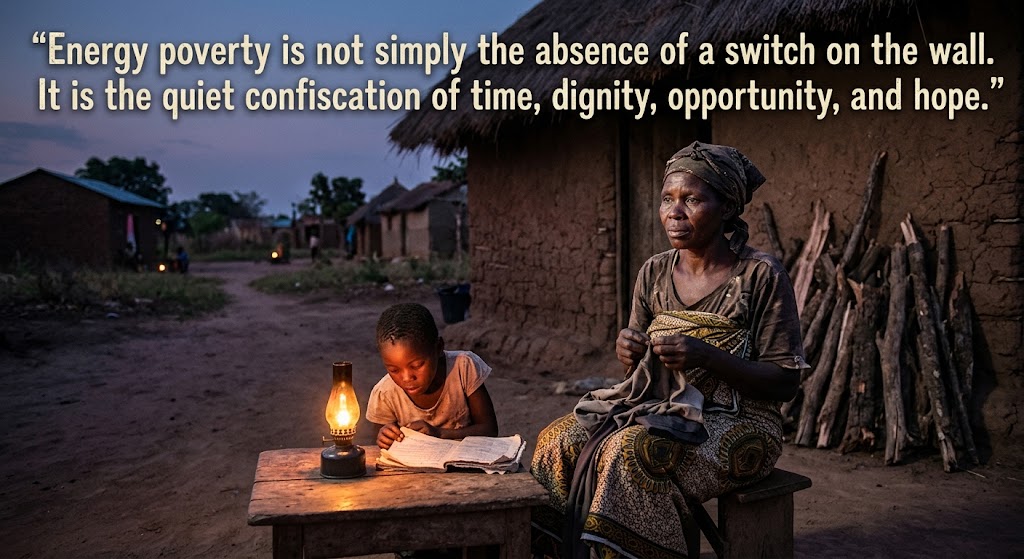
By Jerameel Kevins Owuor Odhiambo
In Kenya today, more than one in five citizens still live without reliable access to electricity, while those connected endure an average of 8.39 hours of blackouts every month nearly six times the regulatory target of 1.5 hours. Peak demand has climbed past 2,439 megawatts, leaving the national grid with a wafer-thin reserve margin of roughly 2.3 percent. These are not abstract numbers. They are the measured pulse of a nation whose lights flicker not merely from technical failure but from a deeper structural betrayal: the persistence of energy poverty in a country that has made genuine strides yet remains trapped in the shadow of scarcity.
Energy poverty is not simply the absence of a switch on the wall. It is the quiet confiscation of time, dignity, opportunity, and hope. It is the student who studies by the dying glow of a kerosene lamp, inhaling fumes that scar lungs while peers in better-served neighbourhoods finish homework under steady light. It is the small trader whose refrigerated goods spoil when the power dies at dusk, turning a day’s profit into loss. It is the mother who still gathers firewood for hours because clean cooking remains a distant promise for nearly seven in ten households. Load shedding the deliberate, scheduled denial of power to protect the grid from collapse has become the visible symptom of this deeper disease. Between 5 p.m. and 10 p.m., when demand surges and intermittent wind and solar generation often falters without adequate storage, entire communities are plunged into darkness so that others may keep their lights on. The grid gasps, and ordinary Kenyans pay the price in interrupted lives.
Consider the correlation that cuts to the bone. Electricity access rose dramatically from roughly 37 percent in 2013 to around 75–79 percent in recent years, an achievement driven by the Last Mile Connectivity Project and off-grid solar innovations. Urban areas approach universal connection. Yet rural access lags sharply, and even among the connected, reliability is fragile. System losses hover between 21 and 23 percent far above acceptable thresholds leaking both energy and revenue through aging lines, theft, and technical inefficiency. Demand grows with population, urbanization, and economic ambition, yet firm capacity has not kept pace. A moratorium on new power purchase agreements in earlier years, combined with delayed generation projects and the inherent variability of renewable sources without storage, has left the system exposed. The result is rationing that falls heaviest on those least able to absorb it.
This is not mere inconvenience; it is a developmental chokehold. Manufacturing output stalls when machines fall silent. Small enterprises the backbone of Kenya’s informal economy burn scarce capital on diesel generators whose fuel costs devour margins. Hospitals risk interrupted procedures. Schools lose instructional hours. The economic toll compounds: lost productivity measured in hundreds of millions of shillings daily in some estimates, deterred investment, and a quiet erosion of confidence in the country’s infrastructure. Energy poverty and load shedding do not merely reflect poverty; they reproduce it. Children without reliable light fall behind educationally. Women and girls, disproportionately burdened by the labour of fetching fuel and managing households without power, lose hours that could have been spent on income or rest. Health suffers from indoor air pollution caused by traditional biomass. The correlation is stark and circular: inadequate energy locks communities into low productivity, which in turn limits the fiscal space and political will to fix the energy system.
There is intellectual dishonesty in celebrating connection statistics while ignoring the quality of that connection. A household counted as “electrified” yet receiving power for only half the day or less is not liberated; it is taunted. Official figures that trumpet progress must be measured against the lived reality of SAIDI scores that remain stubbornly high and restoration times that average over two hours. The grid’s intermittent failures are not random acts of nature. They are the predictable outcome of underinvestment in firm capacity, insufficient storage for variable renewables, aging distribution networks, and policy choices that prioritized rapid connection over sustainable reliability. Kenya generates the majority of its electricity from renewable sources geothermal, hydro, wind, solar an admirable achievement. Yet without the complementary infrastructure of storage, flexible generation, and robust transmission, the green transition becomes a source of evening rationing rather than uninterrupted abundance.
The deeper insight is this: energy poverty is a form of temporal theft. It steals the present from those who must wait for light, and it steals the future from a generation whose human capital is diminished by darkness. Load shedding is the state’s public admission that demand has outrun supply, that planning has lagged ambition, and that the social contract of reliable public services is fraying. When the President himself acknowledges the necessity of daily rationing between late afternoon and night, the problem ceases to be technical and becomes political and moral. A nation that aspires to middle-income status, to industrialization, to digital transformation, cannot treat electricity as a luxury subject to the roulette of wind speeds and rainfall.
What is required is not more rhetoric but hard choices executed with discipline. Accelerate firm capacity geothermal expansions, carefully managed hydro, and strategic thermal or storage solutions that bridge the evening peak. Deploy battery storage at scale so that the abundant daytime solar and strong wind periods are not wasted. Aggressively reduce system losses through modern metering, network rehabilitation, and enforcement against theft. Prioritise rural reliability, not merely rural connection. Align tariffs and subsidies so that the poorest can afford meaningful consumption rather than token lighting. And above all, treat energy access as the foundational infrastructure of human development rather than a sectoral afterthought.
Kenya has proven it can move rapidly when political will and technical focus align. The leap in access over the past decade stands as evidence. Yet progress that leaves a quarter of the population in the dark and subjects the majority to chronic interruption is incomplete and, ultimately, unjust. The lights that flicker across Kenyan evenings are more than a technical failure; they are a mirror held up to the gap between national aspiration and institutional delivery. Until that gap is closed until the grid no longer gasps under the weight of unmet demand energy poverty will continue to exact its quiet, cumulative toll on the bodies, minds, and futures of millions. The darkness is not inevitable. It is chosen, day after day, by the decisions we make or refuse to make. The question is whether Kenya will finally choose light.
The writer is a social commentator.
Similar Posts by The Mt Kenya Times:
- Mt Kenya Times ePAPER October 1, 2026
- Museveni backs Lamu but keeps Uganda’s money at home
- Sifuna’s party wins its name — and Kenya’s opposition race begins in earnest
- Lamu’s $16B gamble: Africa’s biggest refinery divides the region
- Ruto launches KSh2.2 trillion Lamu refinery in East Africa’s biggest energy bet
About the Author