South Africa’s defining moment: Why Africa must choose unity over Afrophobia
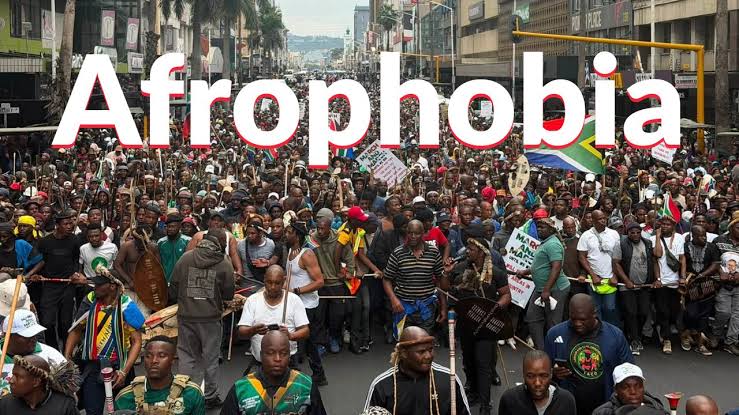
At a time of rising tensions, South Africa faces a choice between division and reconciliation.
By Njoroge Wanjigi
There are defining moments in the life of every nation — moments when history pauses and asks a people to choose between fear and hope, resentment and reconciliation, division and unity. South Africa stands at such a moment today.
Across the continent and beyond, recent events in South Africa have been deeply painful. Attacks on African migrants, the destruction of businesses owned by fellow Africans, and increasingly hostile rhetoric have left many asking how the nation that once symbolised reconciliation now finds itself wrestling with tensions directed largely toward fellow sons and daughters of Africa.
It is for this reason that I deliberately refer to the current phenomenon as Afrophobia rather than xenophobia. Xenophobia broadly describes hostility toward foreigners regardless of origin. Yet many observers note that hostility has fallen disproportionately upon Black African migrants from neighbouring countries, while foreigners from other regions have not faced comparable levels of organised hostility. Whether one agrees with this distinction or not, it deserves thoughtful national conversation rather than dismissal.
This is not merely South Africa’s conversation. It must be Africa’s conversation.
No responsible Pan-African can ignore the frustrations confronting millions of South Africans. Unemployment remains high, poverty persists, crime robs communities of peace, corruption weakens public confidence, and service delivery often falls short of constitutional promises. Rising living costs burden citizens and migrants alike. These realities demand decisive and patriotic leadership.
Every sovereign nation has the right to regulate its borders, enforce immigration laws, protect national security, and safeguard opportunities for its citizens. Respect for sovereignty and respect for human dignity are not competing values; they are complementary responsibilities. The danger arises when legitimate concerns become attached to entire communities simply because of where they were born.
The Black African entrepreneur running a spaza shop is not, by nationality alone, responsible for unemployment or inequality. To suggest otherwise risks reducing complex national challenges to a convenient but incomplete explanation. Immigrant-owned businesses have become part of township life, supplying affordable goods where investment was scarce and extending informal credit to struggling households. Recognising these contributions does not diminish South African aspirations; it challenges all to ask why these gaps exist and how they can be closed for everyone’s benefit.
The more important question is not who owns the spaza shop, but why, more than three decades after democracy, millions of South Africans still struggle for meaningful economic opportunity.
Responsible leadership begins by asking courageous questions: Who benefits when African communities distrust one another? Who profits when township businesses are destroyed? Who gains when fear replaces cooperation? History reminds us that when ordinary people fight among themselves, those with greater economic or political power often remain untouched.
Wisdom, not outrage, must guide the response. Some commentators suggest that prolonged oppression leaves societies with deep psychological scars, sometimes redirecting anger toward those who are neither the architects nor beneficiaries of that oppression. This invites reflection on whether South Africa’s deepest struggle is not only economic but also one of healing from generations of division deliberately engineered under apartheid.
Healing begins when we correctly identify both the wound and its cause. During apartheid, countless African nations stood beside South Africans — opening borders, training freedom fighters, offering diplomatic support, and making sacrifices in the belief that South Africa’s liberation would strengthen Africa itself.
Permit me a brief reflection. As a boy in Kenya, I once uttered an insensitive remark toward a South African child. My late grandfather corrected me with wisdom, reminding me that South Africa’s struggle was Africa’s struggle, and that no African child should regard another as a stranger. That lesson has remained with me throughout my life.
Pan-Africanism does not require abandoning sovereignty. It reminds us that sovereignty and solidarity can coexist. We can secure borders without abandoning humanity, enforce laws without surrendering compassion, and protect national interests while preserving dignity.
The answer to unemployment is not violence. The answer to poverty is not hatred. The answer to inequality is not destroying livelihoods. The answer lies in ethical leadership, accountable institutions, quality education, inclusive growth, entrepreneurship, regional cooperation, justice, and healing.
Civic education is now one of our generation’s defining responsibilities. Nations rise when citizens are equipped with knowledge, values, and hope. They decline when misinformation and resentment dominate public discourse.
To South Africa’s leaders, I offer this appeal. As demonstrated by Nelson Mandela, Oliver Tambo, Chris Hani, Steve Biko, Kwame Nkrumah, Julius Nyerere, Thomas Sankara and many others, leadership is not measured by echoing public anger. True leadership transforms anger into purpose. The greatest leaders elevate society beyond fear, build bridges where others build walls, and heal where others divide.
To Africans beyond South Africa, let us not allow disappointment to extinguish brotherhood. Millions of South Africans continue to reject hatred and work for reconciliation. Their voices deserve to be heard alongside those calling for division.
Africa has overcome slavery, colonialism, and apartheid. Surely, Africa has the courage to overcome Afrophobia. The generation before us secured political freedom. Our generation must secure economic justice, integration, reconciliation, and healing.
As the Swahili proverb says: “Vita vya panzi ni furaha ya kunguru” — when locusts fight, the crows rejoice. Whenever brothers and sisters are consumed by conflict, outsiders benefit while Africa grows weaker.
Let us defend justice without abandoning mercy. Let us defend sovereignty without sacrificing solidarity. Let us choose healing over hatred, wisdom over anger, and unity over division. Africa’s greatest strength has never been minerals or markets, but her people — united in purpose, steadfast in hope, and convinced that our shared destiny is greater than our present disagreements.
God bless South Africa. God bless Africa.
Njoroge Wanjigi Pan-African commentator and writer
Similar Posts by The Mt Kenya Times:
- Mt Kenya Times ePAPER September 21, 2026
- Gachagua accuses Ruto of using UNGA trip to seal niobium deal in Kwale
- Ichung’wah turns Uhuru’s ‘sponyo’ joke into a policy attack
- Kuria’s rebuke of Kindiki on brews reopens the wound Gachagua left behind
- Nyoro storms Engineer as Njabini chaos signals the mountain is already at war with itself
About the Author