The Mt Kenya Times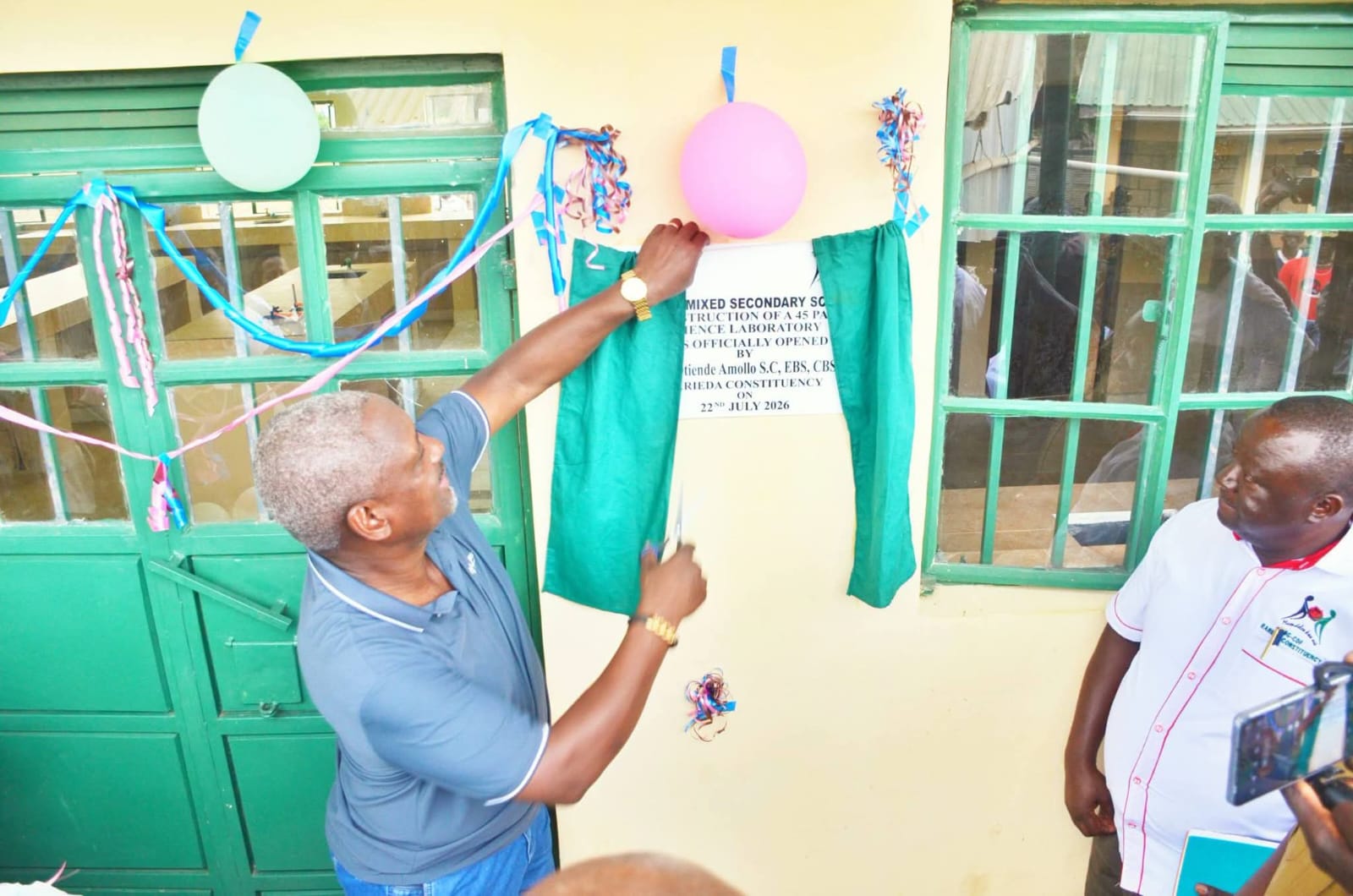
Rarieda MP Otiende Amollo commissioning a new 45-capacity science laboratory at Rarieda Secondary School
New 45-capacity facility at Rarieda Secondary School opens doors to modern science education
By John Kariuki
Rarieda MP Otiende Amollo has commissioned a new 45-capacity science laboratory at Rarieda Secondary School, funded through the National Government Constituencies Development Fund, in a move set to expand access to practical science education for students across the constituency.
The facility, inspected and handed over by Amollo during an official ceremony, is equipped to accommodate 45 learners at a time and is designed to meet modern educational standards for the teaching and learning of science subjects. For a constituency where access to well-resourced learning infrastructure has historically been uneven, the addition of a functional, purpose-built laboratory represents a concrete shift in what students can expect from their schooling.
The NGCDF has been the primary vehicle through which constituency-level infrastructure improvements have been delivered across Kenya since the fund’s establishment, and Rarieda has drawn on it consistently to invest in education. The science laboratory is among the more substantive projects completed under the current allocation cycle, reflecting a deliberate prioritisation of facilities that directly affect learning outcomes rather than cosmetic improvements.
Amollo, a senior advocate who has maintained a prominent profile in constitutional and legal affairs at the national level, framed the commissioning within a broader argument about the relationship between infrastructure and opportunity. A well-equipped laboratory, he said, was not a luxury but a prerequisite for students expected to compete in an increasingly science-driven academic environment.
“Investing in education is investing in the future prosperity of the constituency and the nation as a whole,” he said. “By prioritising quality infrastructure through the NGCDF, we are creating an enabling environment where learners can excel academically and compete favourably at the national level.”
The timing carries particular relevance. Kenya’s Competency-Based Curriculum, which places greater emphasis on practical learning, applied skills and scientific inquiry than the system it replaced, has increased the pressure on schools to provide functional laboratory facilities. Without them, students are taught theory they cannot test and assessed on competencies they have had no meaningful opportunity to develop. The gap between curriculum design and physical infrastructure has been one of the most persistent challenges in the CBC’s rollout, and it falls disproportionately on schools in constituencies where private investment in education is limited and government allocations are stretched.
At Rarieda Secondary School, that gap has now narrowed. Teachers will be able to move practical science lessons out of the theoretical and into the experiential, with students gaining hands-on exposure to the kind of experimental work that builds both scientific understanding and the broader habits of inquiry, precision and analytical thinking that extend well beyond the laboratory.
The reaction from the school community was one of genuine relief as much as celebration. Teachers noted that the absence of a proper laboratory had long been a constraint on how effectively they could deliver the science curriculum, and that the new facility would remove one of the most significant obstacles they faced in preparing students for national examinations and further study.
Parents who attended the commissioning ceremony expressed similar sentiments. Many had watched children travel to schools in better-resourced areas or make do with demonstrations that could not substitute for direct practical experience. The opening of the laboratory, several noted, meant that students in Rarieda no longer needed to look elsewhere for what their own school could now provide.
For the students themselves, the laboratory opens a specific and tangible set of possibilities. Access to practical science facilities at secondary school level correlates strongly with performance in science subjects at the Kenya Certificate of Secondary Education, and strong KCSE results in sciences remain among the most reliable pathways into degree programmes in medicine, engineering, environmental science and technology — fields where national demand for qualified graduates consistently outstrips supply.
The NGCDF model, for all the scrutiny it attracts over accountability and prioritisation, has in cases like this one demonstrated its capacity to deliver infrastructure that public school budgets could not otherwise fund. Whether the Rarieda laboratory is maintained, kept adequately stocked with reagents and equipment, and staffed by qualified science teachers over the years ahead will determine whether the investment fulfils its promise or becomes another underutilised facility.
The ribbon has been cut. The experiments, in every sense, are just beginning.
Similar Posts by The Mt Kenya Times:
- Mt Kenya Times ePAPER October 27, 2026
- Sifuna draws hope from Serbia and Brazil as Kenya’s 2027 race heats up
- Uhuru calls for unity as he marks 65th birthday
- Kenya establishes international crimes division: Justice delayed, but will it be delivered?
- World marathon champion Jepchirchir suspended in fresh blow to Kenya’s clean sport drive
About the Author