Kenya establishes international crimes division: Justice delayed, but will it be delivered?
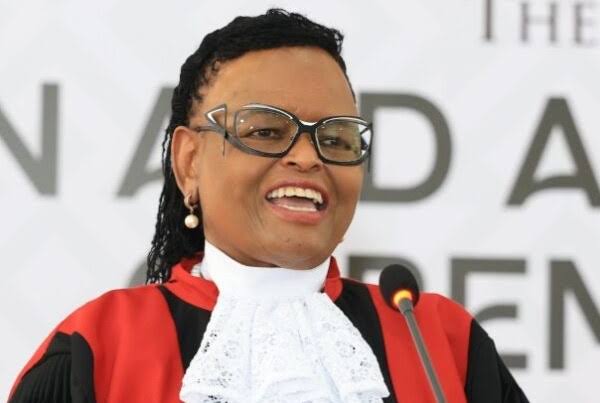
Chief Justice Martha Koome
Fourteen years after the International Criminal Court intervened in Kenya’s post-election violence, the country has created its own international crimes division — but whether it can deliver justice free from political interference remains the defining question.
By David Kimani
Kenya formally established an International Crimes Division within its judiciary yesterday, creating a specialised court to prosecute genocide, war crimes, and crimes against humanity on home soil — fourteen years after the International Criminal Court in The Hague was forced to intervene following the post-election violence of 2007 and 2008 that left more than 1,300 people dead and hundreds of thousands displaced.
The establishment of the division represents a significant institutional milestone. It signals, at least in principle, that Kenya is prepared to internalise accountability for the gravest category of human rights violations rather than leaving that responsibility to an international body operating thousands of miles away. The Rome Statute, to which Kenya is a signatory, encourages precisely this kind of domestic complementarity — the idea that national courts should be the first line of accountability, with the ICC stepping in only when they are unwilling or unable to act.
The critical word in that framework is “unwilling.” And it is that word, more than any question of legal architecture or judicial capacity, that will determine whether Kenya’s new division becomes a genuine instrument of justice or an elaborate mechanism for managing international pressure while protecting the powerful.
Kenya’s relationship with international criminal accountability is not a straightforward one. The ICC’s intervention following the 2007 post-election violence resulted in charges against six senior Kenyan figures, including individuals who would go on to serve at the very highest levels of government. Those cases collapsed — through a combination of witness intimidation, witness recantation, and what the ICC prosecutor described as a deliberate obstruction of evidence. No Kenyan was ultimately convicted. No senior figure served a day in prison for violence that scarred the country for a generation. The families of the 1,300 dead received neither justice nor a credible official account of what happened and who ordered it.
That history is not ancient. It is living context for every assessment of what this new division might achieve. The question it forces into the open is one that Kenya’s legal and political establishment would prefer to leave unasked: if a future episode of mass violence implicates individuals with political connections, financial resources, and the capacity to influence witnesses, investigators, and judicial appointments, will this division perform any differently from the institutions that failed so visibly after 2007?
The structural risks are real and well documented. Kenya’s judiciary has made measurable progress in recent years, particularly in its administrative independence and the quality of its higher court judgments. The establishment of a specialised division with judges trained in international humanitarian law is a genuine improvement on a general criminal court system ill-equipped to handle the complexity of atrocity cases. These advances should be acknowledged honestly.
But judicial independence in Kenya remains imperfect and unevenly applied. Prosecutorial decisions are vulnerable to political influence. Witness protection mechanisms, essential in any atrocity prosecution, are chronically underfunded and have failed visibly in high-profile cases. The Director of Public Prosecutions operates with a degree of independence guaranteed by the Constitution but tested repeatedly by political reality. And Kenya’s political culture — in which accountability is frequently negotiated rather than enforced, and in which the phrase “we forgive each other” has been deployed to foreclose investigation of serious crimes — sits in deep tension with the uncompromising demands of international criminal law.
The ICC standard, against which this division will ultimately be measured, is exacting. Complementarity under the Rome Statute does not simply require that a national court goes through the motions of a prosecution. It requires genuine willingness and genuine ability to investigate and prosecute the same conduct, against the same persons, for the same underlying behaviour. A prosecution designed to produce an acquittal, or one that targets low-level perpetrators while shielding those who planned and ordered the violence, does not satisfy the complementarity test. The ICC retains jurisdiction to intervene whenever it concludes that domestic proceedings are a shield rather than a sword.
That retained jurisdiction matters enormously. It means that the establishment of this division does not, of itself, close the door to future ICC involvement in Kenyan cases. It means that if Kenya’s new court is seen to be protecting influential figures from accountability, the international option remains available. And it means that the division’s credibility will be built or destroyed not by its establishment, but by the cases it chooses to bring, the seriousness with which it pursues them, and the independence it demonstrates when those cases become politically inconvenient.
The most important test will come not from a historical case but from a future one. Kenya remains a country in which electoral cycles carry a real risk of organised violence, in which political competition frequently descends into ethnic mobilisation, and in which powerful individuals have demonstrated both the willingness to use violence instrumentally and the resources to obstruct its investigation. When the next serious episode occurs — and the country’s history offers no grounds for confidence that it will not — the new division will face its definitive examination.
Can Kenya’s leaders submit themselves to this court? The constitutional answer is yes. The political answer is considerably less certain. A court that can be navigated around, delayed indefinitely, or rendered ineffective through the withdrawal of resources and cooperation is not a court at all. It is a performance of accountability staged for an international audience.
Kenya’s victims of past atrocities, and those who may become victims in the future, deserve more than a performance. They deserve a court with the independence to follow evidence wherever it leads, the resources to protect witnesses and manage complex transnational investigations, and the institutional courage to pursue the powerful with the same determination it applies to the powerless.
The division has been established. The harder work — building the credibility, the capacity, and the political culture that genuine accountability requires — has barely begun.
Similar Posts by The Mt Kenya Times:
- Mt Kenya Times ePAPER October 27, 2026
- Sifuna draws hope from Serbia and Brazil as Kenya’s 2027 race heats up
- Uhuru calls for unity as he marks 65th birthday
- World marathon champion Jepchirchir suspended in fresh blow to Kenya’s clean sport drive
- Manchester United in crisis as Bournemouth humiliate Carrick’s side 3-0
About the Author