The Mt Kenya Times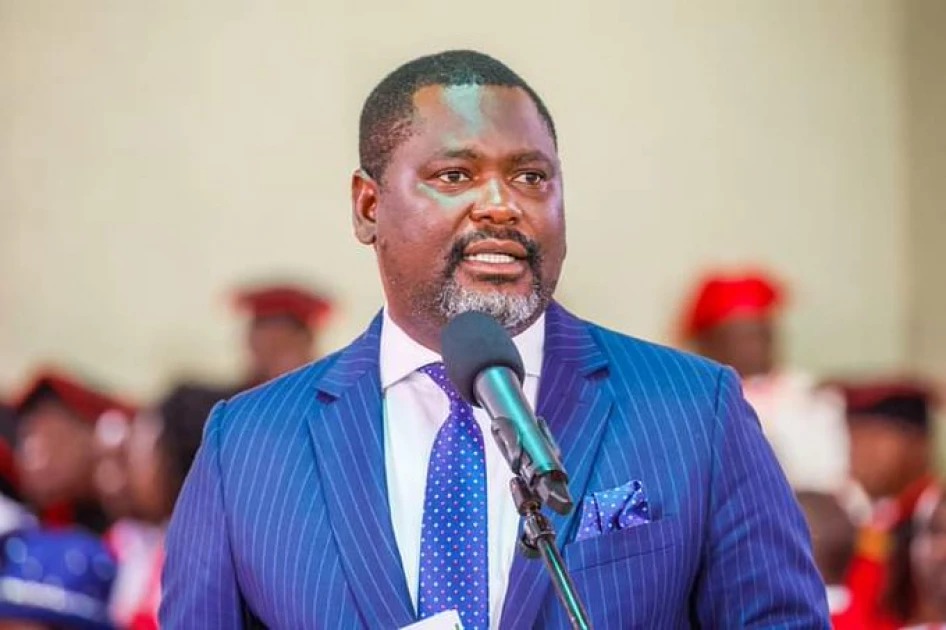
Public Service Cabinet Secretary Geoffrey Ruku
Cabinet Secretary warns that breaking the 2022 electoral commitment risks branding the region as politically unreliable
By Hadassah Karangu
Public Service Cabinet Secretary Geoffrey Ruku yesterday launched a sharp attack on former President Uhuru Kenyatta and former Deputy President Rigathi Gachagua, accusing them of urging the Mt Kenya region to walk away from the political commitment it made in the 2022 General Election.
Ruku argued that such a move would amount to political betrayal and portray the people of Mt Kenya as unable to honour their word — remarks that have reignited debate about loyalty, political agreements, and whether leaders should remain bound by electoral commitments even as alliances fracture.
The Mt Kenya region was decisive in President William Ruto’s 2022 victory. Millions of voters backed the Kenya Kwanza Alliance after regional leaders urged residents to support Ruto, promising that the partnership would deliver development, economic empowerment, and a stronger voice in government.
For months the coalition held. But the impeachment of Gachagua as Deputy President cracked the arrangement open, and the political landscape has since shifted sharply — new alliances forming, old friendships breaking apart.
It is against that backdrop that Ruku accused Kenyatta and Gachagua of attempting to convince Mt Kenya residents to abandon the very leader their own political networks asked Kenyans to support three years ago.
Ruku’s position is straightforward: if leaders ask citizens to back a candidate, they carry a responsibility to honour that commitment rather than reversing course whenever personal political interests change. Constantly shifting allegiances, he warned, risks cementing Mt Kenya’s image as a region that cannot be trusted in future national negotiations.
Gachagua’s supporters are unlikely to accept that framing. Their counter-argument is equally direct: political support is never unconditional. In a democracy, voters and their leaders are entitled to assess whether campaign promises have been fulfilled. Where those promises have fallen short, changing political direction is not betrayal — it is accountability. Loyalty, they insist, must be earned through performance, not merely invoked on the strength of past agreements.
Kenyatta’s role remains a parallel thread in this debate. Though he has kept a deliberately low political profile since leaving office, every statement attributed to him draws national attention. His relationship with Ruto had already deteriorated well before the 2022 election, and analysts continue to watch for signals about the part he may yet play in shaping future alliances.
With Kenya’s attention beginning to turn toward the next General Election, competition for Mt Kenya’s support will only sharpen. The region remains one of the country’s largest voting blocs, and every political message directed at its electorate carries outsized national weight.
The fundamental question beneath all the rhetoric is whether political loyalty should take precedence over public expectation — whether alliances forged at the ballot box should endure regardless of what follows, or whether leaders are entitled to reassess those partnerships as circumstances change.
The voters, as ever, will have the final word. They will judge not on the basis of who made the sharpest speech, but on whether development has reached their communities and whether their trust has been rewarded.
For Ruku, the answer is clear: walking away from Ruto would cost Mt Kenya its reputation as a region that keeps its commitments. For his opponents, changing course is not about breaking faith — it is about answering to the electorate.
The battle for the heart of Mt Kenya is far from settled.
Similar Posts by The Mt Kenya Times:
- Kenya’s parliament races to tame the AI frontier
- Kalonzo calls Ruto to order over Uhuru attacks
- Gachagua takes his 2027 campaign to America
- Uhuru owns “sponsor” — and Ruto should be worried
- Sengwer youth: When will Kenya stop treating a minority like an afterthought?
About the Author