Kenya’s journalists are under siege — and nobody is being held to account
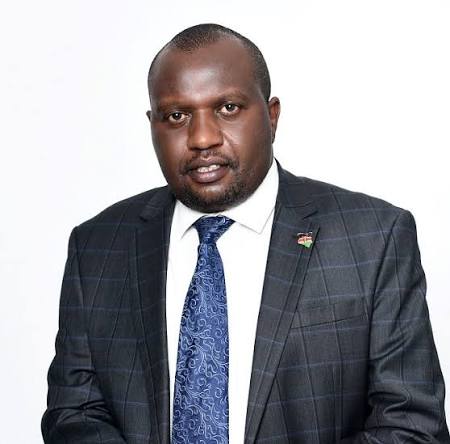
Media Council of Kenya CEO David Omwoyo
With 18 journalists and two drivers attacked in two months, the Media Council of Kenya warns that impunity is the greatest threat to press freedom and democracy ahead of 2027.
By Grace Wanja
The Media Council of Kenya yesterday called on the Director of Public Prosecutions and the Inspector General of Police to urgently investigate and prosecute those responsible for a sustained wave of attacks against journalists, warning that at least 18 reporters and two drivers had been assaulted across the country in the past two months alone.
The council’s statement, issued yesterday, described the escalating violence as the most serious threat to Kenya’s democratic space ahead of the August 2027 general election — not merely because journalists were being harmed, but because the authorities tasked with holding perpetrators accountable had conspicuously failed to act.
“The council is convinced that the continued attacks, intimidation and crimes against journalists, and the reluctance by the relevant investigating agencies to prosecute the perpetrators, is the biggest threat to the country’s democracy and media freedom,” the MCK said.
The latest and most alarming incidents occurred on Sunday during the Linda Mwananchi rally in Homa Bay County, where eight journalists and two drivers were attacked in scenes that media freedom advocates described as a brazen assault on the public’s right to information. The roll call of victims reads like a cross-section of Kenya’s entire media industry.
Francis Mwangi and Evans Okeyo of Mediamax Network were physically assaulted and their vehicle burnt. Sammy Omingo and Rodgers Otiso of the Standard Group were beaten. Fred Ooko and Brian Ongoro of the Associated Foreign Press were attacked and had their cameras destroyed. KBC’s Ken Odiwuor-Mayienga was allegedly beaten and his equipment stolen. A journalist and driver from another outlet were assaulted and their vehicle destroyed. These were not isolated incidents of mistaken identity or crowd panic. They were targeted, coordinated attacks on working journalists in the course of their professional duties.
Yet Homa Bay was not the beginning of this story. The MCK has been documenting a pattern of violence that stretches back weeks and across the country’s geography. On August 12, Nation Media Group photojournalist Karim Rajan was injured near the Mombasa County Assembly while covering a gathering of youth and human rights representatives, when unidentified individuals moved to disperse the group. On July 23, five journalists from Mt Elgon TV were attacked while covering a political aspirant in Kimilili, with one reporter seriously injured. During the Ol Kalou by-election, at least four journalists were physically attacked and their equipment confiscated — among them George Kieru, Brygette Ngana and Fabiola Akinyi of Nation Media Group and Enos Teche of the Star, all of whom reported the incidents to police.
The MCK said it had documented each of these cases and formally submitted them to the Inspector General of Police, the Independent Policing Oversight Authority and the Office of the Director of Public Prosecutions. The response from those institutions, the council said with evident frustration, had fallen well short of what the severity of the situation demanded. Little progress had been made in bringing any perpetrator to account, a failure that the MCK characterised not as bureaucratic delay but as a structural problem — the normalisation of impunity in a political environment where attacking journalists carries no meaningful consequence.
That environment is becoming more dangerous, not less, as Kenya’s political temperature rises ahead of 2027. The pattern the MCK has identified is telling: the attacks are concentrated in politically charged settings — by-elections, opposition rallies, political mobilisation events. Journalists are being targeted not randomly but precisely because they are recording what is happening. In that sense, the attacks are not only an assault on the individuals involved; they are an attempt to control the narrative of Kenya’s pre-election political contest by removing the witnesses.
“Despite Kenya’s laws and international treaties requiring authorities to guarantee a safe working environment for journalists, their safety and protection remain elusive,” the council said — a sentence that carries within it an implicit indictment of every agency responsible for law enforcement in this country.
The legal framework is not in question. Article 34 of Kenya’s Constitution protects freedom and independence of the media. Article 33 protects freedom of expression. Article 29 protects the freedom and security of the person. Kenya is also a signatory to Article 19 of the International Covenant on Civil and Political Rights, which obliges the state to protect journalists from interference with their work. The MCK invoked all of these in its statement, not to introduce new legal arguments but to underline how comprehensively the state is failing to meet obligations it voluntarily accepted.
The MCK’s call to action is specific and unambiguous. It wants the police and prosecutors to work directly with affected journalists and their media houses to ensure that cases are properly investigated and taken to court. It wants the security agencies that have themselves been implicated in some of the attacks — particularly in Homa Bay, where security officers were among those alleged to have assaulted journalists — to be held to the same standard as any other perpetrator. And it wants that accountability to happen now, before the 2027 campaign season fully ignites and the violence becomes even harder to contain.
The stakes extend beyond the journalists themselves. A press that cannot report freely is a press that cannot hold power to account. An electorate that cannot access independent, on-the-ground information about political events is an electorate that will go to the polls in 2027 without the full picture. The camera that is smashed in Homa Bay or Kimilili is not just a piece of equipment — it is the public’s eyes. When those eyes are put out deliberately and with impunity, it is not just the journalist who loses.
Kenya is running out of time to get this right. The election is twelve months away, and the pattern is already set.
Similar Posts by The Mt Kenya Times:
- Mt Kenya Times ePAPER October 7, 2026
- Ruto signs KSh389B electric vehicle deal at State House
- Kenya mobilises KSh70B to fight Ebola as US and World Bank step in
- High Court freezes law school admissions over disputed entry rules
- Grade 11 textbooks head to schools as CBC transition gathers pace
About the Author