Gachagua appeals impeachment ruling in landmark constitutional battle
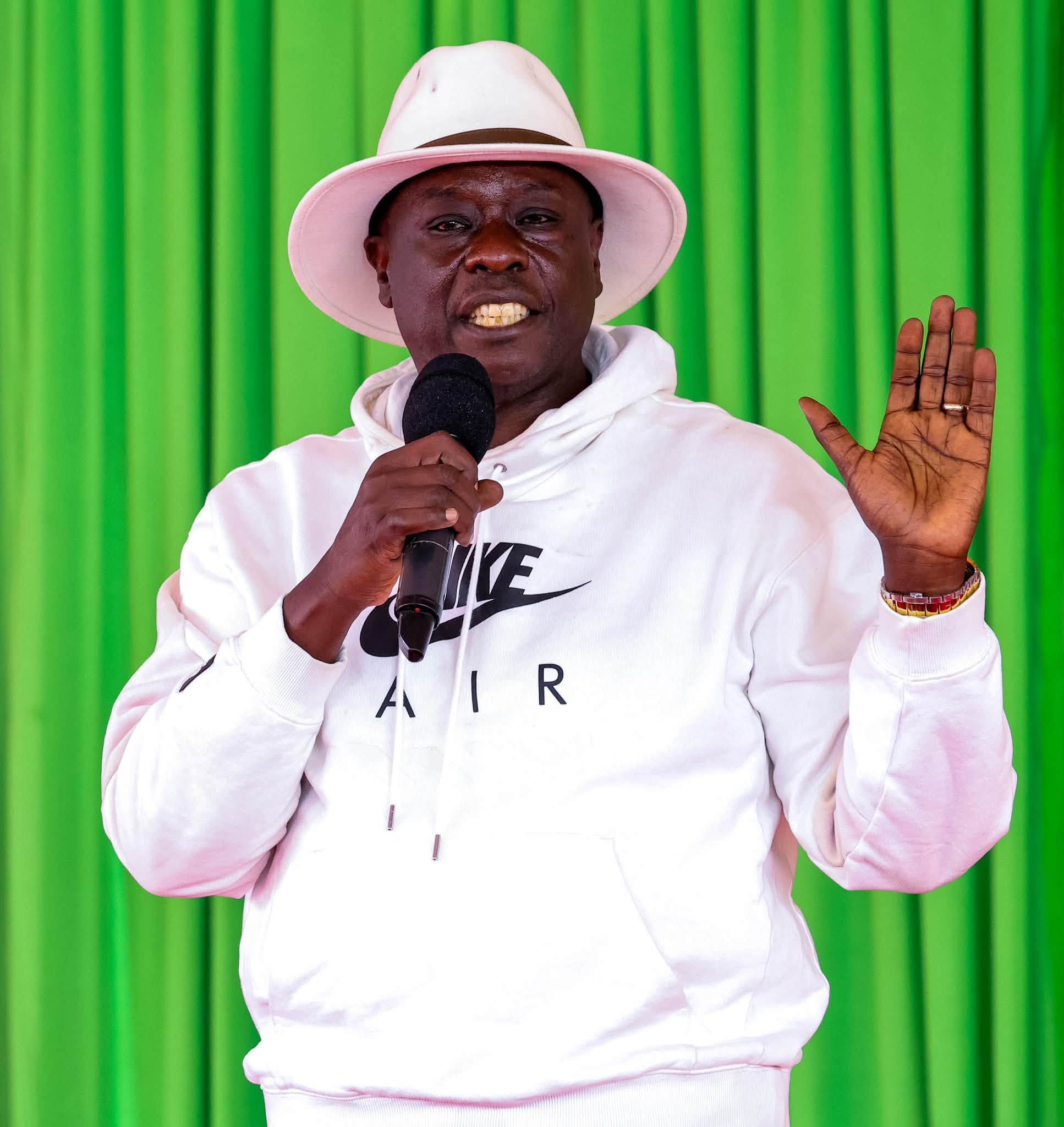
Former Deputy President Rigathi Gachagua
The former Deputy President argues that a judgment which found his rights were violated but allowed his removal to stand is an irreconcilable contradiction that the appellate court must now resolve — with the 2027 election looming over every paragraph.
By David Kimani
Former Deputy President Rigathi Gachagua has appealed the High Court decision upholding his impeachment, arguing that the three-judge bench erred in finding that his removal from office could not be reversed despite violations of his constitutional rights. The appeal, filed yesterday at the Court of Appeal, sets the stage for what legal analysts are describing as one of the most consequential constitutional battles in Kenya’s post-independence history — and one whose outcome will reverberate far beyond the courtroom.
The appeal, filed on August 13, seeks to overturn portions of the High Court decision delivered on June 8, which declared Gachagua’s removal from office valid despite acknowledging procedural irregularities in the Senate proceedings. At the centre of his argument is a proposition as simple as it is legally explosive: a court cannot find that a man’s constitutional rights were violated and then allow the violation to stand.
Gachagua’s appeal contends that the High Court erred in law by failing to find the Senate’s decision null and void, arguing that the court’s ruling was “irreconcilable with the court’s findings in the same judgment and in previous rulings.” His lawyers characterise the High Court’s reasoning as internally contradictory — a judgment that reached two conclusions pulling in opposite directions and then chose the one most convenient to the political status quo.
“No act in violation of the Constitution is outside the reach of the courts,” Gachagua states in his court papers — a declaration that reads as much as a political statement as a legal submission, addressed as much to the nation watching as to the judges who will decide.
Central to the High Court’s reasoning had been its conclusion that reversing Gachagua’s impeachment after Kindiki had already assumed office would create a constitutional dilemma over dual incumbency and the validity of a completed transfer of executive power. Gachagua’s appeal confronts that reasoning directly, arguing that constitutional rights cannot be subordinated to political inconvenience or administrative tidiness. The Constitution, his lawyers insist, does not permit the courts to look the other way because correcting a wrong might create complexity.
Among the grounds of appeal is the question of public participation. Gachagua argues that the Senate conducted no public participation after receiving the National Assembly resolution, and that participation during the National Assembly phase was inadequate. He cites the Supreme Court’s precedent in British American Tobacco Kenya PLC v Cabinet Secretary for the Ministry of Health, which established that public participation must be meaningful both qualitatively and quantitatively — a standard he argues Parliament failed to meet in the rush to remove him from office.
The appeal also targets National Assembly Standing Order 64(2), arguing that the timelines it prescribes are so compressed as to make genuine public participation structurally impossible. The court had found that Parliament provided adequate notice through advertisements published in both English and Kiswahili newspapers and had offered citizens a genuine opportunity to submit their views, ruling that it was “satisfied that the public participation conducted during the impeachment process met the constitutional threshold.” Gachagua’s lawyers dispute that conclusion vigorously, arguing the court set the bar too low and applied the wrong standard.
Perhaps the most extraordinary allegation in the appeal concerns the integrity of the judgment itself. A fresh legal dispute erupted after some petitioners claimed the version of the judgment released to parties differed from the one the judges said they had delivered in open court. Gachagua alleges that four sets of additional paragraphs, read immediately after paragraphs 484, 488, 503 and 508 during the live oral delivery, were subsequently omitted from the written version. He is asking the Court of Appeal to direct the High Court Registrar to insert the missing portions into the official record — a demand that, if upheld, would amount to a finding that a superior court improperly altered its own judgment after delivery.
The appointment of Prof Kithure Kindiki as his successor is also squarely in the crosshairs. Gachagua argues that the High Court erred in finding that public participation was not constitutionally required in the nomination and approval of Kindiki under Article 149(1) of the Constitution. The High Court had held that the approval of Kindiki as Deputy President did not require public participation because Parliament exercised delegated sovereign authority on behalf of the people. Gachagua’s appeal characterises that reasoning as a dangerous precedent — one that would allow Parliament to make consequential executive appointments without any meaningful public accountability.
The KSh 50 million constitutional damages awarded to him by the High Court — a sum the Senate is simultaneously appealing against — is also challenged, but from the opposite direction. The Senate has moved to the Court of Appeal to challenge the High Court’s finding that senators breached Gachagua’s fair-hearing rights, arguing that the judges failed to properly evaluate Articles 47 and 50 and did not recognise that the Senate exercised its discretion. Gachagua, meanwhile, argues that KSh 50 million is woefully inadequate to vindicate the Constitution, restore his dignity or deter future violations — that the only remedy proportionate to the wrong found is a declaration that the impeachment was unconstitutional, null and void from the beginning.
The competing appeals mean the dispute is no longer simply a battle over parliamentary procedure. With the 2027 general election approaching, the case has become intertwined with a wider political contest involving Gachagua’s mobilisation in Mt Kenya, Kindiki’s position in Ruto’s camp and growing demands from ODM for a bigger role in a possible pre-election coalition. The Court of Appeal will decide legal questions. But its ruling could reshape the political terrain on which Kenya’s most consequential election in a generation will be fought.
A ruling favourable to Gachagua could give him fresh political ammunition. A ruling favourable to the Senate could strengthen Parliament’s position over the impeachment process, but it would not necessarily remove Gachagua’s political influence.
Gachagua was removed from office in October 2024 on allegations that included corruption, promoting divisive ethnic politics and undermining the government from within — charges he has consistently and vehemently denied. His impeachment followed months of a bitter fallout with President William Ruto, during which he publicly criticised government policies and accused the National Intelligence Service of cooking up evidence to link him and former President Uhuru Kenyatta to the youth-led uprising that shook the country in June 2024.
He now leads the Democracy for the Citizens Party and has positioned himself as the principal challenger to Ruto’s re-election from within the Mt Kenya heartland. The appeal is therefore not merely a legal filing. It is a political act — a declaration that the fight is far from over and that the man who was removed from office in the middle of the night by a Senate vote intends to have the last word, one way or another, before Kenyans go to the polls in August 2027.
The Court of Appeal has not yet scheduled a hearing date. Whatever it decides, Kenya’s constitutional architecture — and the political landscape heading towards the next election — will never look quite the same again.
Similar Posts by The Mt Kenya Times:
- Mt Kenya Times ePAPER October 7, 2026
- Ruto signs KSh389B electric vehicle deal at State House
- Kenya mobilises KSh70B to fight Ebola as US and World Bank step in
- High Court freezes law school admissions over disputed entry rules
- Grade 11 textbooks head to schools as CBC transition gathers pace
About the Author