Ruto gives officials one week to resolve health workers’ salary arrears
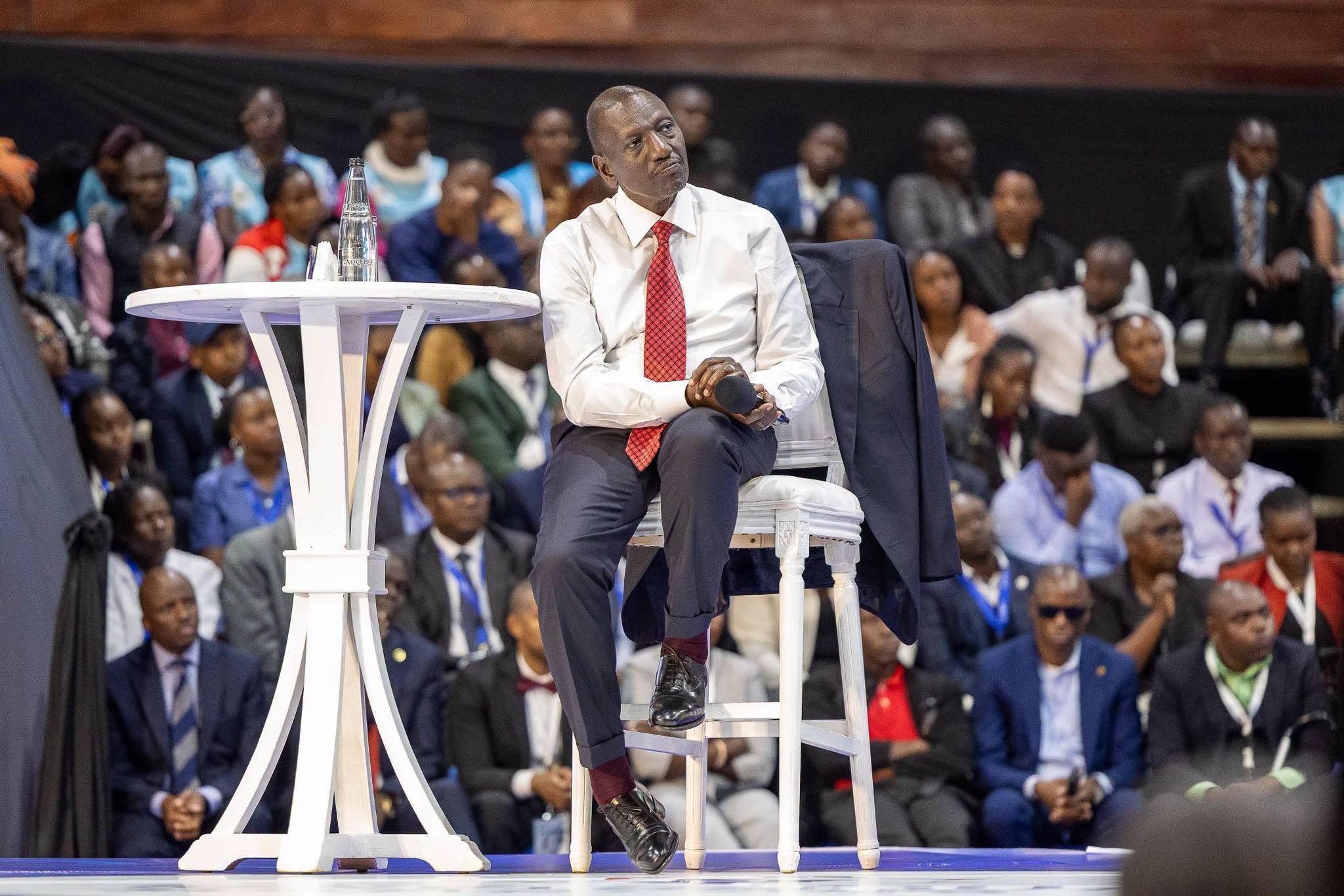
President William Ruto hosts a town hall meeting on the sidelines of the Kenya Health Summit at the Kenyatta International Convention Centre in Nairobi on August 19, 2026. Photo/PCS
The Kenya Health Summit closed with a presidential ultimatum — but the crisis it exposed raises deeper questions about whether devolution can deliver the healthcare reforms Kenya needs
By Grace Wanja
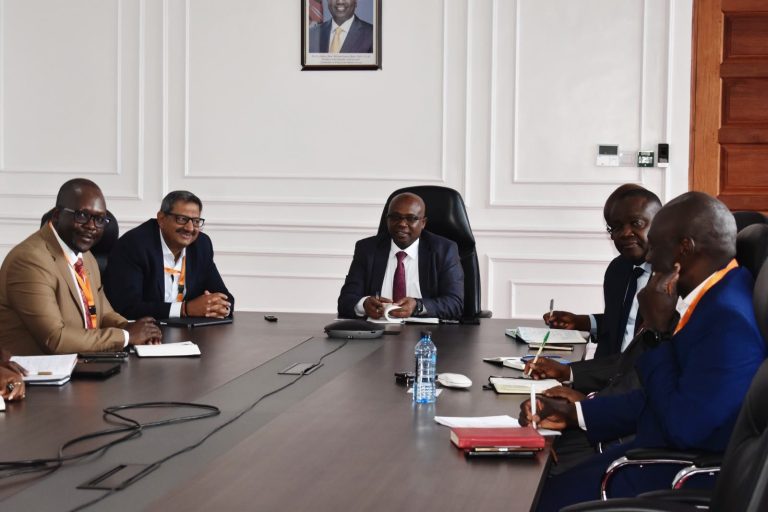
President William Ruto yesterday gave national and county government officials one week to resolve salary arrears owed to Universal Health Coverage health workers, issuing the directive at the close of the inaugural Kenya Health Summit after striking nurses confronted him directly at a presidential town hall in Nairobi.
The summit, convened to assess health reforms undertaken during the first four years of Ruto’s administration, was intended as a showcase of progress. Instead, it became an uncomfortable reckoning with one of the most persistent failures undermining Kenya’s healthcare ambitions — the chronic mistreatment of the workers upon whom every reform ultimately depends.
Seth Panyako, Secretary General of the Kenya National Union of Nurses, used the town hall platform to state the crisis in unambiguous terms. “Nurses are currently on strike. Our Collective Bargaining Agreement has not been implemented,” he told the President directly. The words landed in a room full of senior officials and exposed a contradiction that has haunted Kenya’s devolved health system since counties took over responsibility for health services in 2013: the architecture of reform has advanced while the people delivering care have been left behind.
Abdulswamad Nassir, who chairs the Health Committee at the Council of Governors, acknowledged salary delays while attempting to contextualise them. “I think probably because of this transition, I delayed salaries by a day or two,” he said. He then turned the question outward, asking why a Collective Bargaining Agreement signed in 2017 had proved so difficult for successive county administrations to honour. “That CBA was signed under duress; it was an election year,” he added — a comment that, while containing a grain of political truth, offered cold comfort to nurses who have been waiting years for implementation.
Ruto’s response was pointed. “If today is August 19 and July salaries have not been paid, then there is a problem. It demotivates health workers. If there’s anything the national government can do to help, then we will go out of our way to help,” he said. He also directed that the Salaries and Remuneration Commission be brought into discussions on the unimplemented collective bargaining agreements — a significant instruction that signals the national government’s growing impatience with county-level inaction.
The one-week deadline is a political intervention in a structural problem that has defied resolution for the better part of a decade. Kenya’s devolved system gives county governments control over health worker employment and remuneration, while the national government sets policy and, increasingly, funds programmes such as the Social Health Authority through which UHC is being operationalised. That split creates a governance gap — accountability diffuses across two levels of government, and health workers fall into the space between them.
The summit’s timing adds political weight to the crisis. With Kenya’s General Election constitutionally due in August 2027, Ruto is acutely aware that the condition of public healthcare is among the issues most viscerally felt by ordinary voters. The Social Health Authority, which replaced the National Hospital Insurance Fund as part of the administration’s flagship UHC drive, has faced a turbulent rollout marked by public confusion, provider complaints and questions about financial sustainability. Addressing the human resource dimension — ensuring that the nurses, clinical officers, doctors and community health promoters who deliver care are actually paid on time — is not a peripheral concern. It is the foundation on which every other health reform either stands or collapses.
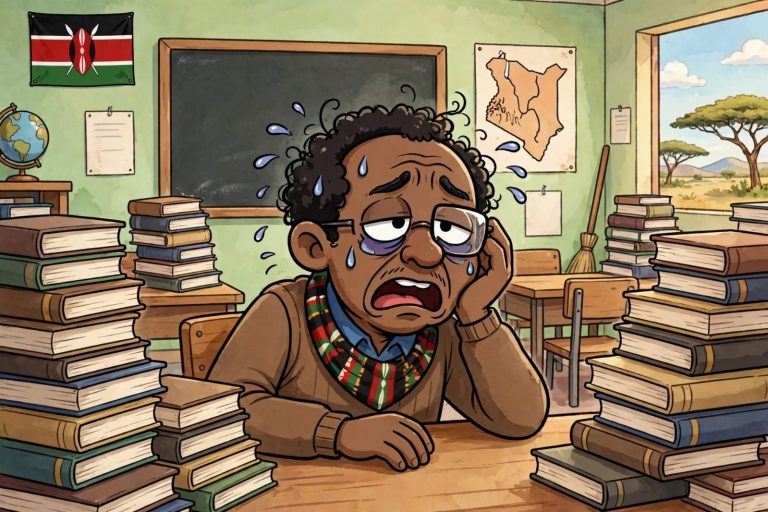
The scale of the arrears problem is significant. Health worker strikes have become a recurring feature of Kenya’s county health system, with nurses, doctors and other cadres downing tools periodically in disputes over unpaid salaries, unimplemented CBAs and deteriorating working conditions. The Kenya Medical Practitioners, Pharmacists and Dentists Union has similarly flagged persistent remuneration disputes across multiple counties. Each strike inflicts direct harm on patients — particularly the most vulnerable, who rely entirely on public facilities. Each resolution, when it comes, has tended to be partial and temporary, with the underlying structural issues left unaddressed.
Nassir’s observation about the 2017 CBA is worth examining carefully. Collective bargaining agreements in Kenya’s public sector have a troubled history of being signed during politically sensitive periods and then quietly shelved once electoral pressure dissipates. The pattern is not unique to health — teachers, lecturers and other public sector workers have experienced similar cycles. But in health, the consequences of that pattern are measured in patient outcomes, in preventable deaths and in the steady haemorrhage of trained professionals to better-paying opportunities elsewhere, including abroad.
The brain drain dimension is a slow emergency that rarely receives the attention it deserves at summits. Kenya trains significant numbers of nurses and clinical officers who then emigrate to the United Kingdom, the Gulf states and other destinations offering better pay and conditions. The National Health Workforce Strategy has acknowledged this challenge, but policy acknowledgement has not been matched by the salary structures and working environments needed to retain talent at home. A health system that cannot pay its workers on time is a system that signals to its best people that they should leave.
Ruto’s one-week deadline will now be tested against this entrenched reality. The mechanism he has proposed — bringing the Salaries and Remuneration Commission into CBA discussions — has potential if it leads to binding timelines and enforceable accountability frameworks rather than another round of meetings that produce goodwill communiqués without implementation.
The inaugural Kenya Health Summit was designed to mark a milestone in the country’s healthcare journey. It may instead be remembered as the moment the human cost of that journey was finally stated plainly, in the President’s presence, by the people bearing it most directly.
Whether the one-week deadline produces a genuine resolution or merely a temporary reprieve will say a great deal about whether Kenya’s health reforms have the institutional depth to match their political ambition.
Similar Posts by The Mt Kenya Times:
- Mt Kenya Times ePAPER September 23, 2026
- Kagwe vows to fight punitive taxes choking Kenya’s flower farmers
- Court seals national tallying of presidential votes as 2027 election battle lines form
- Jubilee’s new dawn: Matiang’i takes the helm
- Kenyatta passes the torch: Jubilee’s Matiang’i gambit and the battle for Kenya’s political soul
About the Author