The green tide: How Gachagua is reshaping Kenya’s political landscape ahead of 2027

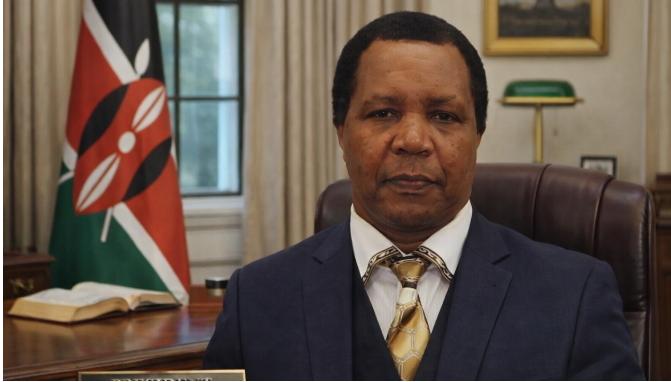
Rigathi Gachagua receiving defectors at DCP Hqs
With defectors streaming in, by-election wins and a presidential bid hardening, the former deputy president is turning DCP into the opposition’s most disruptive force
By James Mwangi
Rigathi Gachagua’s Democracy for the Citizens Party received Kamukunji MP Yusuf Hassan and eleven Jubilee branch chairmen into its ranks yesterday, in the most symbolically charged defection yet as Kenya’s pre-election political realignment accelerates toward what promises to be the most fiercely contested general election in a generation.
Hassan, who has served Kamukunji constituency since 2011, announced his defection from Jubilee at DCP’s Nairobi headquarters yesterday, pledging his support for Gachagua’s presidential ambitions. “We are now in DCP, and we have decided to support Rigathi Gachagua in his 2027 presidential ambitions,” he said.
The declaration was significant on multiple levels. Hassan is not a fringe figure. He is a veteran urban legislator with deep roots in one of Nairobi’s most politically active constituencies, and his departure from Jubilee — the party that once dominated Kenyan politics under former President Uhuru Kenyatta — is the latest evidence that the old political architecture is being torn down and rebuilt around new centres of gravity.
Hassan cited the cost of living, unemployment and heavy taxation among his reasons for joining DCP. “I am happy to join DCP, a party which is advocating for the good of Kenyans. It is looking for the change we want since Kenyans have suffered due to high cost of living,” he said.
The eleven Jubilee branch chairmen who crossed over alongside Hassan — drawn from constituencies including Starehe, Embakasi South, Langata, Kibra, Mathare, Roysambu and Kasarani — extend DCP’s urban footprint across Nairobi’s most contested political terrain. Their collective defection is less a statement about Jubilee’s decline, which is well established, than a statement about where they believe the momentum now lies.
The timing sharpens that message further. Just a day before Hassan’s defection, Nyandarua Governor Kiarie Badilisha and Murang’a Governor Irungu Kang’ata also shifted allegiance to DCP from the ruling UDA party, underlining the pace at which Gachagua’s outfit is expanding beyond its Mount Kenya base.

The trajectory of DCP’s rise is not easily dismissed. A TIFA Research poll recorded the party’s support climbing from nine per cent in September 2025 to 16 per cent by May 2026, a period during which both ODM and UDA recorded declining figures. The party has also secured four by-election victories over the past year, in Kariobangi North, Narok Town, Kisa East wards, and the Ol Kalou parliamentary seat — results that demonstrate DCP’s capacity to convert political momentum into electoral outcomes.
DCP has now taken its campaigns into Nakuru, one of Kenya’s most closely watched electoral battlegrounds, with Gachagua and a team of opposition leaders touring the county as the party seeks to build a grassroots network beyond its traditional strongholds. Political analyst Joseph Omondi noted that Gachagua could find a receptive audience among Mount Kenya communities in the county, though he cautioned that intensifying mobilisation risks deepening ethnic and political divisions if campaigns fail to remain issue-based.
Gachagua himself has left no ambiguity about his intentions. Responding to suggestions within the opposition that his role should be limited to helping another leader defeat President William Ruto, Gachagua was unequivocal: “Rigathi is not a kingmaker. Gachagua is king.” He dismissed as a “ridiculous proposition” the idea that his purpose was to remove Ruto and simply hand power to someone else.
He also used the occasion of Hassan’s reception to reject calls for zoning within the United Opposition, insisting that all parties should field candidates wherever they enjoy support rather than agreeing to exclusive regional spheres of influence. “We do not want zoning. Every party should put a candidate where it feels it has popularity,” he said.
That position places Gachagua at the centre of a broader tension within the opposition — between the desire for unity and the competition for dominance. Kenya’s opposition is beginning to look less like a loose collection of political interests and more like a coalition in the making. But the bigger question is not whether opposition leaders can sit together. It is whether they can remain together when the difficult question of who leads finally arrives.
The emerging partnership between Gachagua’s DCP and Kalonzo Musyoka’s Wiper Patriotic Front has exposed a problem that could prove more difficult for Kenya’s opposition than defeating Ruto at the ballot box: deciding who will lead the coalition. The two parties are betting that combining Gachagua’s influence in Mount Kenya with Kalonzo’s support in Ukambani will give the opposition a stronger base, pointing to the region’s 5.7 million registered voters and Ukambani’s reliable opposition vote as the arithmetic foundation of a winning alliance.
Gachagua has said that even if he does not secure the opposition’s presidential ticket, he will serve as director of campaigns — a role he described as one that President Ruto himself fears. “If I will not be the opposition’s flag bearer, I will be the director of the presidential campaigns,” he said. The declaration was characteristic: framed generously as flexibility, but carrying an unmistakable undertone of supremacy.
The political landscape that Kenya is navigating toward August 2027 is unlike anything the country has encountered in recent memory. A sitting president with a broad-based parliamentary alliance faces a fragmented but energised opposition whose most prominent figure is a man he impeached from the second-highest office in the land. The personal history between Ruto and Gachagua adds a dimension of intensity to what is already a high-stakes contest, and it infuses every defection, every rally and every strategic manoeuvre with a weight that goes beyond ordinary political competition.
For DCP, the green tide that Gachagua invokes — “the future is green” — is no longer merely a slogan. It is a live political experiment, being tested ward by ward, constituency by constituency, across a country that has learned, through repeated experience, that Kenyan elections are rarely decided until the very last moment.
Whether the experiment succeeds will depend on whether Gachagua can hold the coalition together, resolve the kingmaker question on his own terms, and convert an impressive 12 months of political theatre into the one thing that ultimately matters: votes.
Similar Posts by The Mt Kenya Times:
- Mt Kenya Times ePAPER October 17-18, 2026
- Ruto bets billions on Kerio Valley — with one eye on 2027
- Ruto’s health ministry kills Murang’a’s digital hospitals
- Kenya bets on Mount Kenya to drive a billion-shilling tourism revival
- Do you have a wealth vision? Or are you just working until you die?
About the Author