The Mt Kenya Times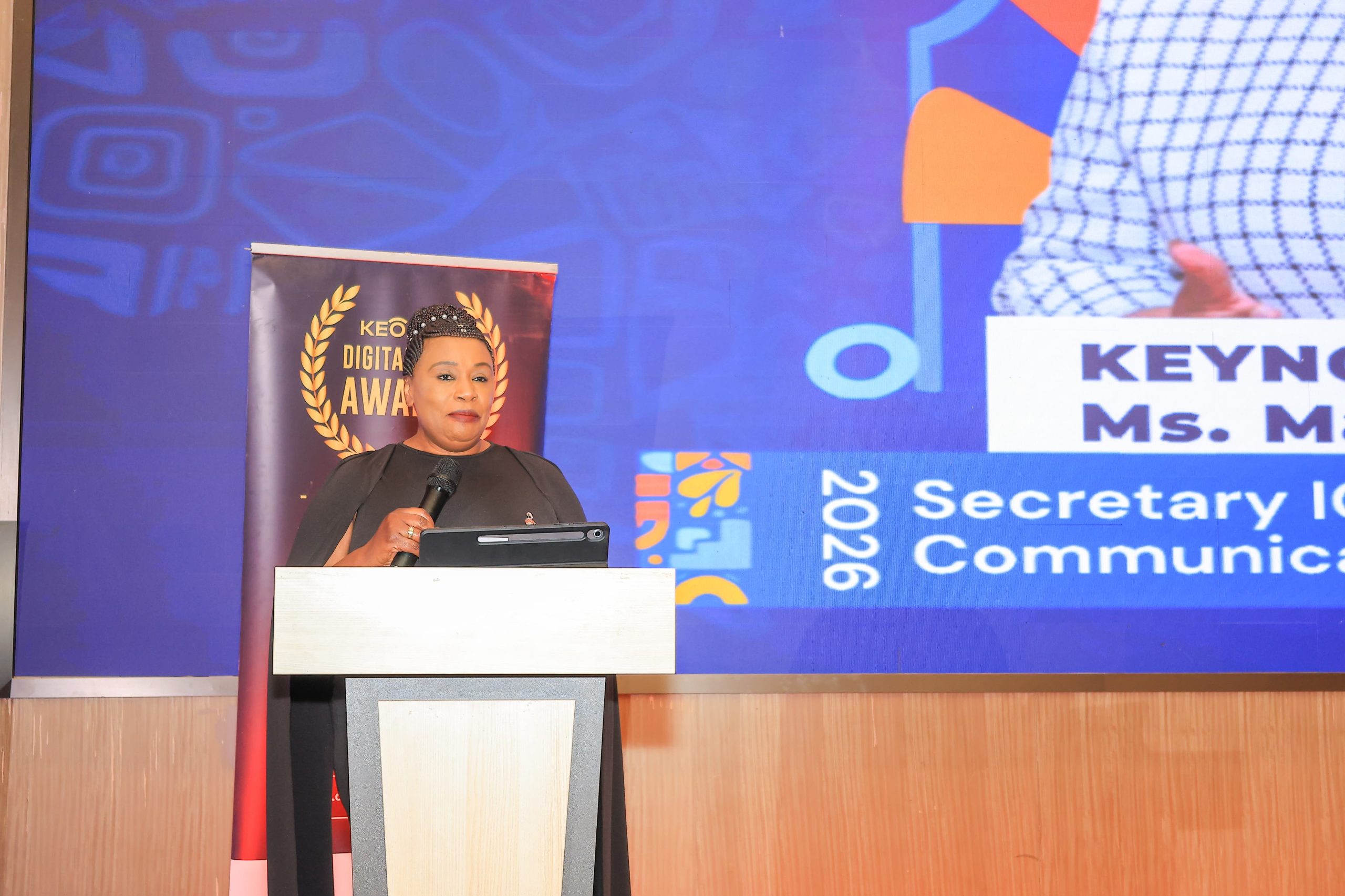
Mary Kerema, Secretary for ICT, Digital Economy and Emerging Technologies
Kenya’s growing digital economy is opening real doors for young creators, entrepreneurs and tech professionals — but only if they step through them.
By John Kariuki
Young Kenyans have been challenged to move beyond consuming digital content and channel their creativity, skills and online presence into sustainable businesses and income.
Mary Kerema, Secretary for ICT, Digital Economy and Emerging Technologies, said Kenya’s expanding digital economy offers young people a genuine opportunity to build brands, showcase talent, access global markets and generate wealth.
“Digital spaces should not only be places where young people consume content. They should also be spaces where they create, market and earn from their skills,” Kerema said.
She was speaking on Friday evening at the Digitally Fit Awards Kenya Edition, held at Argyle Grand Hotel in Nairobi, where digital creators, entrepreneurs and technology professionals gathered to celebrate innovation and excellence.
Kerema said opportunities were growing across content creation, graphic design, photography, software development, digital marketing, music and fashion. She urged young people to pair creativity with professionalism, consistency, quality and market-relevant skills, saying the message had to be unambiguous: Kenya’s youth must shift from being digital consumers to creators, entrepreneurs and earners.
The call comes as the Government accelerates efforts to build the infrastructure and ecosystem needed to support a more productive digital economy. Kerema said that agenda is anchored on three priorities: infrastructure, access and creation.
“We are aggressively expanding the national fibre backbone to reach every corner of the country,” she said, adding that access to high-speed internet should be treated as a critical enabler of entrepreneurship and economic participation.
The Government is also pushing for the adoption of locally developed technology. Kerema stressed that homegrown solutions can retain capital within the economy, create high-value jobs, address uniquely Kenyan challenges and strengthen digital security. The country, she said, must shift from being primarily a consumer of technology to a producer and exporter of digital solutions.
To support that shift, the Government is implementing regulatory sandboxes for emerging technologies such as artificial intelligence, establishing digital hubs across the country and introducing reforms aimed at giving Kenyan-developed software and hardware greater access to public ICT procurement.
“We are not just talking about change; we are institutionalising it,” Kerema said.
She added that Kenya’s digital transformation must ultimately be measured not only by infrastructure and platforms, but by the economic opportunities they generate. “The success of our digital transformation will be measured by the number of Kenyans whose lives and livelihoods are transformed by technology,” she said.
Kenya is also seeking to scale local innovations beyond its borders through the African Continental Free Trade Area, with a focus on developing digital products and services capable of competing in regional and global markets.
Kerema called for stronger collaboration between Government, industry, academia and investors. Universities, she said, must align training with industry needs, investors must back investment-ready startups, and the private sector must create opportunities for young innovators to test and deploy their solutions.
Strategic sectors — including FinTech, AgriTech, manufacturing and e-government — offer significant room for further digital adoption and economic growth. The Government’s ambition is to build a fully digital Kenya by 2030, with current efforts focused on scaling the adoption of Kenyan technology across Government and key economic sectors.
Kerema also challenged investors and industry leaders to back local innovation, adopt Kenyan technologies, mentor young entrepreneurs and collaborate to build solutions for African and global markets.
“Do not underestimate the economic value of your digital skills,” she told young Kenyans. “Build. Create. Learn. Experiment. Market yourself. Build your brand. Solve a problem — and turn your skills into value and your value into income.”
Dr Ezekiel Mutua, Strategic Communication and Public Administration Specialist, echoed the call, urging young people to harness technology to create economic opportunities, particularly within the creative sector.
The Digitally Fit Awards recognise excellence across technology, digital marketing, e-commerce, education, finance, agriculture and health. As winners were honoured, Kerema described each award as evidence of perseverance, problem-solving and the growing strength of Kenya’s innovation ecosystem.
On behalf of Cabinet Secretary for ICT, Digital Economy and Emerging Technologies William Kabogo and herself, Kerema extended best wishes to the Digitally Fit Awards chief executive and Secretariat for the successful 14th Edition. The Ministry, she said, remained committed to supporting innovators and strengthening Kenya’s digital transformation ecosystem.
“Kenyan technology must not merely compete with the world. It must lead,” Kerema said, challenging stakeholders to turn the Silicon Savannah into a global benchmark for innovation — with Kenyan technology powering businesses, creating jobs and opening new markets for the country’s digital talent.
Similar Posts by The Mt Kenya Times:
- Dr. Ekrah Ndung’u wins TVET advocacy award after 12 years
- Mt Kenya Times ePAPER October 17-18, 2026
- Ruto bets billions on Kerio Valley — with one eye on 2027
- Ruto’s health ministry kills Murang’a’s digital hospitals
- Kenya bets on Mount Kenya to drive a billion-shilling tourism revival
About the Author