Gachagua vs IEBC: The battle for electoral trust has already begun
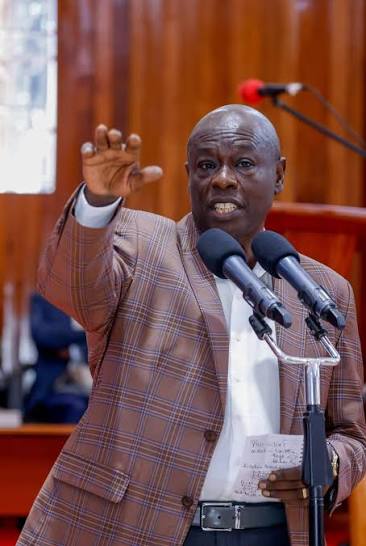
Former Deputy President Rigathi Gachagua
Kenya’s 2027 election is still a year away, but the fight over its credibility is being waged right now — and the stakes could not be higher.
By Collins Kibet
The contest over Kenya’s 2027 general election has already started — not at the ballot box, but in the increasingly bitter dispute between former Deputy President Rigathi Gachagua and the Independent Electoral and Boundaries Commission over technology, procurement and institutional independence.
Gachagua has intensified his criticism of the IEBC in recent weeks, raising pointed concerns about the procurement of an Integrated Election Management System. He has alleged that the process could favour a South Korean technology company and questioned the treatment of officials who reportedly raised internal concerns about the procurement. These remain allegations. They require evidence, independent verification and proper institutional scrutiny — not trial by political statement.
The IEBC, for its part, carries a constitutional responsibility that goes well beyond simply organising a vote. It must ensure that every stage of the electoral process — from procurement decisions made in 2025 to the announcement of results in August 2027 — can withstand legitimate scrutiny from political parties, civil society, the courts and the Kenyan public. That responsibility cannot be discharged through silence or defensiveness.
The dispute, viewed through that lens, is considerably larger than a confrontation between one opposition figure and an electoral commission. It touches the foundation of democratic legitimacy itself. Kenya’s electoral history offers a sobering reminder of what happens when sections of the public believe the process has been compromised before the first ballot is cast. The 2007 post-election crisis, the controversies of 2017 and the litigation that followed the 2022 presidential result all demonstrated that electoral credibility cannot be retrofitted after the fact. It must be built, painstakingly, through transparent decisions and accountable institutions long before election day arrives.
Gachagua’s accusations should neither be accepted uncritically nor dismissed as mere political noise. He is a political leader with a direct interest in the 2027 contest, and that interest shapes how his claims must be read. But political motivation does not automatically make an allegation false. If he possesses credible evidence of procurement irregularities or institutional bias, that evidence should be placed before the relevant oversight bodies and legal institutions for proper investigation — not deployed solely as a mobilisation tool on the campaign trail.
The IEBC, meanwhile, would serve Kenya better by responding with transparency rather than political confrontation. Major technological decisions — particularly those involving systems that will determine how votes are transmitted and results announced — deserve clear, detailed public explanation. Procurement processes should be open to scrutiny. Political parties, civil society organisations and independent technical experts should be given meaningful access to assess election preparations. Where legitimate concerns are raised, they should be addressed promptly and substantively, not left to ferment into the kind of suspicion that can delegitimise an election before a single vote has been counted.
The responsibility extends well beyond these two parties. Kenya’s media must investigate electoral preparations rigorously and report findings accurately, without becoming amplifiers for unverified political claims. Civil society organisations with expertise in electoral monitoring must engage early and consistently. Parliament must exercise its oversight role over the commission actively, and the courts must remain both accessible and independent. Political leaders across all affiliations — including those within the governing coalition — must resist the temptation to weaponise institutional disputes for short-term political gain.
Kenya’s recent electoral history also raises a structural question that this dispute brings back into focus: how much of the country’s democratic stability depends on technology that the public does not understand, procured through processes the public cannot easily observe, operated by institutions whose internal decision-making remains opaque? The IEBC’s technology choices in 2027 will matter enormously. So will the credibility of the process through which those choices are made.
With the August 10, 2027 election now less than twelve months away, the window for building genuine public confidence in electoral institutions is narrowing. Every unexplained procurement decision, every allegation left unaddressed and every confrontation that generates heat rather than clarity brings Kenya closer to the kind of pre-election environment in which results — whatever they may be — are contested not on their merits but on accumulated institutional suspicion.
Kenya does not need another election defined by technological controversy, accusations of bias and a legitimacy deficit that takes years to resolve. It needs transparent procedures, secure and independently verified technology, accountable institutions and results capable of withstanding serious legal and public scrutiny.
Gachagua may be challenging the IEBC. But protecting Kenya’s electoral democracy is a responsibility that belongs to every institution, political leader and citizen.
In 2027, the greatest victory should not belong merely to the candidate who wins. It should belong to the Kenyan voter — whose ballot is cast freely, counted accurately and respected absolutely.
Similar Posts by The Mt Kenya Times:
- Mt Kenya Times ePAPER October 17-18, 2026
- Ruto bets billions on Kerio Valley — with one eye on 2027
- Ruto’s health ministry kills Murang’a’s digital hospitals
- Kenya bets on Mount Kenya to drive a billion-shilling tourism revival
- Do you have a wealth vision? Or are you just working until you die?
About the Author