Karua’s warning: Is Kenya slipping back into the politics of fear?
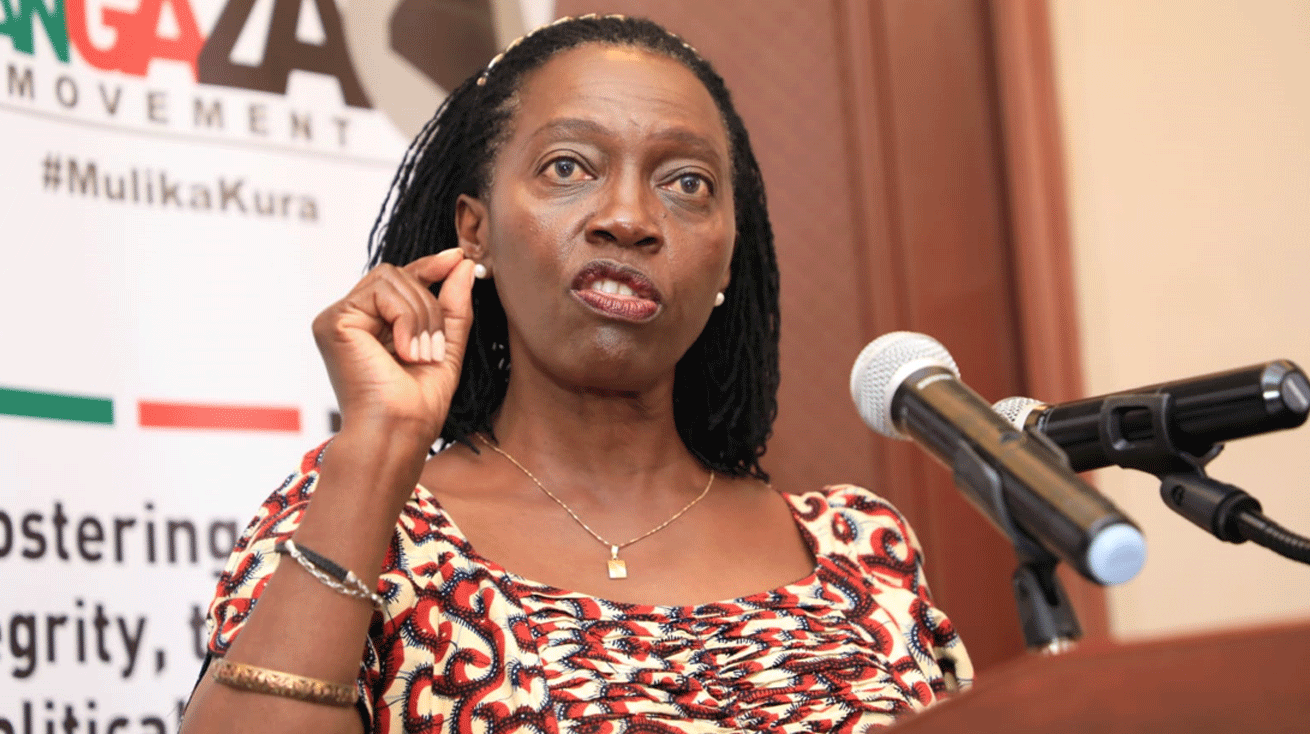
Martha Karua, the People's Liberation Party leader
With 2027 approaching, a veteran opposition leader’s challenge to the Ruto administration cuts to the heart of Kenya’s democratic health
By Collins Kibet
Martha Karua, the People’s Liberation Party leader and former Justice minister, warned yesterday that the days of ruling through fear are numbered, injecting fresh heat into Kenya’s already charged political environment and raising a fundamental question about the direction of the country’s democracy as the 2027 General Election draws closer.
Karua’s statement is more than ordinary opposition rhetoric. It touches the delicate and always contested relationship between political power and citizens’ freedoms. In a functioning democracy, criticism is not an act of rebellion — it is the oxygen of accountability. Opposition leaders, journalists, activists and ordinary citizens must be free to question government decisions without intimidation. When fear begins to replace open debate, democracy risks becoming a performance in which citizens watch politics from a distance rather than participate in it.
The timing of the warning matters. With 2027 approaching, alliances are shifting, political ambitions are sharpening and the competition for public support is intensifying by the month. Every government action is increasingly being read through an electoral lens. Opposition leaders, for their part, are seeking to convert public dissatisfaction into political momentum, and Karua, a veteran of Kenya’s most consequential political battles, understands better than most how to land a message that travels.
The allegations surrounding abductions, intimidation and the excessive use of state power have further complicated the national conversation. Such accusations are serious and deserve to be treated seriously — neither dismissed as propaganda nor accepted without evidence. They demand independent investigation, transparency and a willingness to be accountable. A government confident in the strength of its institutions should have nothing to fear from credible scrutiny. The refusal to engage such concerns, or the habit of attributing all criticism to political mischief, only deepens public unease.
President William Ruto’s administration will argue, as governments routinely do, that it holds a constitutional mandate to govern and that its record should be judged on policies, development programmes and economic performance rather than on the accusations of political opponents. Ministers have repeatedly challenged critics to offer alternative solutions rather than relying on condemnation alone. That is a fair point as far as it goes. But it does not go far enough. Governance is not only about delivery — it is also about conduct, and the manner in which a government treats dissent tells citizens a great deal about whether it trusts them.

Kenya’s democratic test, however, extends beyond the rivalry between Ruto and his opponents. The larger question is whether institutions can remain stronger than the individuals who occupy them. Parliament, the courts, the police, the electoral commission and the media must be capable of operating independently regardless of who sits in State House. When institutions bend to power rather than holding it accountable, the constitutional architecture that Kenyans fought hard to establish begins to hollow out from within.
Fear, it should be noted, does not always announce itself loudly. Sometimes it settles quietly into behaviour — a journalist who hesitates before filing a story, an activist who decides against attending a demonstration, a public servant who chooses not to question an unlawful instruction, a citizen who swallows a grievance because speaking feels dangerous. When such behaviour becomes widespread and normalised, democracy may remain alive on paper while weakening steadily in practice. The forms persist. The substance retreats.
The Constitution guarantees Kenyans freedom of expression, peaceful assembly, political participation and human dignity. These are not privileges extended at the discretion of a particular president or political party. They are rights that belong to citizens by virtue of citizenship. Protecting them is therefore not a partisan act — it is not about supporting the opposition or attacking the government. It is about protecting the country itself, and the kind of political culture that Kenyans want to pass on.
As Kenya moves towards 2027, the political contest should be fought through ideas rather than intimidation, through persuasion rather than threats, through evidence rather than propaganda. Leaders should be competing for the confidence of citizens, not their silence. The distinction is not a small one. Confidence is earned. Silence can be induced. A government that confuses the two has misunderstood what legitimacy means in a democracy.
Karua’s warning should provoke a broader national reflection — one that goes beyond the question of who will win the next election. The deeper question is whether Kenya will enter that election as a confident democracy in which citizens can speak freely, institutions can act without fear and political disagreements can be resolved through the ballot rather than through intimidation.
A democracy does not grow strong because citizens praise those in power. It grows strong when citizens can challenge those in power without consequence.
And perhaps that is the sharpest edge of Karua’s message: when citizens become afraid to speak, democracy goes quiet — and a quiet democracy can be more dangerous than a noisy one.
Similar Posts by The Mt Kenya Times:
- Mt Kenya Times ePAPER October 24-25, 2026
- Muturi calls on IEBC to keep election technology tender clean and on schedule
- Ruto meets UAE minister in push to deepen trade ties
- Gideon Moi breaks silence on Ruto fallout, cites broken promises
- The doctor who refused to abandon a sick Uganda
About the Author