Behind the visor: How Nairobi’s ‘Brayo Oyaah’ is redefining Kenya’s road safety culture
 The Mt Kenya Times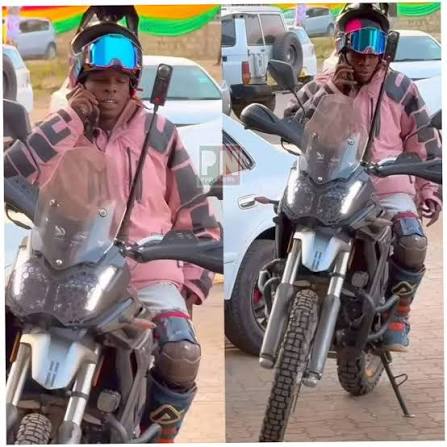
A helmeted commuter with a viral greeting is doing more for road safety than most government campaigns.
By David Nyaga
Every morning along the clogged corridors connecting Ongata Rongai to Nairobi’s Westlands, hundreds of thousands of commuters brace for the familiar gridlock. Amid the sea of cars and swerving motorcycles, a helmeted figure on a 300cc Voge Rally bike weaves through traffic, raises a hand and delivers his signature echoing greeting: “Oyaaaah!”
To his hundreds of thousands of digital followers, he is simply “Brayo Oyaah” or “Biker Nairobi” — a faceless content creator whose brief road encounters routinely go viral. Beneath the helmet and the catchphrases, however, lies one of Kenya’s most effective grassroots advocates for road safety.
According to data from the National Transport and Safety Authority, two-wheeler casualties — covering both commercial boda boda riders and personal commuters — account for a disproportionate share of road fatalities and severe injuries in Kenya each year. Speeding, failure to wear protective gear, poor lane discipline and hostile interactions between motorists and riders all feed the crisis.
Formal government campaigns lean on billboards and enforcement crackdowns. Brayo’s advocacy works differently. By remaining faceless behind a full-face helmet, he shifts the focus away from personal celebrity and onto the gear itself. His daily commuter footage models practices that are, in his world, non-negotiable: full riding suits, armoured jackets, certified helmets and defensive riding habits that would not look out of place in a road safety manual.
The impact goes beyond protective equipment. The relationship between motorists, pedestrians and motorcycle riders on Nairobi’s roads is frequently fraught with friction and mutual suspicion. Through casual, positive interactions — greetings exchanged at junctions, a hand extended to a stranded motorist, lane space shared without aggression — his videos quietly dismantle the stigma that tends to follow motorcyclists in the city.
“The message is simple: safety first, fame later,” Brayo said during a media appearance. By showing that a commuter can navigate Nairobi’s toughest traffic corridors efficiently without resorting to dangerous tactics or flouting the rules, he offers a practical and quietly radical blueprint for younger riders watching from their phones.
His rise points to something broader: a genuine shift in how civic messaging works. Effective road safety advocacy no longer lives exclusively in policy documents or highway enforcement units. Increasingly, it lives on the chest-mounted action cameras of everyday commuters who model discipline in real time, to audiences that government campaigns rarely reach.
As Kenya’s urban road network expands and motorcycle transit continues to grow, the influence of creators like Brayo is a reminder that a culture of safety is built one individual decision at a time — one helmet, one commute and one “Oyaaaah” at a time.
Similar Posts by The Mt Kenya Times:
- Inspired by the poem “Time”
- The use of digital educational technologies in the prevention of dental diseases
- Trauma, Friendship, Love, and the Search for Self-Worth in Hanya Yanagihara’s A Little Life
- Kenya’s scouting laws face overhaul: Kiarie leads push to align movement with devolved governance
- Mt Kenya Times ePAPER September 19-20, 2026
About the Author