With nine months to the August 2027 election, the appointment of Matiang’i and Orengo as Ukombozi Alliance co-chairs signals a maturing opposition strategy — and a gathering storm for President Ruto
By James Mwangi
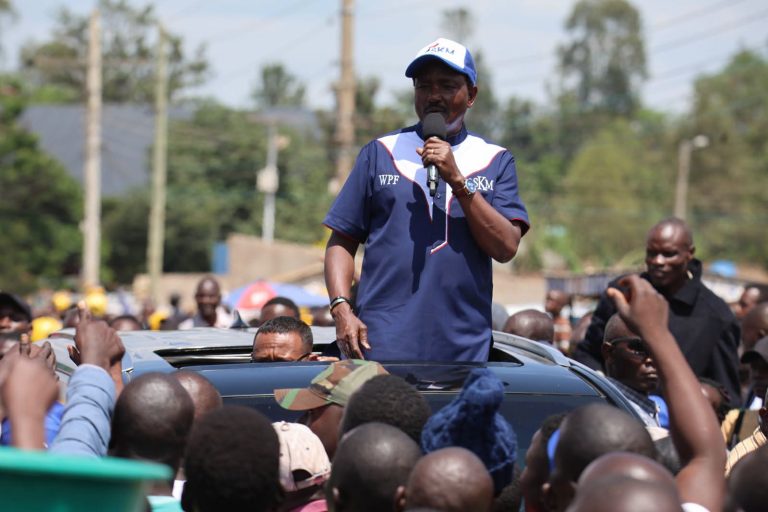
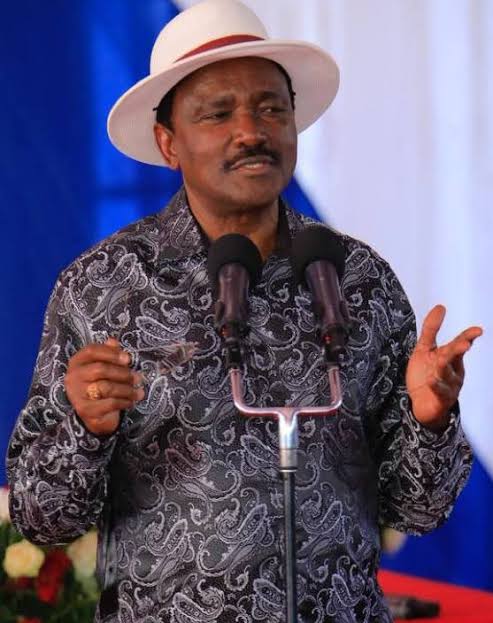
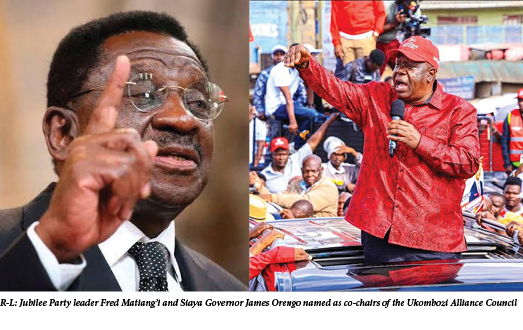
Wiper Patriotic Front leader Kalonzo Musyoka yesterday named Jubilee Party leader Fred Matiang’i and Siaya Governor James Orengo as co-chairs of the Ukombozi Alliance Council, completing a sweeping leadership overhaul of Kenya’s main opposition coalition and drawing the clearest battle lines yet ahead of the August 2027 General Election.
The announcement, made in Kisumu as Kalonzo arrived for a two-day rally in Migori and Homa Bay counties, is the most consequential structural move the opposition has made since the Azimio la Umoja coalition was rebranded as The Ukombozi Alliance — meaning liberation — on 21 September. It is also a declaration of intent: that Kenya’s fractured opposition, long derided as a collection of competing presidential ambitions masquerading as a coalition, is now serious about building a machine capable of unseating President William Ruto.
“We have chosen two people who have given this country years of service, and they will chair the Council of the Ukombozi Alliance together,” Kalonzo said. “Matiang’i knows how government works and how to get it to deliver. Orengo has stood for the Constitution when it was dangerous to do so. Kenyans will see that in the Alliance.”
The appointment of Matiang’i and Orengo is not merely a reshuffling of chairs. It is a carefully calibrated political statement. Matiang’i, who served as Cabinet Secretary for Interior under retired President Uhuru Kenyatta, brings administrative credibility and a growing Mt Kenya following at a time when the region’s estrangement from Ruto’s administration remains the most consequential variable in the 2027 contest. Orengo, a senior counsel who has spent decades defending Kenya’s constitutional architecture from both government benches and the opposition trenches, adds legal gravitas and a Nyanza footprint that the alliance has struggled to consolidate since former Prime Minister Raila Odinga’s death in October 2025.
The two men replace Uhuru, who resigned as council chair in a letter dated 5 October, ending a brief but symbolically loaded tenure. Uhuru’s earlier exit from Jubilee Party leadership — forced by a High Court order barring retired presidents from holding party office beyond six months post-presidency — had already signalled that his role in the opposition’s formal structures would need to evolve. His departure from the chairmanship, though quiet, removed the most recognisable name in opposition politics and left a vacuum that Kalonzo has now moved decisively to fill.
The alliance’s deed of agreement has been revised to allow more than one council chairperson, a structural change designed to manage the competing interests of a coalition that spans parties, regions and personalities. It is a pragmatic concession to political reality. Kenya’s opposition does not lack talent or ambition. What it has historically lacked is the discipline to subordinate individual presidential dreams to a shared electoral strategy — a failure that cost it the 2022 election despite fielding a combined vote share that, on paper, should have been decisive.
The challenge is openly acknowledged within the coalition’s own ranks. Gachagua has consistently insisted that opposition leaders cannot afford to enter the 2027 race divided, describing a united ticket as the only viable strategy to unseat the Kenya Kwanza administration. Jubilee Party has backed him as its preferred presidential candidate, while Martha Karua, who co-convenes the coalition with Kalonzo, has said the alliance remains focused on building strong institutions before settling on a 2027 candidate.
That careful hedging tells its own story. For Kalonzo, the question of Matiang’i’s candidacy is a political calculation: associating too closely with Matiang’i risks undermining his rapport with Gachagua, whose backing in Mt Kenya remains a crucial bargaining chip in the opposition’s power matrix. Kalonzo himself has said the priority is “unity and a workable formula” — language that sounds reassuring until one considers how many Kenyan opposition coalitions have dissolved over precisely that workable formula.
The opposition’s battle against Ruto is increasingly turning into a contest within the opposition itself. While Kalonzo is building the Ukombozi Alliance, the Linda Mwananchi camp led by Edwin Sifuna is preparing a political vehicle of its own, and the Democratic Coalition Party has indicated it will not join the Ukombozi Alliance at this stage. The fragmentation is not incidental. It reflects genuine ideological and regional differences that no amount of coalition branding can fully paper over.
For Ruto, the Ukombozi Alliance’s latest moves present both a threat and an opportunity. The coalition could become a political nightmare for the President, as it brings together leaders from Mt Kenya — crucially the region that was instrumental in Kenya Kwanza’s 2022 victory — alongside a Nyanza dimension that the opposition has been working to consolidate. At the same time, a divided opposition remains Ruto’s most reliable asset. He has already moved to peel off Kalonzo’s constituency, directly appealing to voters in Kitui County during an October address in Tseikuru, and directing that the road leading to Kalonzo’s home be tarmacked. Kalonzo has publicly dismissed the overture, ruling out joining Kenya Kwanza and insisting he will face Ruto directly at the ballot.
The Independent Electoral and Boundaries Commission voter register stands at 24.45 million and is projected to reach 28.4 million by 2027 — a larger electorate that makes regional vote arithmetic increasingly unpredictable and raises the stakes for every coalition calculation. No single region will decide this election. That reality cuts both ways.
What Kenya is watching, with nine months to the vote, is whether Matiang’i, Orengo and Kalonzo can do what their predecessors in the One Kenya Alliance of 2022 could not: hold together long enough to present a credible, unified ticket. The structural changes are real. The political will is visible. But in Kenyan politics, declarations of unity have a habit of unravelling precisely when the question of who stands at the top of the ballot can no longer be deferred.
The opposition has played its boldest card. Whether the hand wins depends on whether its principals can agree who deals next.
Similar Posts by The Mt Kenya Times:
- Kalonzo marches through Raila country, stones and all
- KRA hits KSh1 trillion early as tax growth surges
- Kalonzo storms Raila’s heartland under stones and teargas — and dares Ruto to stop him
- DTB tightens Northern Kenya footprint with Isiolo branch opening, targets 100th branch by year-end
- New Maara law courts to ease access to justice in Tharaka-Nithi
About the Author