Kalonzo storms Raila’s heartland under stones and teargas — and dares Ruto to stop him
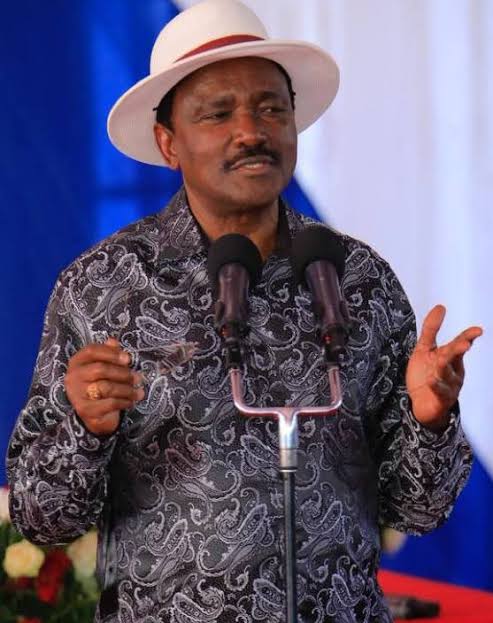
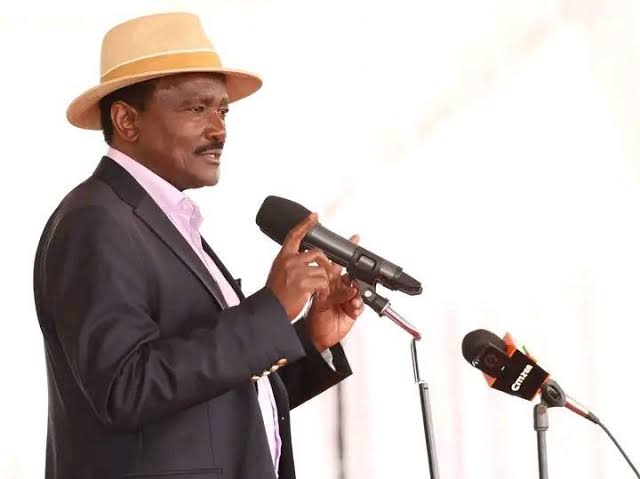
Wiper Patriotic Front leader Kalonzo Musyoka,
The Migori attack on the Ukombozi Alliance convoy is not simply a law-and-order failure — it is a measure of how dangerous Kenya’s road to August 2027 is becoming
By David Kimani
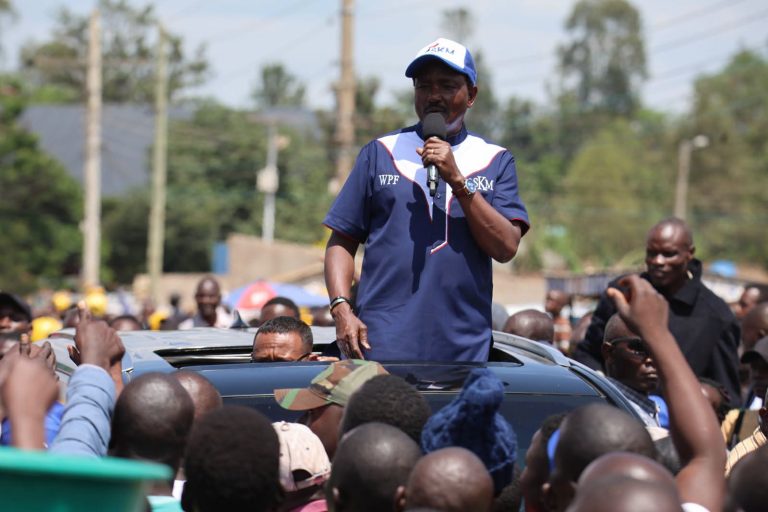
Wiper Patriotic Front leader Kalonzo Musyoka’s convoy was attacked by stone-throwing youths in Migori yesterday, as police deployed teargas to disperse crowds during a political tour of Nyanza — a region the opposition is fighting hard to consolidate ahead of the August 2027 General Election.
The assault, which occurred in Suna West during the first day of Kalonzo’s two-day Ukombozi Alliance tour of Migori and Homa Bay counties, damaged several vehicles and briefly disrupted the rally. Former Attorney-General Justin Muturi’s car had its windscreen smashed. Kalonzo described a group of about ten people pelting his convoy with stones, calling it a serious threat to his life and a deliberate attempt to intimidate the opposition. Despite the violence, he proceeded to address residents who had turned out in numbers to hear him.
“Stones and teargas could not stop us from addressing the great people of Migori,” Kalonzo wrote on X afterwards. “That is the predator regime’s answer to peaceful assembly: violence and intimidation. We will not let it rot our democracy or take away a right the Constitution guarantees every Kenyan. No amount of intimidation will keep us from our people. Ukombozi cannot be stopped.”
By Friday morning, the Ukombozi Alliance had confirmed it would proceed with its planned rally in Homa Bay as scheduled — a pointed signal that the opposition does not intend to be driven from the campaign trail by force.
The Migori incident is not an isolated event. In August, a Linda Mwananchi rally in Homa Bay was disrupted by teargas, and opposition leaders faced an attack in Garissa in September. A pattern is forming, and it is a troubling one. Each incident raises fresh questions about whether Kenya’s security apparatus is operating as a neutral referee in the country’s increasingly heated pre-election politics — or as something else entirely.
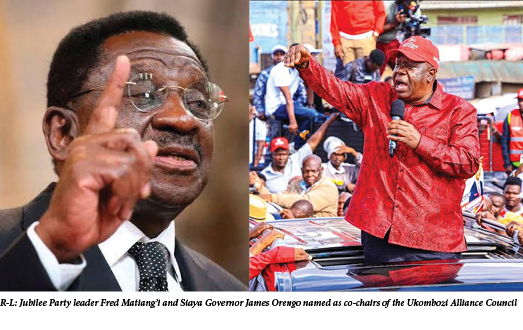
Siaya Governor James Orengo, who was unveiled alongside Jubilee Party leader Fred Matiang’i as co-chair of the Ukombozi Alliance Council on the same day as the attack, condemned the violence, warning that such incidents raised serious concerns about the country’s democratic space ahead of the election. Raila Odinga Junior also weighed in, calling for political competition to be driven by ideas rather than intimidation, and warning that no political ambition justified attacks on those seeking elective office.
The government has not claimed responsibility. No credible authority has claimed the attack was state-directed. But Kalonzo’s framing — “the predator regime’s answer to peaceful assembly” — was deliberate. He is building a political narrative, and the stones thrown in Migori have handed him the imagery to advance it.
That narrative matters enormously in this region. Nyanza — the heartland of the late Prime Minister Raila Odinga’s political legacy — remains contested territory. Kalonzo acknowledged that critics had cautioned him against campaigning in the area, citing the August incident in which a Linda Mwananchi convoy encountered blockades and stone-throwing in Homa Bay. He came anyway. And a local woman at the Ndhiwa rally captured the mood with a raw directness that no polished political speech could match: “Kalonzo, okiwacha sisi otakufa, vijana ya apiko anaendesha apiko na akuna pesa” — “Kalonzo, if you abandon us we will die, the youth are riding motorbikes and there is no money.” The economic desperation behind that cry is exactly the constituency the Ukombozi Alliance is gambling it can mobilise.
It is a high-stakes calculation. Nyanza gave Raila Odinga its most loyal and overwhelming support across five presidential campaigns. With Raila gone since October 2025, the region is politically unmoored — and every major opposition formation is competing to inherit its votes. Kalonzo’s team travelled without incident from Kisumu International Airport to Migori on arrival, suggesting that parts of the region remain accessible and receptive. The violence, when it came, was localised and organised — not a spontaneous expression of public rejection.
That distinction matters. Kalonzo is not unwanted in Nyanza. What he faces is targeted disruption designed to make it appear that he is. The political choreography of the attack — a small group, swift intervention, vehicles damaged but leaders unharmed — has the hallmarks of a message rather than an assassination attempt. The message: this region is not yours.
Kalonzo’s response has been to double down. At Sori in Migori County, he received what his team described as an overwhelming welcome. “Your energy and determination to see a better Kenya give us even greater strength to continue this journey of liberating our nation and restoring hope,” he told supporters. “Ni Ukombozi Time.”
Whether Ukombozi time translates into electoral time is the central question hanging over Kenyan politics. The opposition field remains fractured, with Gachagua, Matiang’i, Kalonzo, Karua and others all circling the presidential question without yet resolving it. The Migori attack has, paradoxically, served the opposition’s interests in one respect: it has given its disparate principals a common cause to rally around and a common adversary to point at.
President Ruto has been making his own moves in opposition territory, appealing directly to Kalonzo’s constituency in Kitui County and directing that the road to the Wiper leader’s home be tarmacked — a gesture of political courtship that Kalonzo has publicly and emphatically rejected. Ruto is not standing still. But the images from Migori — a smashed windscreen, a defiant opposition leader addressing a crowd through the residue of teargas — are not the images an incumbent government wants circulating nine months before a general election.
Kenya’s August 2027 ballot will be decided by millions of ordinary voters who want jobs, lower prices and a government they can trust. The woman at Ndhiwa who called out to Kalonzo from the roadside was not speaking the language of coalitions and co-chairs. She was speaking the language of survival.
Whether the Ukombozi Alliance can answer that call — or whether it will dissolve, as so many before it have, into competing presidential ambitions — is the question Kenya is watching. The stones in Migori did not stop it. What could still stop it is itself.
Similar Posts by The Mt Kenya Times:
- Mt Kenya Times ePAPER November 6, 2026
- Kalonzo marches through Raila country, stones and all
- KRA hits KSh1 trillion early as tax growth surges
- Matiang’i and Orengo step in as Ukombozi chiefs
- DTB tightens Northern Kenya footprint with Isiolo branch opening, targets 100th branch by year-end
About the Author