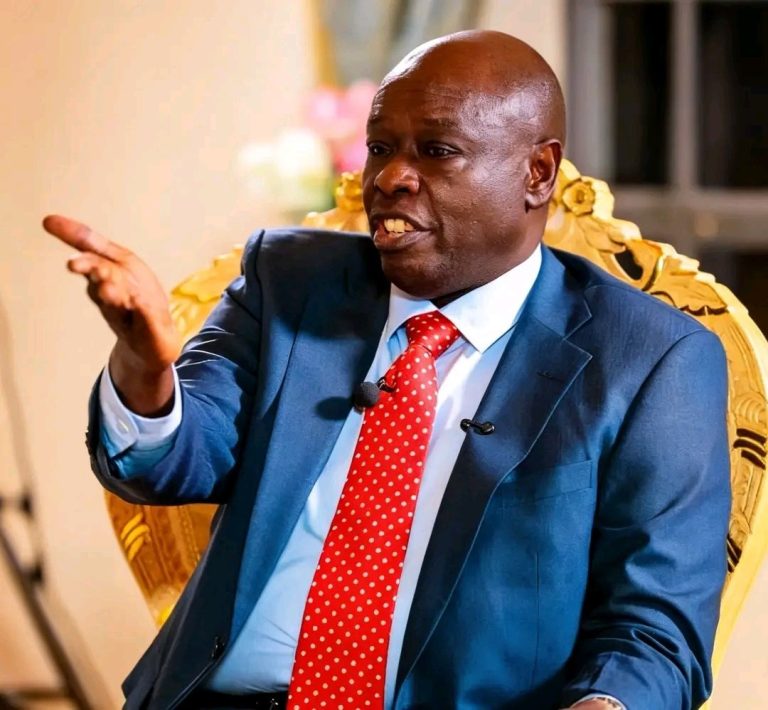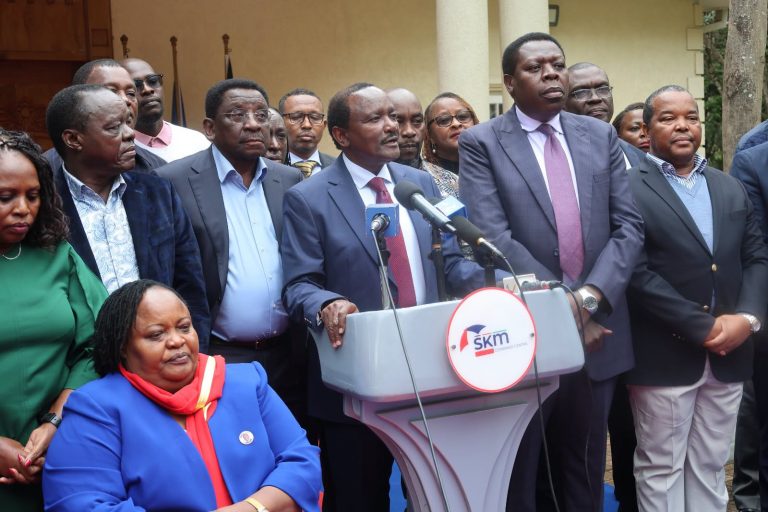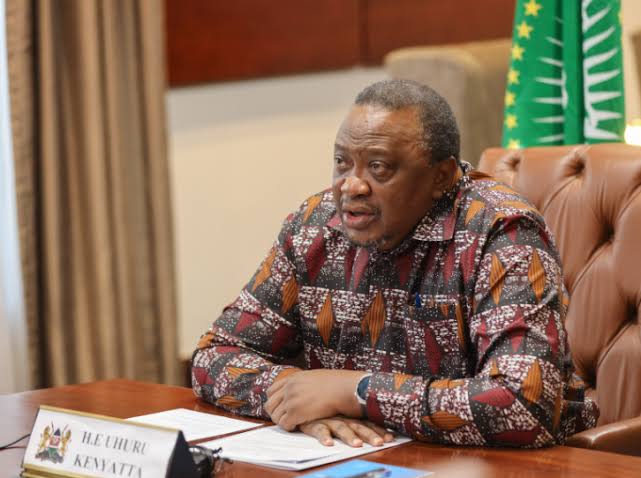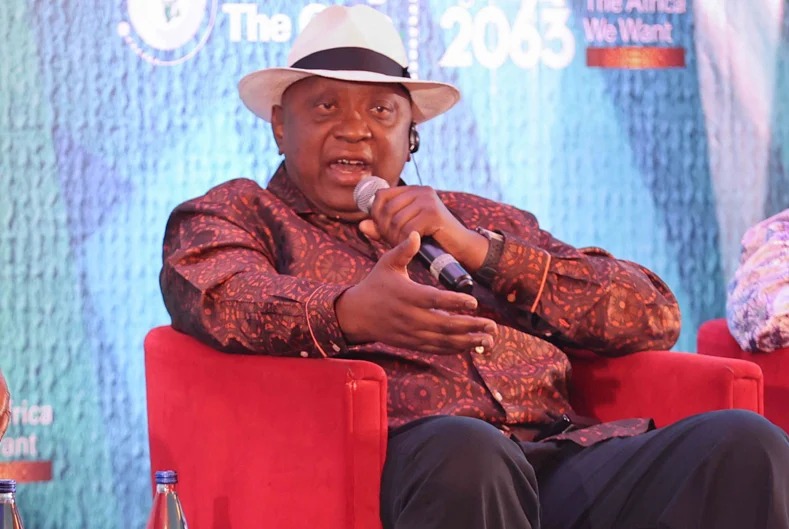
Former President Uhuru Kenyatta
A landmark High Court ruling strips away the legal barrier that kept Kenya’s retired heads of state out of active politics — and its consequences reach far beyond any single individual
By James Mwangi
The High Court yesterday declared unconstitutional the law barring retired presidents from participating in active politics, ruling that once a head of state leaves office, the state loses its authority to govern their civic life.
Justice Bahati Mwamuye, delivering the judgment, drew a clear and consequential line: the coercive and executive authority of the state attaches to the office, not the person. When the office ends, that authority ends with it. What remains is a private citizen, and private citizens in a constitutional democracy cannot be legally stripped of their political rights simply because of the position they once held.
“Once a president ends his or her term, he ceases to exercise the coercive and executive authority of the state,” Justice Mwamuye said. “It is illegal to control the political life of a private citizen.”
The ruling lands in a political environment already charged with speculation about the ambitions of Kenya’s former presidents and their potential role in the country’s increasingly competitive pre-election landscape. Its implications, however, extend well beyond any individual. It is a ruling about the architecture of constitutional rights — about where the state’s authority over a citizen begins, and crucially, where it ends.
The provision that Justice Mwamuye struck down had been justified, by its supporters, on grounds of national stability and the protection of democratic processes from undue influence by individuals who had already held the country’s highest office. The argument ran that former presidents, by virtue of their networks, resources and residual institutional influence, posed a distinct risk to the level playing field that democratic competition requires. Restricting their political activity was, on this reading, not a punishment but a safeguard.
The court rejected that reasoning in its entirety. Kenya’s Constitution is built on a framework of rights that apply equally to all citizens, and the burden of justifying any departure from that framework is a high one. The government did not meet it. The restriction on former presidents’ political participation, the court found, could not be sustained against the constitutional guarantee of every Kenyan’s right to participate in political life.
That finding has immediate practical consequences. Former President Uhuru Kenyatta, who left office in 2022 after serving two terms and has since maintained a studied public silence on Kenya’s internal political contests, is now legally free to re-enter the fray. So is former President Mwai Kibaki’s legacy network, and so would be any future retired head of state. The ruling creates no exceptions and draws no distinctions based on the circumstances of departure from office.
The political arithmetic this changes is significant. Kenyatta’s support base, spanning central Kenya and substantial cross-regional networks built during his decade in power, has remained an unspoken variable in calculations about the 2027 general election. His formal legal freedom to deploy that influence openly, to attend rallies, endorse candidates, fundraise or even seek a different elective office, redraws the map of what is possible in Kenya’s next political cycle.
Constitutional lawyers have been quick to note the broader principle embedded in the ruling. Makau Mutua, a constitutional scholar and frequent commentator on Kenyan jurisprudence, has argued that the restriction on former presidents was always legally precarious — a political accommodation dressed in constitutional language rather than a genuinely defensible limitation on rights. Yesterday’s ruling, in his view, brings the law into alignment with what the constitution actually says.
Others are less sanguine. Political analysts who supported the restriction argue that the court has underestimated the structural advantages former presidents carry into political competition. A retired head of state is not simply a private citizen in the ordinary sense. He commands residual loyalty within the security services, maintains relationships with business elites built over years of patronage, and carries the symbolic weight of having led the nation. These advantages do not dissolve at the moment of handing over power, and no court ruling can legislate them away.
That tension — between the formal equality of citizenship and the practical inequality of political resources — sits at the heart of the debate the ruling has now forced into the open. Kenya’s democratic institutions have repeatedly struggled with the gap between constitutional ideals and political realities, and the question of how to manage the afterlife of presidential power is one that mature democracies across the world have answered in very different ways.
In the United States, former presidents face no legal restrictions on political activity and regularly remain influential figures in national politics. In France, a different tradition of republican restraint has shaped, though never legally enforced, the expectation that former heads of state step back from active partisan competition. In South Africa, the post-presidency has become a site of intense political contestation, with consequences that have tested the country’s institutions severely.
Kenya now joins those democracies in navigating the question without the legal guardrail it previously relied upon. The court has made clear that the guardrail was never constitutionally legitimate. The harder work — of building political norms, institutional resilience and civic expectations that can manage the influence of former presidents without suppressing their rights — falls to the political class, civil society and ultimately the electorate.
Justice Mwamuye’s ruling does not resolve that challenge. What it does is force Kenya to confront it honestly, without the comfort of a legal restriction that the constitution cannot support.
The former presidents are free. What they do with that freedom — and what Kenya’s democratic institutions do in response — is the question that now matters.
Similar Posts by The Mt Kenya Times:
- Mt Kenya Times ePAPER September 22, 2026
- Ruto offers Kenya as test case on African risk
- Gachagua demands fuel deal accountability, accuses Ruto of deception
- Azimio is dead. Long live the Ukombozi Alliance
- Ruto tells UN: Africa’s crisis is rigged rules, not empty coffers
About the Author