Ruto tells UN: Africa’s crisis is rigged rules, not empty coffers
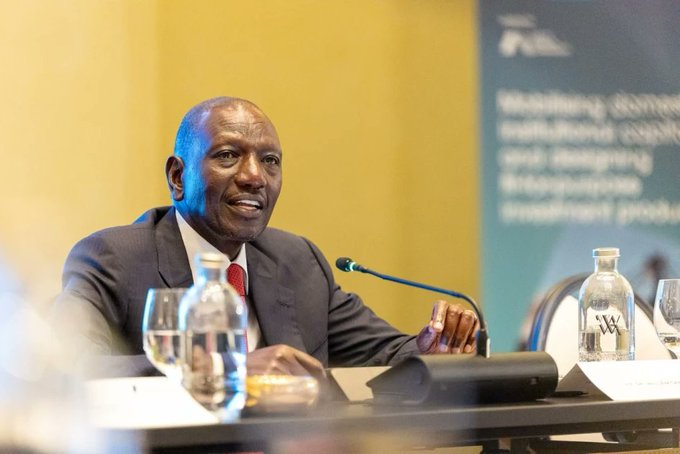
President William Ruto
At the world’s premier diplomatic forum, Kenya’s president offered a diagnosis of African underdevelopment that reframes the continent’s relationship with global institutions — and demands a new conversation
By David Kimani
President William Ruto told world leaders at the 81st United Nations General Assembly yesterday that Africa’s fundamental challenge is not a shortage of capital but a global financial architecture built on rules that systematically disadvantage the continent.
The address, delivered from the floor of the UN General Assembly hall in New York, positioned Ruto as one of the most assertive African voices at this year’s gathering, pressing a case that many of his peers have long felt but rarely articulated with such directness before the world’s most powerful audience.
“Africa does not lack resources,” Ruto told delegates. “What Africa lacks is a fair system — one that does not price us out of the capital we need to develop, one that does not treat our nations as higher risk than our fundamentals justify, one that does not extract our wealth while lending us back a fraction of it at punishing rates.”
The argument is not entirely new. African leaders, economists and development scholars have made versions of it for decades. What gave Ruto’s intervention its particular weight was the moment in which it arrived. UNGA 81 is convening against a backdrop of compounding crises — a global debt emergency affecting dozens of developing nations, stalled climate finance commitments, a reforming multilateral system that has moved slowly and, for many on the African continent, insufficiently.
Ruto’s speech was structured around a single, clarifying premise: that the conversation about African development has been systematically misdirected. Donors, international financial institutions and Western governments have for years framed the continent’s challenges as governance failures, infrastructure deficits and insufficient domestic resource mobilisation. Ruto challenged that framing head-on, insisting the more consequential problem sits in the design of the global system itself.
He pointed specifically to credit rating agencies, whose assessments of African sovereign debt consistently attract higher risk premiums than comparable economies in other regions, effectively raising the cost of borrowing to levels that undermine the very investments intended to drive growth. He cited the disconnect between Africa’s demonstrated climate vulnerability and the pace at which promised climate finance has materialised. And he raised the persistent issue of illicit financial flows — estimated by the African Union to drain the continent of more than 88 billion US dollars annually — which dwarf the foreign aid figures that typically dominate development discussions.
“We are told to reform, to improve governance, to create better conditions for investment,” Ruto said. “And we must. We accept that responsibility. But the conversation cannot end there. The rules governing trade, finance, intellectual property and climate responsibility were not written with Africa in mind. They were written to preserve arrangements that benefit those who wrote them.”
The speech drew measured applause in the hall and immediate commentary from analysts tracking the shifting dynamics of African multilateral diplomacy. Kenya has increasingly positioned itself as a continental interlocutor — a bridge between African concerns and Western capitals, between development ambitions and the institutions that shape the terms of global finance.
That positioning carries both opportunity and tension. Ruto has maintained close relationships with Washington and Brussels while simultaneously pressing for systemic reforms that those same capitals have resisted. His government has also faced domestic criticism over Kenya’s own debt levels and economic management, a tension that his critics argue undermines the moral authority of his international advocacy.
Those complications do not diminish the substance of the argument he brought to New York. The African Development Bank, the International Monetary Fund and the World Bank have all, in varying degrees, acknowledged that the current architecture of international finance creates structural disadvantages for developing economies. Former IMF chief economist Gita Gopinath has written about the asymmetries in global capital flows. Nobel laureate Joseph Stiglitz has argued for decades that the rules of the international economic order were designed to serve rich countries’ interests. What Ruto did at UNGA 81 was carry those arguments into the General Assembly chamber and attach to them the political weight of a sitting African head of state.
His address also touched on the reform of the United Nations Security Council, a longstanding African demand that the continent receive permanent representation in the body that holds primary responsibility for international peace and security. Africa, home to 1.4 billion people and 54 of the UN’s 193 member states, currently holds no permanent seat. Ruto called that arrangement indefensible in an institution that presents itself as the guarantor of a rules-based international order.
“You cannot speak of rules-based order,” he said, “while maintaining a decision-making structure that excludes the majority of the world’s nations from its highest table.”
The broader significance of Ruto’s UNGA 81 speech lies less in any single demand and more in the coherence of its argument. He did not arrive in New York asking for more aid or appealing to international sympathy. He arrived with a structural critique — carefully framed, consistently argued and aimed squarely at the legitimacy of a global order that has, for all its stated universalism, produced profoundly unequal outcomes.
Whether that critique translates into concrete reform is a separate question, and the history of such calls at the United Nations is not encouraging. The institutions Ruto is challenging were designed with considerable political durability. Changing them requires not just compelling arguments but sustained coalitions, and African unity on questions of global economic governance has often been harder to maintain than the rhetoric of continental solidarity suggests.
But the speech mattered nonetheless. In a week when world leaders gathered to debate the future of multilateralism, Kenya’s president made a case that will resonate well beyond the General Assembly hall — that the problem with the global order is not the absence of rules, but who wrote them, who benefits from them and who has been left, persistently and structurally, on the outside.
That is an argument the world will be hearing more of.
Similar Posts by The Mt Kenya Times:
- Azimio is dead. Long live the Ukombozi Alliance
- Court frees former presidents to play politics
- Njogu’s diaspora agenda gains fresh impetus as Kenya launches investment platform
- Eldoret to host 2026 UN Tourism Week: Can the North Rift redefine Kenya’s tourism story?
- After Madrid chaos derby: Mourinho pulls out the printer
About the Author