From leading within to changing the world: The Fredah Mainah story
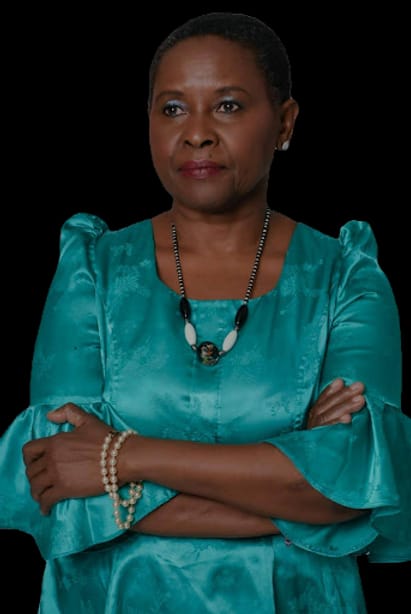
Dr. Fredah Mainah
Before the podium, the strategy and the title, there is a person who must first understand themselves — that is where Mainah’s work begins
By Levis Wangamati
There is a quiet moment before every act of leadership, long before the conference room, the podium or the strategy document. It is the moment when a person is left alone with a choice, forced to confront what they believe, what they value and what they are prepared to do. It is in that space that Fredah Mainah’s work begins. For her, leadership is not merely about directing others. It is about understanding the person making the decisions and the weight of responsibility that comes with influence.
Mainah is a global voice in self-leadership, helping individuals and institutions lead from within before attempting to transform the world around them. As an international speaker, strategist, author and founder of Rainbow-Ono Sanctuary, her work is built around a conviction that is disarmingly simple: no one can lead your life better than you. Her philosophy sits at the intersection of personal growth, education, organisational strategy and human capacity — shaped by a career that has moved from classrooms and academic institutions to corporate environments and international platforms.
Behind the global language of leadership lies a deeply rooted beginning in Kenya. Before the books, the research and the keynote addresses, there was a young girl growing up in a society full of expectations, contradictions and possibilities. It was in the classroom that she first encountered the transformative power of education and began to understand its ability to shape individual lives. That experience became the foundation of a journey that would eventually take her from teaching into consulting, scholarship, organisational development and leadership strategy.
Her move from Kenya to the United States was more than a change in geography. It became an ongoing exercise in adaptation, reinvention and reflection. After earning a Bachelor of Education at Siriba Teacher Training College, she pursued graduate studies in organisational learning and performance at Western Michigan University before earning a doctorate in organisational leadership from The Chicago School in 2016. Along the way, her work across education, consulting and organisational development gradually brought a deeper purpose into focus.
The evolution did not come through a single dramatic turning point. It was forged through years of observing how people behave, learn and make decisions within institutions. Teaching exposed her to the complexities of individual growth. Consulting brought her closer to organisational challenges and structural dysfunction. Academic research provided tools for examining those challenges more rigorously. Migration placed her in unfamiliar cultural and professional environments, while entrepreneurship required her to turn ideas into tangible enterprises. Over time, these experiences converged around one fundamental question: how do people understand themselves, make sound decisions and translate intention into meaningful action?
That question became central to her self-leadership philosophy. Mainah argues that leadership does not begin with a position on an organisational chart. Long before an individual becomes an executive, entrepreneur, educator or public figure, they remain a human being carrying beliefs, anxieties, ambitions and assumptions. These internal forces shape decisions before their consequences become visible. Her approach places self-awareness, intentionality and personal responsibility at the heart of meaningful leadership.
This intellectual framework developed into the SPIRAL methodology, a reflective approach connecting academic research with lived experience. Rather than treating reflection as a passive exercise, it encourages leaders to slow down, recognise behavioural patterns, examine underlying assumptions and make deliberate choices. In a professional culture increasingly driven by speed, output and immediate results, such reflection becomes more than personal contemplation. It becomes a practical tool for improving the quality of decisions.
The importance of that internal work becomes especially visible at the institutional level. A leader may design a coherent strategy and still watch an organisation struggle to execute it. Somewhere between strategic intent and everyday implementation, communication weakens, ownership disappears and momentum stalls. It is within this space that Mainah’s concept of decision grit becomes significant. The idea focuses on the momentum required for a decision to travel successfully from approval to action — moving through departments, managers and operational teams without losing direction or energy. An organisation can have an approved strategy and still lack the alignment needed to bring it to life. Mainah’s work draws attention to this often overlooked distance between deciding and doing.
The challenge has grown more pressing in an era of rapid technological change. Artificial intelligence and data-driven systems can accelerate information processing and expand the possibilities available to organisations. Yet information alone does not produce judgment. Human beings must still determine what is ethical, proportional and appropriate. Mainah’s approach places human development alongside technological advancement, insisting on the continuing importance of character, judgment and conscious action.
That perspective runs through her published work, which spans self-leadership, philosophy, student success, public speaking and legacy. The subjects vary, but they return to a consistent question: how can individuals recognise their potential, develop it and use it to create value beyond themselves? Her thinking on legacy extends this beyond professional achievement, asking what remains after titles and milestones have passed. A book, a lesson or an idea can carry influence through conversations an author may never witness — moving from teacher to student, mentor to professional, one generation to another. Sometimes the greatest evidence of influence is found in lives changed long after the person who planted the idea has left the room.
The Rainbow-Ono Sanctuary in Crockett, Texas, offers a physical expression of this philosophy. Founded in 2021, the sanctuary provides an environment for reflection, learning and personal renewal that stands in deliberate contrast to the corporate and academic environments that have defined much of Mainah’s professional career. It reflects an understanding that human capacity is not developed solely through institutional performance. Sometimes it requires distance from the systems demanding it.
Yet despite the international dimensions of her story, Mainah’s journey remains connected to its Kenyan origins. Before the strategist and scholar, there was the teacher. Before the international platforms, there was the classroom. Before the language of self-leadership became central to her work, there was a personal journey through education, migration, professional adaptation and discovery. Those beginnings were not erased by what followed. They were expanded by it.
Seen whole, her life is less a collection of titles than an evolution of experience into inquiry, and inquiry into practice. At the centre of that evolution is the individual — how people think, how they decide, how they respond to responsibility and how their choices eventually shape the institutions and communities around them.
The theme running through it all is cultivation. A seed holds potential, but potential is not a harvest. A leader may hold authority, but authority is not wisdom. An organisation may publish a strategy, but strategy is not execution. Between potential and realisation lies the essential work: sustained attention, honest reflection and deliberate action.
That is perhaps where the idea of leading within becomes most powerful. Before changing an institution, a community or the world, there is an individual who must first confront the person in the mirror. For Mainah, leadership begins there — and her journey from a Kenyan classroom to international platforms points to one enduring lesson: lasting outward influence begins with the work we are willing to do within.
Similar Posts by The Mt Kenya Times:
- Gachagua’s DCP holds strategic NEC meeting ahead of 2027 polls
- Sifuna’s unending party ownership hurdles
- Kagwe launches nationwide soil testing drive to guide fertiliser use
- Mombasa’s new energy mandate: Turning regional trade into shared prosperity
- Security test: Trust, integrity and the path to 2027
About the Author