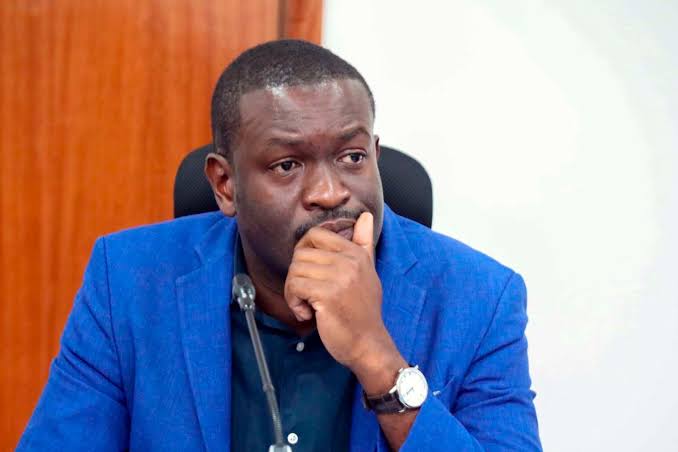
Nairobi Senator Edwin Sifuna
Every name the senator reaches for — Linda, Ukombozi, now UDP — finds a wall waiting; whether that wall is bureaucratic, legal, or political is a question Kenya’s opposition circles are asking with increasing urgency
By David Kimani
Fresh complaints filed by United Democratic Party officials against a proposed takeover by Nairobi Senator Edwin Sifuna have added yet another chapter to what is fast becoming one of the most bruising party registration sagas in Kenya’s pre-election history.
UDP Vice Chairman Mohammed Abikar issued a categorical statement yesterday dismissing reports that Sifuna and Trans Nzoia Governor George Natembeya were positioning to assume control of the party, warning that no such arrangement had been sanctioned by the party’s National Executive Council. The party said it was open to Sifuna, Natembeya and other like-minded politicians joining, but insisted that any entry and leadership changes must comply with the party constitution and that any new leader must be chosen by delegates. For a senator who has spent the better part of a year trying to secure a political vehicle for a 2027 presidential run, the statement landed as one more door slammed in his face.
The UDP dispute is merely the latest in a sequence of setbacks that began when Sifuna’s Linda Mwananchi movement first attempted to formalise its political identity. In March, the Sifuna-led faction moved to block a separate application to register Linda Mwananchi as a political party, arguing to the Office of the Registrar of Political Parties that the applicant — one Charles Wanyonyi — was not associated with their group and that approval of the name could enable political fraud. Caleb Amisi, among the leaders listed in the formal objection, called the application a “normal ploy by government state operatives to confuse the public.”
The registrar eventually rejected the Linda Mwananchi name, but not in Sifuna’s favour. The Office of the Registrar of Political Parties ruled that the name closely resembled an already reserved slogan and was against the public interest, citing Section 8 of the Political Parties Act. The decision left the movement without its most recognisable brand and opened a legal dispute that dragged on for months.
Compounding matters was the emergence of the Liberty National Democratic Alliance, known by its acronym LINDA. The emergence of the LINDA Party complicated things further. Although Sifuna’s allies insisted the newly approved party had no relationship with their movement, the registration effectively occupied the broader “Linda” political space. LINDA party leader Phanesio Thuku said the outfit was registered as far back as November 2024 and had members across the country. Sifuna’s team found itself outflanked on a name it had spent months rallying behind.
The movement then pivoted toward Ukombozi. Former MP Cyrus Jirongo’s United Democratic Party sought to rebrand as Ukombozi People’s Party amid talks of a planned takeover by the Sifuna-led Linda Mwananchi movement. The plan seemed, briefly, to offer a workable path. It did not last. The Registrar of Political Parties rejected the rebranding bid, citing similarities with the newly reserved Ukombozi Alliance name — a coalition name that Azimio la Umoja had reserved on July 20 and formally adopted as its new coalition name on September 21. The timing struck Sifuna’s allies as rather too convenient.
Natembeya was blunt in his assessment: “We know who is involved, but you can’t use a party to curtail Sifuna’s bid,” he said, accusing the Registrar of “playing games” over the Ukombozi application that had been filed as far back as March. Vihiga Senator Godfrey Osotsi was more measured but equally pointed: “The state is frustrating the registration of Linda Mwananchi. We are now in court,” he said, adding that his team was treading carefully because of what he described as “state tactics” to infiltrate or scuttle their plans.
Former Jubilee official Pauline Njoroge, now a member of Sifuna’s camp, went further, seeing the government’s hand directly in their legal quagmire. Whether that assessment holds is difficult to verify independently. What is clear is that the pattern of obstruction — names blocked, rebrands rejected, third-party applicants surfacing at critical moments — has been consistent enough to fuel credible suspicion within the movement.
The question of motive matters politically because of who Sifuna has come to represent. A TIFA poll earlier this year showed him climbing from virtually no measurable support in 2025 to 15 per cent nationally by June 2026, with 44 per cent support within ODM as the party’s preferred presidential candidate. That trajectory — driven substantially by Gen Z voters who have embraced his combative anti-establishment posture — makes him a genuinely disruptive force in a race that President William Ruto’s camp had expected to control. A candidate without a registered party cannot contest. The arithmetic of obstruction, if it is obstruction, writes itself.
Kisii Senator Richard Onyonka acknowledged as much, revealing that the party question had become a headache following what he described as frustrations allegedly placed in Sifuna’s path by the state. The senator himself has struck a deliberately unbothered tone in public. “Let our supporters relax; a rose by any other name still sells,” he told supporters at a funeral in western Kenya, brushing aside speculation about his party situation with the kind of studied nonchalance that has become his trademark.

The planned UDP launch is now scheduled for October 3 at the party’s Westlands headquarters in Nairobi, with Sifuna and his allies expected to use a closed-door retreat to finalise stewardship arrangements ahead of the event. Sources indicate that Rigathi Gachagua’s Democracy for the Citizens Party is also eyeing a potential coalition with Sifuna, with DCP proposing its Secretary-General John Methu as a possible running mate candidate.
Analysts caution, however, that acquiring a party is only the beginning. Sifuna now needs functioning grassroots structures, credible officials, county coordinators, aspirant networks, a clear policy agenda, fundraising mechanisms and committed political organisers who believe in the presidential project beyond the excitement of his rallies. The IEBC has gazetted a deadline of October 15 for parties intending to participate in the 2027 general election to submit the names and specimen signatures of their authorised persons. The calendar is tight, and the margin for further setbacks is gone.
Whether the obstacles Sifuna has encountered are the product of bureaucratic coincidence, rival political manoeuvring, or a coordinated effort to neutralise a rising opposition threat before he can properly launch, one thing is beyond dispute: no presidential aspirant in recent Kenyan political history has fought this hard simply to secure a party name. The battles ahead — structural, financial, coalitional — will be no easier. But Sifuna has staked his credibility on the argument that obstacles are evidence of relevance, not failure. His supporters, particularly the Gen Z constituency that has made him a national figure, appear, for now, to believe him.
Similar Posts by The Mt Kenya Times:
- Media warns: Information gaps fuel 2027 disinformation risk
- Gachagua’s DCP holds strategic NEC meeting ahead of 2027 polls
- From leading within to changing the world: The Fredah Mainah story
- Kagwe launches nationwide soil testing drive to guide fertiliser use
- Mombasa’s new energy mandate: Turning regional trade into shared prosperity
About the Author