Parents seek sincerity more than infrastructure in education
By Ashford Kimani
In Kenya’s private school sector, administrators often invest heavily in buildings, buses, digital screens, and glossy marketing campaigns. While these efforts may improve visibility, they do not necessarily build trust. Parents are not simply looking for infrastructure; they are looking for people they can trust with what matters most — their children.
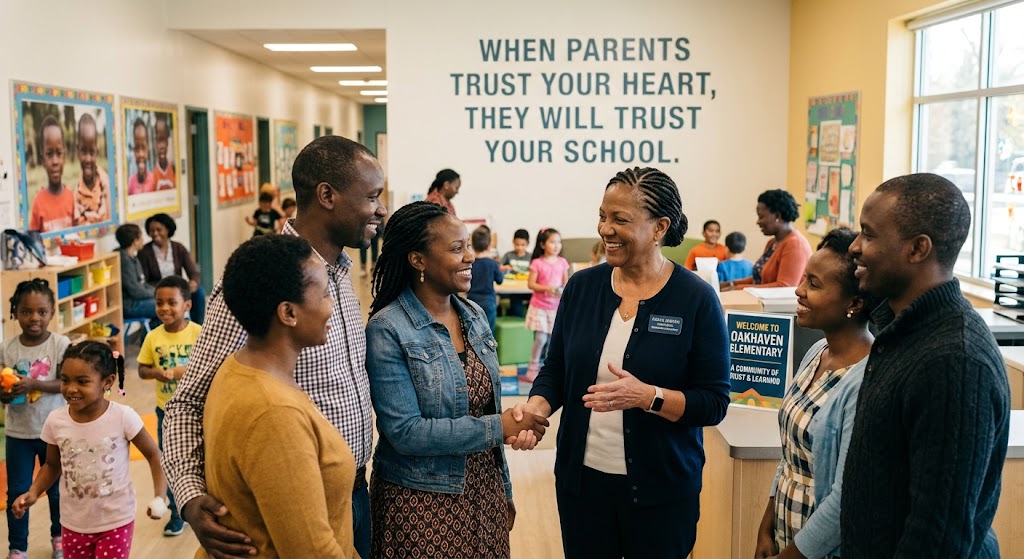
That is why one principle stands above all others in school leadership: when parents trust your heart, they will trust your school.
Parents are emotional investors in their children’s lives. Each morning, when they drop them at the school gate, they hand over not just learners but dreams, fears, expectations, and hopes. They want assurance that the people leading the school genuinely care — not about fees or rankings alone, but about children as human beings.
Schools that enjoy long‑term loyalty are rarely the loudest on social media. They are usually places where parents feel respected, heard, and valued. Parents can forgive mistakes, delays, and even occasional academic shortcomings if they believe the leadership has the right intentions. But once they suspect arrogance, dishonesty, indifference, or greed, trust collapses quickly.
Trust begins with leadership attitude. Some school heads operate like untouchable CEOs, feared by parents, teachers, and learners alike. Such leadership creates emotional distance. Parents may comply temporarily, but deep loyalty never develops. Strong leaders, by contrast, are approachable. They greet parents warmly, listen carefully, communicate openly during crises, and admit mistakes when necessary. Parents do not expect perfection; they expect sincerity.
Transparency during problems is one of the quickest ways to build trust. When incidents occur — whether bullying, sickness, injury, examination issues, or teacher misconduct — parents want immediate communication. They do not want cover‑ups or rumors from students before official word arrives. Honest schools earn respect even in difficult situations. Institutions that prioritize image management over truth often destroy trust. Parents are observant; they can tell when leadership is hiding something. Once doubt enters the relationship, rebuilding confidence is extremely difficult.
Parents also trust schools whose actions consistently match their words. Many institutions preach values such as integrity, discipline, excellence, and care. Yet parents judge by lived experience: how visitors are received, how struggling learners are treated, how fee defaulters are handled, how teachers respond to weak performance, and whether disagreements are managed respectfully. Culture reveals the true heart of a school. Mission statements may hang on walls, but parents notice whether teachers know learners personally, whether leaders remember names, and whether communication feels human rather than robotic. These small details create emotional security.
Consistency is another pillar of trust. Parents become uneasy when schools constantly change policies without explanation. Confusion weakens confidence. Trusted schools build predictable systems: rules applied fairly, communication following clear procedures, financial matters transparent, and academic reports timely. Stability reassures families.
Importantly, trust cannot be outsourced to marketing departments. Some schools invest in advertising but neglect relationships. They produce professional videos, yet parents struggle to get responses from administrators. They organize flashy events, yet teachers are emotionally exhausted behind the scenes. Eventually, reality catches up with branding. The strongest marketing tool in education remains word of mouth. Parents who trust a school become its ambassadors, defending it during criticism, recommending it to friends, enrolling siblings, and remaining loyal even in difficult economic times. In contrast, parents who feel exploited or ignored may leave silently and discourage others privately. One disappointed parent can damage a school’s reputation significantly because education is deeply relational.
Modern parents are also becoming more emotionally intelligent. They no longer judge schools purely by KCSE results or CBC performance. They ask deeper questions: Is my child emotionally safe? Does the school nurture confidence? Does leadership genuinely care? Is discipline humane? Does my child feel known? These questions cannot be answered through brochures; they are answered through culture and relationships.
Ultimately, successful private schools understand that education is a people business before it is a financial business. Buildings matter. Results matter. Systems matter. But human connection matters most. When parents trust the heart behind the institution, they stop feeling like customers and begin feeling like partners. That partnership becomes the foundation of long‑term growth and stability. Parents stay where their children are not merely taught, but genuinely cared for.
Ashford Kimani teaches English and Literature in Gatundu North Sub‑county and serves as Dean of Studies.
Similar Posts by The Mt Kenya Times:
- Ruto’s Taita Taveta visit puts land and power at the heart of coastal development
- Politicians must stop advancing tribal narratives
- Kenya’s payments overhaul puts remittances at the centre of FX debate
- When “without lawful excuse” becomes the ultimate alibi: The mens rea mirage in sections 72–75 of Kenya’s Data Protection Act, 2019
- Mt Kenya Times ePAPER October 1, 2026
About the Author