Carrying babies while studying: The real struggles of student parents on Kenyan campuses
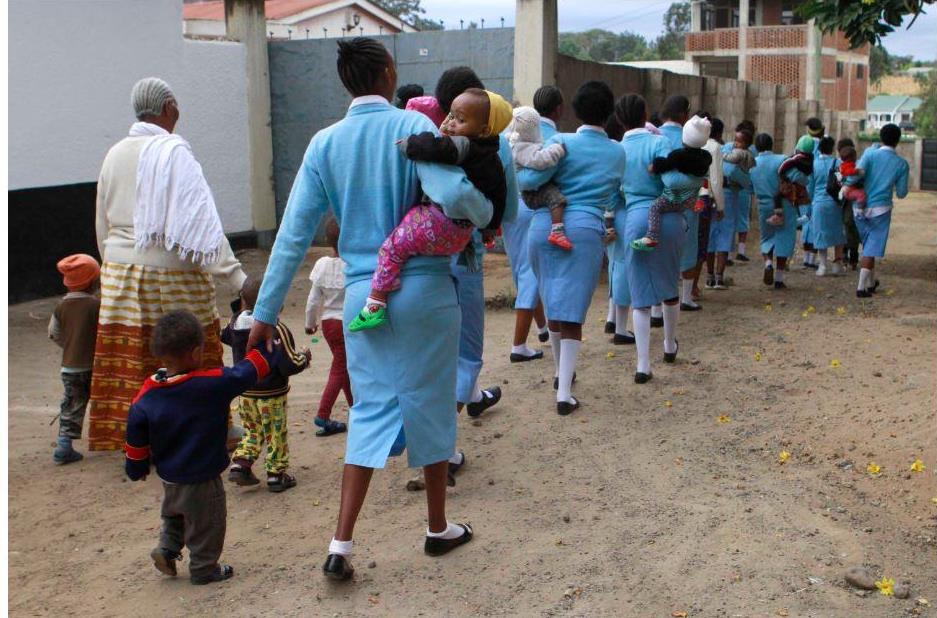
Carrying babies while studying
Tens of thousands of student mothers are navigating lectures, deadlines and childcare with little institutional support — and some universities are making it worse
By Njeri Mickeydan Kioko
Research shows that student motherhood in Kenyan public universities stands at around 18 per cent, with an estimated 40,000 female students between the ages of 17 and 24 giving birth every year. That is not a small number. It is a significant portion of the student population navigating one of the most demanding periods of their lives while simultaneously raising a child.
But here is what many people are reluctant to admit: Kenyan universities were simply not designed with these students in mind. The structures, schedules and policies assume a student with no dependants, no childcare responsibilities and no one waiting at home. When you become a parent while still a student, you cannot stop being either. And the university system does not always make room for both.
Start with the most obvious struggle: money.
Raising a child costs money. Studying costs money. For most student parents, there is never enough of either. A study of student mothers at Kirinyaga University found that 41 per cent were unable to cover their basic expenses, while 33 per cent had used part of their school fees to meet parenting obligations. These are students diverting money meant for tuition to buy food and diapers. Some have taken academic leave purely for financial reasons.
The costs accumulate in ways non-parenting students never have to consider — clinic visits, baby food, transport, emergencies. One student mother described her daily reality plainly: she skips meals so her child can eat, walks to campus to save on fare, and buys second-hand clothes to afford formula. These are not lifestyle choices. They are survival strategies.
Compounding the pressure, many public universities now demand lump-sum fee payments before students can register for examinations. For a young parent already stretched to the limit, that demand can mean the difference between continuing their education and dropping out entirely.
Even where money is managed, time remains an unrelenting constraint.
Babies do not respect timetables. They fall ill at 2am. They need feeding every few hours. They cry when you are trying to study and do not understand that examinations are tomorrow. The same Kirinyaga University research found that 41 per cent of student mothers had missed class since having a child, and nearly half said they could only study at night, after the baby was asleep. Some said they simply could not concentrate during the day.
These are students who want to learn, who are paying fees they can barely afford, sitting in lectures so exhausted they cannot absorb what is being taught. As one student mother put it: “Sometimes I feel guilty because I am not fully present either as a mum or as a student.”
Grace, a 23-year-old third-year student at Rongo University studying education, is smart, hardworking and determined. She is also a mother. Before her university opened a daycare centre, she had a morning routine she does not like to discuss. She would dress her baby, lock the child inside her hostel room and walk to class. There was no one to watch the baby. She could not afford help. Attendance was compulsory. So she locked the door, said a prayer and hoped.
One afternoon she returned to find her baby had somehow locked the door from the inside. She stood outside panicking, called for help, and eventually someone broke the door open. The child was unharmed. Grace was not. Something inside her broke that day.
Her story is not exceptional. It is the reality facing thousands of student parents across Kenya. A study at Kirinyaga University found that 66.7 per cent of student mothers could not afford a babysitter. Only 10.3 per cent received financial support from partners, and another 10.3 per cent received help from family. The rest improvised — leaving babies with friends, rushing between hostels and lectures to breastfeed, or, like Grace, making choices that no parent should have to make.
In December 2025, Kisii University issued a memo titled “Prohibition of Children in the Classroom Set-up.” It noted that parenting students were bringing children onto campus and directed security officers to prevent it during weekdays. The memo acknowledged that childcare “can sometimes be challenging” but insisted the classroom was a professional space where children were not appropriate.
Consider what that memo did not ask. It did not ask why students were bringing babies to class. It did not ask what those students were supposed to do instead. It simply banned the babies and called it policy.
A lecturer at South Eastern Kenya University, writing in response, noted that university structures “were not designed with student parenting in mind” and that affected students felt they were “treated as outsiders.” That is the core of the problem. Student parents are not asking for special treatment. They are asking for basic recognition that they exist.
Behind the statistics is a layer of struggle that does not appear in data: shame. In many Kenyan communities, pregnancy during studies carries heavy social stigma. Student mothers are sometimes viewed as irresponsible. Some are rejected by their families. Some are abandoned by the fathers of their children. The Kirinyaga University study found that 46.2 per cent of student mothers reported experiencing stigma because of their situation.
That stigma keeps many silent. They do not seek help for fear of judgment. They struggle alone, convinced their situation is a personal failure rather than a systemic one. There is also a gender dimension that cannot be ignored. Female students frequently carry the full weight of pregnancy, childcare and emotional stress, while male counterparts avoid accountability. The result, as one student at Kenyatta University wrote, is “bitterness, missed opportunities and cycles of inequality.”
Despite the challenges, there are genuine signs of progress.
Rongo University in Migori County established a Child Care Centre that has become a reference point for other institutions. Funded in partnership with ChildFund and the Lake Region Development Programme, the facility serves children aged six months to three years and handles between 20 and 30 infants daily. By the end of the first quarter of 2026, it had supported 55 student mothers who contribute KSh50 per day towards running costs.
The results have been significant. Student mothers who had considered dropping out are staying enrolled, attending lectures and performing better academically because they are no longer consumed by anxiety about their children.
Other institutions are following. MMUST has announced plans for a campus daycare. The University of Nairobi is advancing a childcare and lactation facility proposal, with a policy dialogue held in February 2026. Karatina University hosted a mentorship seminar for 98 student mothers in April 2026. The University of Eldoret held a Young Mothers’ Day in February 2026 to celebrate and empower student mothers on campus.
Every public university in Kenya should have an affordable, accessible childcare facility. The Rongo University model demonstrates it is achievable even with limited resources. Institutional policies must also become more flexible — a student who misses class because a child is ill should not be penalised, and a student who has no childcare alternative should not be banned from campus.
The government’s proposed shift to universal funding, announced in July 2026, could help if it results in targeted support for student parents rather than blanket allocations that ignore the additional costs they face. Universities must also actively dismantle the culture of shame surrounding student parenthood, making support structures permanent rather than occasional. And crucially, fathers must be part of the conversation. As one coordinator at the University of Eldoret observed: “The children also belong to fathers, and if we don’t involve the young fathers in these conversations we are losing out on the young men.”
Thousands of student parents across Kenya are still choosing between their education and their child’s safety, still being managed as problems rather than supported as students. Their determination deserves more than silence.
Parenthood and ambition should not have to compete for the same hours in the day. And no mother should ever have to lock her child in a room just to attend class.
Njeri Mickeydan Kioko is a third-year student pursuing a Bachelor of Arts in Journalism and Mass Communication at Chuka University.
Similar Posts by The Mt Kenya Times:
- Keep off politics from teachers – West Mugirango MP tells off sponsors at Kiangungu Prayers Day
- Seven women’s rights organisations in Africa launch coalition for gender equality and media sustainability
- Ruto: Why are some African leaders hesitating on the Lamu refinery?
- Your certificate has no power of its own: It borrows power from the brand you are killing
- Kinoti Marete backs Samburu security operation, rallies Meru aspirants to PPK
About the Author