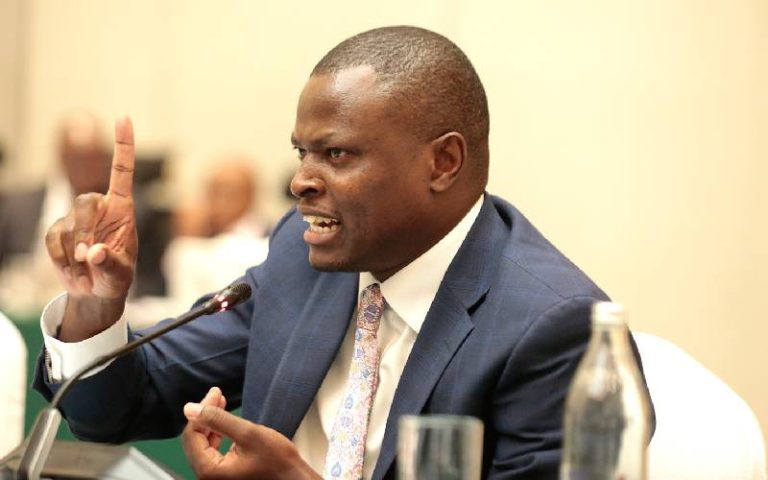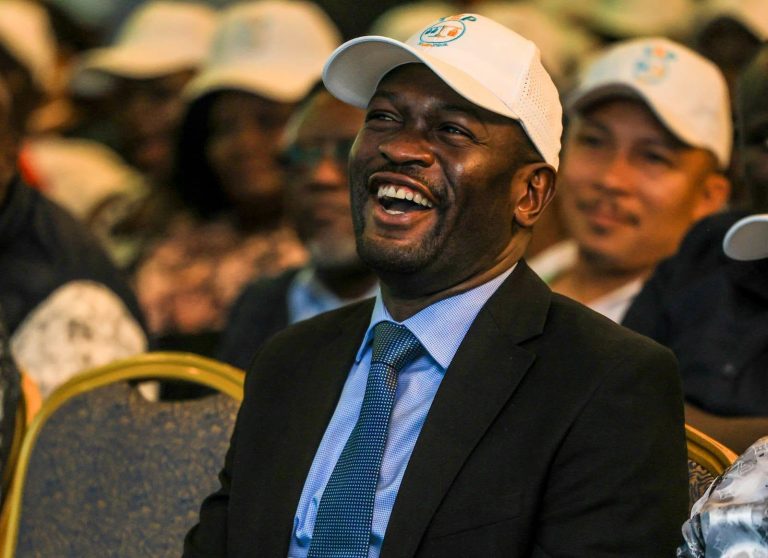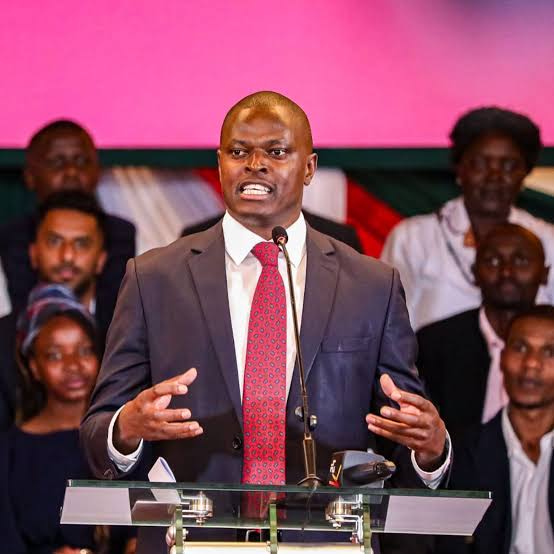
Kiharu MP Ndindi Nyoro .
The MP has a record, a party and a plan. Whether that is enough to clear a crowded field is the question Kenya’s opposition must now answer
By Munene Gitonga and Njeri Mickeydan Kioko
Kiharu MP Ndindi Nyoro was once so close to President William Ruto that the President publicly described him as “the young man I am mentoring.” By August 2026, Nyoro had left Ruto’s United Democratic Alliance, crossed to the opposition, launched his own party and declared, with characteristic bluntness, that he could beat the President “hands down” in next year’s general election. The first instinct of many observers was scepticism. A constituency MP vaulting straight to a presidential bid is an unusual proposition in any political system. But spend time looking at what Nyoro has actually done in Kiharu, and the confidence begins to make a degree of sense.
The centrepiece of his constituency record is the Masomo Bora programme — translated as “good learning” — which he presents as both a local achievement and a national blueprint. The headline figure is a reduction in day secondary school fees from KSh1,000 to KSh500 per term across 65 public schools, benefiting more than 12,000 students. In the context of Kenya’s cost of living in 2026, that saving translates directly into household budget relief for families with multiple children in school. But the programme goes considerably further than fee reduction. Students receive free lunch from Monday to Saturday — chapati on the last Friday of each month has reportedly become the most anticipated item on the menu — and KSh50 million from the National Government Constituency Development Fund has been directed into laboratories and libraries, with an additional KSh10 million for revision books and KSh50,000 per school for extracurricular activities. Extra tuition is capped at KSh1,000 per term, and arbitrary additional charges have been banned entirely. The best-performing subject teachers receive a week in Mombasa. Top principals travel to Dubai or Malaysia. Teacher morale in Kenya’s public schools is a persistent and well-documented problem; at the very least, Nyoro has acknowledged it and attempted an answer.
The physical transformation of schools in Kiharu has been equally visible. All 112 public primary schools in the constituency have been renovated, with classrooms retiled and compounds paved with cabro. The results have been striking enough that locals now rent some school grounds out for weekend weddings — an unplanned but telling indicator of how dramatically the facilities have improved. Parents have noted a practical benefit: pupils return home cleaner, reducing uniform wear. Nyoro’s method for financing this transformation is worth examining. He bypassed the conventional contracting system entirely, training 150 local youths in tile installation and another 150 in professional painting, then deploying them directly on school construction projects. His arithmetic is straightforward: under standard procurement, a KSh1 million classroom project loses KSh160,000 to VAT and roughly KSh300,000 to contractor profit before a single brick is laid. By removing the contractor, he argues, the full allocation reaches the project, effectively doubling output per shilling spent.
Beyond education, Nyoro’s record covers roads, water and employment. The Kiangochi-Muchungucha Irrigation Project in Mbiri Ward has placed 500 acres under year-round farming, generating 2,000 direct construction jobs and projecting 5,000 indirect jobs on completion. A borehole in Gaturi now supplies 90 households with domestic water. The constituency has shifted toward concrete roads in steep terrain, replacing murram surfaces that deteriorate rapidly under heavy rainfall. A newly constructed road in Kandundu Estate, completed in under a year, has visibly stimulated local commercial activity. More than 1,200 youths have been sponsored through short artisan courses in hospitality, cosmetology and driving, with tuition fully covered by the CDF — in addition to the 300 trained directly for the school infrastructure programme.
His national policy proposition extrapolates directly from Kiharu. He argues that combining KSh10 billion annually from CDF allocations, KSh10 billion from county governments and KSh10 billion from the national budget produces KSh30 billion — enough to make day secondary education free across Kenya. He says he could implement the policy within three months of taking office. The ambition is clear. The arithmetic is debatable. Critics will note that redirecting existing CDF and county allocations is not new money; it means other projects absorb the cost. He has not yet provided a detailed account of what gets cut to make the numbers work. Scaling a model that covers 65 schools to a national system of approximately 9,500 schools serving 3.5 million students is also a fundamentally different management challenge. In Kiharu, Nyoro can and does maintain direct oversight. Nationally, that proximity disappears and the complexity multiplies exponentially.
His political positioning carries its own complications. He was among Ruto’s most committed supporters in 2022, and when former Deputy President Rigathi Gachagua faced impeachment, Nyoro chose to abstain rather than stand against it — a decision that Gachagua’s allies have not forgotten and are unlikely to set aside easily. He has been labelled a government plant and a spoiler by elements of the opposition who question the sincerity of his transition. Dismissing those concerns as political mudslinging, as he does, is easier than disproving them, and that gap remains a vulnerability. On Saturday, October 3, during a live press interview in Chuka, Tharaka-Nithi County, he addressed his People’s Party directly. “People’s Party is a national party — the fastest-growing party in terms of registration, with over 2,000 aspirants in a short period,” he said. He spoke of a parent who brought her daughter to the party so she could contest an MCA seat in Embu, presenting it as evidence of the kind of intergenerational trust he is working to build.
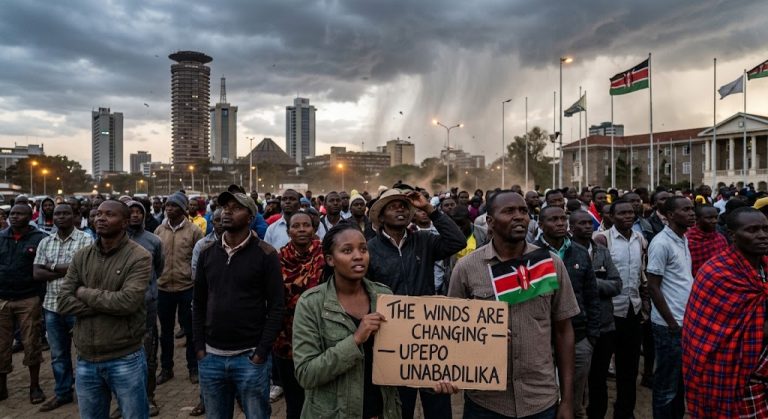
His age is arguably his most underappreciated political asset. Kenya’s presidential field is customarily populated by figures who have been cycling through the same positions for decades. Nyoro, in his early forties, is a genuine millennial candidate in a political culture that speaks endlessly about youth but rarely delivers it at the top of a ticket. As one supporter put it at a rally in Murang’a: “Even if he loses this time, he can try again in 2032.” That calculation is not defeatist. It is strategic, and it reflects a patience that older rivals simply do not have.
His stated strategy for 2027 is coalition-minded rather than narrowly competitive. He has indicated willingness to contest within the opposition for a single presidential ticket and to support whoever emerges from that process — a position that leaves him a credible role in any opposition coalition even if the presidential nomination goes elsewhere. That flexibility is either genuine political maturity or a carefully constructed exit option, depending on one’s reading of the man. Probably it is both.
What distinguishes Nyoro from much of Kenya’s political class is specificity. He does not speak in adjectives. He speaks in numbers, menus, kilometre lengths and named schools. His record can be walked into and questioned. Students in Kiharu’s day secondary schools can tell you which day chapati is served. That accountability, however modest in national terms, is rarer than it should be. Whether it is sufficient to carry him to the presidency is a different question entirely — one that only August 2027 can answer.
Similar Posts by The Mt Kenya Times:
- Mt Kenya Times ePAPER October 5, 2026
- Sharp school wins national award for career and workforce readiness
- Government takes diaspora jobs drive to the grassroots
- The stolen hands: How we killed the craftsman to create a clerk
- After nearly 60 years in darkness, Nyabiendi awaits the light
About the Author