Beyond celebration: Why Kenya must put teachers at the centre of education reform
Sixty years after a landmark international commitment, the profession still awaits the sustained support it deserves
By Ashford Kimani
As Kenya joins the rest of the world in marking World Teachers’ Day 2026, the occasion offers more than a moment for applause. Under the theme “Standing with teachers: 60 years of protecting the profession, advancing its status and shaping our futures,” it is a call to account — and to action.
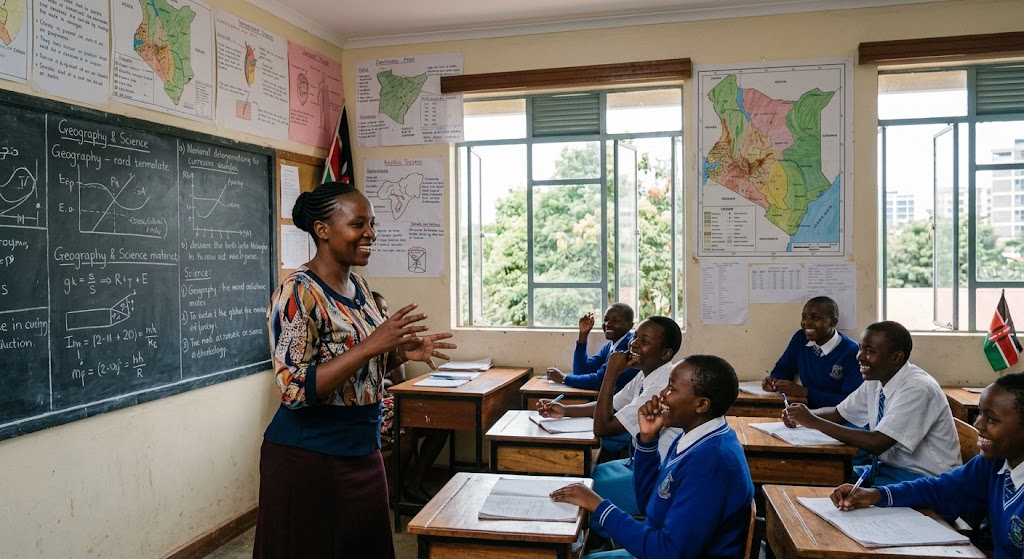
Teachers are central to every functioning education system. They do far more than deliver lessons and mark scripts. They nurture talent, kindle curiosity, build confidence and prepare young people to engage meaningfully in society. Their influence radiates beyond the classroom into families, communities and the broader national development agenda. How well Kenya supports the people entrusted with delivering education will, to a significant degree, determine the quality of that education.
The 2026 theme carries particular weight because it marks six decades since the 1966 ILO/UNESCO Recommendation concerning the Status of Teachers. That milestone invites stakeholders to take honest stock of how far the profession has been protected and what remains unfinished.
Kenya’s education system is in active transition. The Competency-Based Education curriculum places emphasis on practical skills, learners’ individual talents and real-world application. For that approach to deliver on its promise, teachers must be adequately prepared and consistently supported to translate curriculum expectations into meaningful classroom experiences. Policy announcements alone will not move the needle. Educators need relevant professional development, effective school leadership, appropriate learning materials and the conditions in which to understand and respond to the different needs of their learners.
Several institutions featured in the World Teachers’ Day programme carry complementary responsibilities in that effort. The Kenya Institute of Curriculum Development works on curriculum design, review, evaluation and the supply of support materials. The Centre for Mathematics, Science and Technology Education in Africa supports capacity-building in STEM through training and research. The Kenya Education Management Institute focuses on strengthening leadership and management across the school system. These roles are distinct but interdependent: curriculum development, teacher training and school leadership must move together if reform is to be understood and effectively implemented on the ground.
The programme’s recognition categories — spanning early years educators, school leadership, inclusive education, ICT integration, mentorship, sustainable development and early-career teaching, among others — reflect the breadth of what good teaching actually involves. They challenge the narrow view that educational success is best measured through examination results alone. Effective teaching encompasses mentoring, creating inclusive classrooms, encouraging creativity, promoting safety and equipping young people with skills that outlast any syllabus.
Yet recognition, however well deserved, is not a substitute for structural support. Awards can inspire excellence; they cannot replace the professional environment that makes excellence possible. Lasting improvement requires sustained investment in professional development, constructive feedback, capable leadership and the resources teachers need to do their jobs properly. Every educator deserves those conditions, whether or not they ever hold a trophy.
The status of teachers is inseparable from the conditions in which they work. Professional respect must be visible in how educators are treated day to day, how their concerns are handled and whether they have genuine opportunities to participate in decisions that shape their working lives. The Kenya National Union of Teachers and the Kenya Union of Post-Primary Education Teachers play a critical role here. Their work — advancing welfare, rights, remuneration, career progression and professional development — provides teachers with a collective voice that individual educators cannot exercise alone.
Constructive engagement between teachers’ representatives, government and other education stakeholders is not optional. Social dialogue creates the space for concerns to be raised honestly, competing priorities to be weighed and solutions to emerge through consultation rather than imposition. When teachers believe their professional voice carries weight, education reform gains a far more durable foundation for implementation.
Protecting the profession also means acknowledging the scale of what is asked of teachers. They are expected to support diverse learners, uphold professional standards, absorb curriculum changes, integrate new technologies and help maintain safe learning environments — often with limited resources and under considerable pressure. Meeting those expectations demands institutional support, clear communication and policies that reflect an honest understanding of complexity.
Digital resources, ICT, STEM approaches and competency-based methods are reshaping what effective teaching looks like. But technology and new methodology are only as effective as the training and resources behind them. The programme’s emphasis on innovation and ICT integration points to a growing need for adaptable educators — teachers who can support learners with varied abilities, encourage participation and connect classroom learning to the challenges of real life.
That responsibility cannot fall on individual teachers alone. Institutions must provide relevant training and professional guidance. School leaders must foster collaboration and the sharing of effective practice. Parents and communities must create home environments that value learning and reinforce children’s development.
Ultimately, strengthening the teaching profession is a collective undertaking. Government agencies, training institutions, curriculum developers, school leaders, unions, parents and communities each shape the conditions in which education takes place.
World Teachers’ Day 2026 should therefore be more than ceremony. It should renew a concrete commitment to policies and partnerships that protect teachers’ professional standing, widen development opportunities and improve the quality of learning across the country. Sixty years after the international recommendation on teachers’ status, Kenya has the opportunity to turn recognition into sustained action.
The message is plain: teachers cannot be expected to shape the future without the tools, respect and support required to do so. When Kenya stands genuinely with its teachers, it stands for every learner whose potential depends on quality education. The true measure of this year’s celebration will be the lasting commitment to making that principle real.
Similar Posts by The Mt Kenya Times:
- NTSA cannot regulate road safety by passing the buck: Kenya needs a clear separation of policy, regulation and enforcement
- Mwiteria teachers celebrate their day — and speak plainly about its challenges
- Mucheke commends Linturi over Meru unity call
- The phantom of freedom: Kenya’s social justice as elite inheritance in disguise
- Mt Kenya Times ePAPER October 5, 2026
About the Author